Altered states: an altar boy’s struggle with sexual and national identity
The Fields

Altered states: an altar boy’s struggle with sexual and national identity

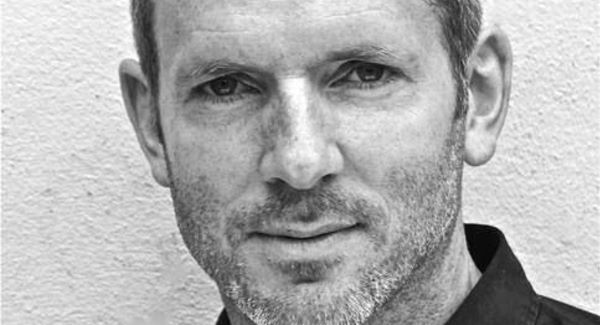
But as we talk in Kevin Maher’s publisher’s office — off London’s Blackfriars’ Bridge — the 41-year-old has made a seamless transition from film hack to full-time writer.

Maher left Dublin, for London, in 1994. By 2001, he was editing a film magazine, The Face.

Despite Maher’s success, he had a thirst to write prose fiction. That year, he decided to give it a go.

“I quit London, and my wife and I went up to this tiny fishing village in the north of Scotland, called Findhorn. While I was there, I wrote a novel, and the first 50 pages of it ended up in this current book. It was written with my critic’s brain, rather than my creative one.

“But it got me a meeting with a publisher, who said: ‘we love the first 50 pages about the boy, but the rest is bullshit’.”

Nearly a decade passed and Maher had no success.

By 2010, he decided to tell a simple story: this would become the basis for his debut novel, The Fields.

This coming-of-age tale, written in a simple first-person-narrative, is set in the suburban streets of south Dublin in 1984.

The story is told by Jim Finnegan: a 13-year-old boy who lives carefree, hanging out in the local park, and going on nightly bike rides with his geeky friend, Gary.

Shortly after his 14th birthday, Jim’s life changes when he falls in love with a beautiful, 18-year-old woman, Saidhbh Donoghue.

Their relationship turns sour when the young couple takes a boat to Britain to arrange for Saidhbh to have an abortion.

Both Jim and Saidhbh decide to stay on in Kilburn, in North London, for the entire summer of 1985, where Jim gets a job as a waiter, and Saidhbh has a long and nervous battle with her inner demons.

Running alongside this romantic tale is the story of Jim’s dubious relationship with Father O’Culigeen: a nasty young priest who has a sexual penchant for insecure altar boys.

Maher’s novel is a melancholic, yet truthful depiction of Ireland in the 1980s: when dogmatic Catholicism was still instrumental in shaping the cultural and moral values of Irish society.

Writing a story set in this period, Maher says it was natural that it would involve child abuse.

“I felt that growing up in Dublin in the 1980s, there was an ominous undercurrent, that was always relating to sexuality, and leaning somewhere towards priests and religion.”

Unlike Jim Finnegan, Maher was not an altar boy, though he does remember a strange experience he had as a teenager in secondary school, which made him think all was not right with the Catholic Church.

“I recall a priest we had in school, when I was 13. He got us into the class and started speaking about touching yourself, and masturbation. He was saying things like ‘how often do you touch yourself’? I remember just thinking: ‘fucking hell, this is very odd’.

“This guy was in his late 30s, and he was basically saying to a group of young boys ‘tell me about wanking’. For me, it was just like an epiphany, where I thought: ‘I’m out of this whole system’.”

Through the naive voice of Jim Finnegan, the reader is taken into the pious and hypocritical world of conservative Catholic Ireland. Maher felt this device was the only way his novel could succeed without it becoming overtly political.

“The novel wouldn’t work if I wrote it in an adult’s voice. It would then seem like it was part of a polemic. Whereas, a 13-year-old boy is confused by the world he is in, and articulating his confusion. In that articulation, you get to make little digs, or jibes about how mad this is: that teachers can beat up kids for example,” Maher says.

Writing in this voice was also important for Maher in remembering the days he said goodbye to his own childhood.

“We all come back to [those early teenage years], because it’s the most interesting, and the most primal: that loss of innocence. You go from more innocent times to hit upon things like sex and death.”

Of the early 1980s, Maher remembers very deep discussions at family meal times about Irish politics: more specifically about the Provisional IRA.

“There would have been an atmosphere around the dinner table growing up, that the IRA were bad. But also, paradoxically, there was a lot of nationalism, republicanism, and anti-British feeling.

“In the novel, Jim’s voice is trying to explain that. The main paradox was that you lived in this environment that was pro-Ireland, nationalistic, and that you secretly liked singing all these rebel songs. But, at the same time, the IRA would just be seen as ‘beyond the pale’.”

We finish our conversation by discussing the pros and cons of national identity.

I’ve lived in London for nearly four years now, and find myself constantly debating this idea of what the nation state stands for: do the words mean anything beyond the sum of their parts?

I’m not sure I’m in agreement with Maher’s world view regarding this subject, but his closing statement definitely gives me something to think about.

“I’m really suspicious of nationalism. There is a brilliant book called Imagined Communities, by Benedict Anderson. It talks about the myth of nationalism. I guess you could say [at this stage of my life] I have a balanced approach to nationalism, whereas, once, it would have been uncritical.”

More in this section

Cookie Policy Privacy Policy Brand Safety FAQ Help Contact Us Terms and Conditions

© Examiner Echo Group Limited













