How much is that doggy in the window?
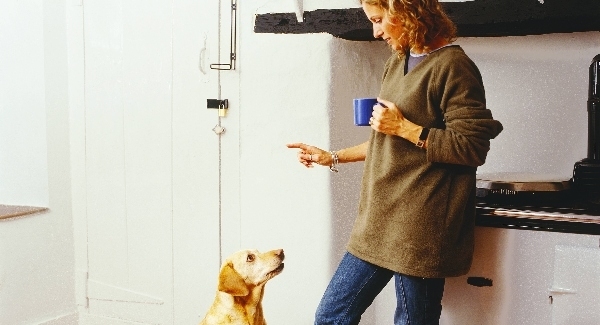
Installed in your den, their place in the hierarchy fiercely guarded, this is a 10-18-year commitment of money, emotion and square footage.
Permanently shedding, with nails holding them up square, teeth at one end and evacuation tubes at the other — dogs leave their mark on more than your heart. It’s easy to be knocked off balance by the soul-deep gaze of any puppy — who can resist?
I’m not persuading you to choose the right dog (we all have our favourites), but there are facts to consider before time pulls at the toggle on that pup, and the canine life raft inflates into 100lbs of live trouble.
WHICH BREED?
Working dogs (dogs bred for generations to do an agricultural or hunting job), are intelligent and energetic. Collies, for example, can become demented by a suburban existence and will herd speeding cars if not given sufficient exercise and attention.
Labradors, so neglected in driveways, and roaming estates across Ireland, are not suited to a latch-key life, and that’s according to the guidance of the Irish Kennel Club (www.ikc.ie).
Then, there are Rottweiler and Dogue de Bordeaux, as inert as forest sloths, but, frankly, I don’t keep anything in fur that’s big enough to potentially kill me or mine.
Read the full characteristics on more voluptuous breeds and ignore their hysterically adoring fan websites.
The UK Kennel Club, affiliated to our own, has a run-down of all types of pedigree dogs, if that’s your intended buy, at www.thekennelclub.org.uk/item/2102.
CARE OF YOUR DOG
If you can skip the joys of perpetually peeing and puking puppies, vouch for an adult rescue dog: you know what you’re getting and there’s the chance to give the dog back if things get seriously “ruff”.
If you don’t have an enclosed, sizeable garden and you’re out all day, it’s questionable to have a dog at all, and a responsible adoption agency will reject your advances.
Dogs are sociable, and even a scrap of Jack Russell needs a sizeable, independent romp, company and a warm lap. I lived next door to an otherwise lovely lady, who felt it appropriate to leave her heartbroken Afghan hound (bred for desert life), tied to a hollow block, whimpering from 7.30am-7pm, six days a week.
Dog creches are a rare pup, but we are lucky in Cork to have Nanci Creedon’s pioneering Creedon’s Doggie Daycare, on Vicar’s Road, which offers owners everything from day-boarding to grooming and personalised training. www.creedonsdoggiedaycare.com
GROOMING
Dogs shed all the time as their coats renew, and some breeds (shorter-haired, oddly) need regular attention to contain the worst. Get into a routine of grooming outside: do the outer and under hair when the coat is warm and dry. Brush the coat with the direction of the hair, in long strokes, avoiding soft-tissue areas such as nipples, rear end and genitals. The furminator (best priced on Ebay.ie) is a fabulous tool for lifting out the under hair, which forms so much of the dust bunnies.
Some breeds, such as Cocker Spaniels, are best professionally stripped (making the coat less dense) to create a more manageable picture, and many types of dog can be closely clipped out while retaining enough covering to be snug and comfortable.
OH THE MESS
The critical point for preserving your surroundings, with any dog, is its approach from the outside and a suitable bed.
If you can create those first few metres to sop up the sucking mud that gets into their pads, it will make a huge difference.
Water-loving mats placed inside the back door, or under a dog door, will grab a lot of muck.
Trace the dog’s path, and put two mats end-to-end, if needs be.
Long-haired breeds enjoy sloughing rain off their coats, and if they don’t have something to roll on they will rub the walls when they return. A washable emulsion can deal effectively with the worst of it.
If the dog is coming inside after the garden, create an area with a basket, bed or rug, where they can flop and dry-off.
Properly trained to a command word, they will stay even in an open-plan area until dry enough to come inside.
If you must have cream carpet, then dividing the house into community and no-go areas is the only option. Otherwise, washable tiling and hardwood flooring is far more paw friendly, and will forgive the worst digestive insults thrown at it.
Child stair gates are handy additions for keeping smaller dogs out of more delicate family rooms, while letting them see the action through the bars.
BEDS AND BUGS
Washable baskets and beds, with covers that slip off, are ideal. Combined with a proper worming routine, and spot checks for fleas and lice, they will keep your dog hygienic and happy.
Larger dogs enjoy a flop across a big cushion, so head them off the couch with something like snoozzze dog cloud, from €44, detailed with a water-resistant outer cover that washes in your machine at 30°C; www.zooplus.ie.
Resist letting all but the most quiet, clean dog on your bed. Apart from the dander, it gives many a snaggle-toothed tyrant an inflated sense of their place in the pack, and snapping can follow.
DON’T FORGET HUMAN HEALTH
Despite all our anthropomorphising, dogs are not human, and they carry a range of parasites that not only impact their health, but can be passed to humans on clothes, hands, food and soft furnishings. For a comprehensive rundown on everything you need to know, talk to your vet, and go online to the European Science Counsel for Companion Animal Parasites, a mouthful but an ultra-friendly resource for all pet owners; www.esccapuk.org.
Just because your dog doesn’t have fleas, it still needs a flea preventative, such as Flevox or Frontline Spot-on, and they work out at 50c-75c a week for a drop-on product for a medium-sized dog; www.medicanimal.com.
Q: I need a dog door for our small mongrel to get to the garden. What size will work and can I install it in a timber door?
A. If you can handle a drill and a jigsaw you should be able to penetrate the door. Use the stencil provided. Doors are sold according to the dog’s weight but measure your dog’s shoulders to ensure it has a few centimetres extra to get through without difficulty in a bound. Door prices start at €30 for a small-two way Staywell.
Q: I would love a greyhound and it seems there are plenty available on the rescue websites of the adoption agencies. Do they need a lot of run in the garden?
A. Oddly, greyhounds do not require a lot of exercise and are slobs who love nothing better than a warm lap and lots of attention. You will need to walk the dog and be aware that some hounds will not tolerate cats without a chase.
Q: Do I have to buy my dog a license?
A. Yes, licenses are the law and are available at any post office for €20. You can also get a lifetime license for the dog for €140, which at 7 years is a bargain as most dogs will make it to 10-12 or even longer.
Accidents are inevitable with cats and dogs, and carpet forms the perfect, soft artificial grass for a bit of quiet relief. Soaked deeply into the pad, the smell of urine will smell for weeks if not dealt with properly.
What you need: Paper towels, Baking soda, Enzymatic cleaner, White vinegar, Vacuum cleaner
Instructions:
1. Blot out as much of the wet stain as possible by standing on it on layers of paper towel (wearing your shoes!)
2. Shake out a little baking soda and when it has lifted the moisture and dried out, vacuum the spot. Repeat until the baking soda stays white rather than yellowing
3. Apply your enzymatic cleaner to the area according to the instructions and allow it to sit for the required period
4. Vacuum out.
5. If the smell persists, the bacteria causing the odour are still there. Put a cup of white vinegar into a bucket of warm water and apply to the area. Repeat with the enzyme treatment.
Note: Never smack a dog or cat if they wet the carpet —there can be a variety of excuses for this behaviour. Train them to go outside, or in a tray in the case of cats and ensure they have the chance to regularly do so.


CONNECT WITH US TODAY



Be the first to know the latest news and updates









