How Red Bull got its wings
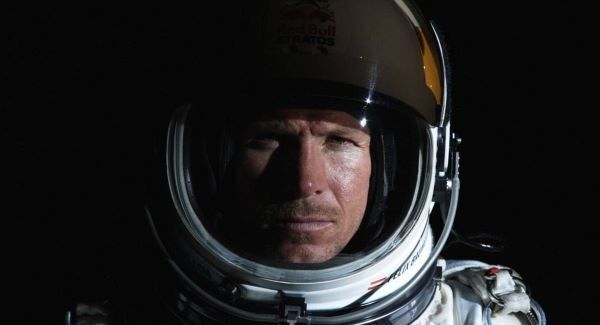
For the veteran basejumper, this was the culmination of seven years of planning, this was the last unconquered frontier. He’d leapt from all kinds of buildings and bridges, he’d jumped into caves, raced aeroplanes. He held the record of the lowest ever basejump, from the outstretched palm of Christ the Redeemer in Rio de Janeiro. Now, he was about to leap into the record books once more, and just as on every other occasion, the two colliding bulls were everywhere.
But to think of the event as sponsored by Red Bull is to miss the point completely. This was not some pre-existing phenomenon onto which the highest bidder slapped his logo. The space jump was Red Bull conceived, designed, planned, and executed. This was the brand achieving marketing nirvana, becoming one with the content, to the point where the two are indistinguishable.
It’s been conservatively estimated the exposure Baumgartner’s drop achieved for the company was worth in the region of €125m. Though this was its most daring stunt yet, Red Bull have been building bespoke events around their brand for years.
They arranged for stunt biker Robbie Maddison to leap onto the Arc de Triomphe from the Champs Elysees three years ago. A year earlier they built a private ‘halfpipe’ for snowboarder Shaun White, while this summer, they brought 34 of the world’s best BMX riders to London to perform in front of 10,000 fans at the Alexandra Palace. These are Red Bull events to the core. Guinness can claim a lot of things for its brand, but it didn’t come up with the idea of the All-Ireland.
It could all have turned out so differently for Dietrich Mateschitz. Back in 1982, the Austrian business graduate was working as marketing director for a German company called Blendax. Later acquired by Proctor and Gamble, the company made skin creams and shampoo. Its best known product was a toothpaste. It was a job that took Mateschitz around the world, but now, at age 38, he had lost his enthusiasm for the chase.
In an interview with a Bloomberg business magazine last year, he said: “All I could see was the same grey airplanes, the same grey suits, the same grey faces. All the hotel bars looked the same, and so did the women in them. I asked myself whether I wanted to spend the next decade as I’d spent the previous one.”
While working in the Far East, Mateschitz had noted the popularity of a locally produced soft drink called Krating Daeng. He asked around and was told it was a ‘tonic’, popular among blue collar workers.
Exhausted from his flight, Mateschitz tried some and found, to his astonishment, that it cured his jet-lag. The Eureka moment followed quickly, and ironically enough, it happened in one of those nondescript hotel bars; the Mandarin Oriental in Hong Kong.
He picked up a business magazine and came across an article which delivered this vital little nugget of information: the top corporate taxpayer in Japan in 1982 made tonics like Krating Daeng. Now the idea hit. Mateschitz would pack in his job as toothpaste salesman and sell this stuff in the West.
By sheer luck, one of his Blendax contacts in Thailand was the man who made the aforementioned Krating Daeng. When Mateschitz sat down with Chaleo Yoovidhya and ran the proposition past him, Yoovidhya went for it instantly.
They agreed that each would put $500,000 into the new company, giving them an equal 49% stake, with the remaining 2% going to Yoovidhya’s son, Chalerm. Mateschitz would run the company and it would be called Red Bull — a loose translation of Krating Daeng.
Mateschitz’ next job was to figure out how to adapt the drink for a Western palate. He decided to carbonate it, then went through the ingredients list. Some were dropped but the key ones were retained, among them a cocktail of B vitamins, glucuronolactone, sodium, an industrial strength dose of caffeine, and finally taurine, a synthetically produced amino acid. The result was a syrupy, sweet and yellow, with a taste generously described as ‘acquired’.
Mateschitz was no chemist. He knew that no matter what his new drink tasted like, without the right public profile, it would fail. He turned to a university friend, Johannes Kastner, who was running an ad agency in Frankfurt. Because Mateschitz had no money, the two men agreed a services swap. Kastner would work on the design and marketing of the product and in return, Mateschitz would do some freelance work for Kastner’s company.
Eighteen months and 50 designs later, they finally settled on design and logo: The familiar blue and silver can, emblazoned with two charging bulls against a yellow sun. But when it came to the slogan, nothing would satisfy Mateschitz, to the point where an exasperated Kastner told him to go find another agency. Mateschitz begged him to try one more time, and that night, at 3am, Kastner came up with it: ‘Red Bull Gives You Wings.’ The ad man called up his client the next day and told him it was the last slogan he’d produce.
It was at this point, with all his ducks in a row, that Mateschitz hired a marketing company to test his proposition. The results were not good. In a 2005 interview with Forbes magazine, Mateschitz recalled: “People didn’t believe the taste, the logo, the brand name. I’d never before experienced such a disaster.”
He should have walked away at this point, but instead, Mateschitz went ahead and established his company in Fuschl am See, a town just outside Salzburg. Red Bull, Mateschitz decides, will not compete with every other soft drink on the market. It will become its own category. The diminutive 8oz can will sit alone on the shelf, it will be an energy drink and consumers will be charged three times the price of any other soft drink for the privilege of drinking it.
What must have sounded like lunacy to his bank would turn out to be a master stroke. Afterwards, Mateschitz pointed out that if they charged a mere 15% more for it, it would be seen as no more than a premium soft drink. By charging many multiples of the price of a can of coke, he was making a clear, unambiguous statement. This isn’t pop. It worked.
In the 25 years that have passed since then, around 30bn cans of Red Bull have been consumed in 164 countries around the world. In 2011 alone, the company shifted 4.6bn cans. Red Bull currently employs 8,300 people, up from 7,750 in 2010. Mateschitz is Austria’s richest man, and, up until his death earlier this year, sleeping partner Chaleo Yoovidhya was the second richest man in Thailand.
Mateschitz honed in on extreme sports right from the beginning. He saw in that disparate group of thrill-seeking mavericks a philosophy that fitted perfectly with the amber-coloured pick-me-up he was trying to sell.
These people were outsiders, they were counter-culture, but most of all they were daredevils. And here was Red Bull: “Developed for people who want to have a clear and focused mind, perform physically, are dynamic and performance-oriented whilst also balancing this with a fun and active lifestyle.” It was a marriage made in marketing heaven.
And it was cheap. While the Pepsis and Cokes went after the icons and paid millions to have Michael Jackson or Britney Spears drink their product, Red Bull went downmarket. Mateschitz realised that as soon as some superstar raises your drink to his lips, it becomes mainstream and that edgy cachet you’re aiming for is lost forever.
In the last quarter century, more than 500 athletes have joined the Red Bull ‘family’. Some, like Formula 1 supremo Gerhard Berger were well known mainstreamers, but most are famous only among their fans; they are basejumpers, ice climbers, wakeboarders, waterfall kayakers, big-mountain freeskiers, parabungiskiwire-surfers… Felix Baumgartner has been in Mateschitz’ inner circle since 1996. Then, as now, Red Bull organised every event in which he participated.
Red Bull owns extreme sports in a way that just doesn’t compute with mainstream sports. There isn’t an extreme sports event in the world that Red Bull is not all over like a rash. Every year, the brand is rock climbing, wind surfing, cliff diving.
They brought the Cliff Diving World Series to Inis Mór last August and Red Bull Freestyle Ireland — a street football event, to Grafton Street in May.
Check out the events section of Redbull.com and you’ll find a map peppered with details of extreme events going on right now around the globe.
The Billabong Pipe Masters was the third and final event in the professional surfing world series, held in Oahu, Hawaii from Dec 8 to 20 last.
Then there’s Crashed Ice, a five-meet series in which former ice hockey stars race each other down mountains. This is what the promo material has to say about the second meet, in Saint Paul, Minnesota on Jan 24: “Two hundred of the toughest, fastest, ice cross downhill racers will go head-to-head through a downhill course full of mind-and-body-bending jumps, turns and slides — all against the backdrop of the historic Cathedral of Saint Paul with thousands of spectators bearing witness.’
Last year, when Outside Magazine named Dietrich Mateschitz the most influential person in the outdoors, it estimated that Red Bull had poured $300m into extreme sports. “Without Red Bull,” said the magazine, “it’s unlikely the extreme-sports boom would have happened at all.”
In addition to wrapping itself around the nascent extreme sports movement, Red Bull created events like the Red Bull Flugtag, in which participants test drive home-made flying machines, all of which totter cartoon-like in the air before crashing down into the water. First run in Vienna 20 years ago, the Flugtag is now an annual event in more than 35 cities. At the beginning, there were no TV ads.
Those cutesy ‘Red Bull Gives you wiiings’ cartoons that began appearing on our TV screens in the late 90s ran counter to most of the marketing that Mateschitz endorsed, and was an attempt to capture the older end of the market as new entrants flooded into the sector that he had created.
In the beginning, there were graffiti style billboards, and a meticulously-targeted campaign to get that distinctive little can into the right hands. The brand zeroed in on hip hop, sponsoring rap battles and break-dancing competitions. They created the Red Bull Music Academy, a globetrotting series of music workshops and festivals.
But it was when Red Bull arrived in bars that a whole new side to the drink emerged. Red Bull as mixer, and Red Bull and vodka in particular exploded in popularity in Europe in the early 90s. Clubbers brought the cocktail to Ibiza, where that same marketing message, about endurance, performance and fun segued perfectly with the drug-fuelled hedonism of Europe’s party island.
It was in that environment that the myths began to attach themselves to the drink. Taurine, the synthetic amino acid that Mateschitz had retained from the Asian version of the drink, was, according to one urban legend, derived from bull testicles. In another it was actually bull semen.
With any other product, these kinds of stories would have been instantly stamped out by PR people. For Red Bull, however, they only added to the mystique. The company set up a page on its website that celebrated these myths. In an interview with Business Week last year, Mateschitz said the establishment unease that surrounded the drink in the early days, became the lifeblood of its marketing.
“In the beginning, the high-school teachers who were against the product were at least as important as the students who were for it,” says Mateschitz. “Newspapers asked, ‘Is it a drug? Is it harmless? Is it dangerous?’ That ambivalence is so important. The most dangerous thing for a branded product is low interest.”
Wild as these rumours were, they blossomed in a regulatory environment which didn’t always look with favour on Mateschitz yellow concoction. Because some of the ingredients — taurine in particular — weren’t present in any European product up to the arrival of Red Bull, it could not be introduced into any country without the approval of the local health department.
Austria was the first to give them the nod in 1987, but not every jurisdiction was as quick to follow suit. Norway, France, and Denmark refused entry for years. They classified the drink as a medicine and only allowed it for sale in pharmacies. The only version available in France was taurine free, despite the fact that Mateschitz sent a delegation of lobbyists, armed with all kinds of scientific studies, to petition for its approval up to 10 times a year.
Finally, in 2008, the EU introduced a regulation which stipulated that any product must be allowed in the absence of proof that it was harmful. The French finally got their first shot of taurine.
Throughout that period, health scares flared repeatedly. In 1991, two young Swedes died after a night out in which they’d consumed vodka and Red Bull, while another died when he drank several cans after an intensive gym workout.
Here at home, a Limerick teenager, Ross Cooney died at a basketball match in Dublin in Nov 1999 after drinking four cans. Though the inquest found he had a heart condition as a child, the coroner called for more research into the health effects of the drink.
While some jurisdictions have warned against mixing Red Bull with alcohol, most of the research hasn’t provided conclusive proof of anything. A study from Dublin’s St James Hospital in 2000 found that consuming two cans of the drink causes some arteries to dilate, precipitating a fall in blood pressure, while other arteries stiffen, leading to higher blood pressure.
Though the two effects may cancel each other, adding alcohol to the mix makes results unpredictable. A French study, meanwhile, found that rats fed with taurine exhibited bizarre behaviour, including self mutilation.
As recently as last month, the Canadian press reported that some provinces were considering restricting the sale of Red Bull following the release of Health Canada papers which linked three deaths over the past decade to the consumption of the drink.
The company, of course, has carried out its own research, all of which backs up its claims that Red Bull increases performance, reaction speed and concentration, improves vigilance, stimulates metabolism, and “makes you feel more energetic and thus improves your overall wellbeing”.
Regardless of where the truth lies in all of this, the fact that a soft drink is able to thrive in a world where it is connected from time to time with teenage death tells you something about its endurance.
This is a cash-rich company; revenues last year came to €4.25bn. A very substantial chunk of that revenue — somewhere between 30% and 40% — goes on marketing. The equivalent figure for Pepsi is somewhere around the 9% mark.
Once the company had embedded itself into extreme sports, it set out to established the same hold on mainstream sports.
Prior to 2004, Red Bull had sponsored a Formula 1 team. By then, however, the company’s rich revenue stream was strong enough to apply the Mateschitz formula and swap sponsorship for ownership. That year, Red Bull bought the Jaguar Formula One team from Ford and renamed it Red Bull Racing. Then Mateschitz went on a spending spree. He bought the Minardi team from its Australian owner and renamed it Scuderia Torro Rosso — Toro Rosso meaning Red Bull in Italian.
He bought the Austrian football club SV Austria Salzburg and the US club MetroStars, both of which were, inevitably, renamed Red Bull Salzburg and Red Bull New York. Mateschitz has also picked up a Nascar team and a Formula One circuit. In 2007, he started a new soccer team in Campinas, Brazil, called, of course, Red Bull Brasil.
He’s also bought and renamed both a German soccer team and a hockey club.
Everything about the brand belies the ordinariness of that syrupy yellow liquid that might or might not be good for you. Red Bull HQ remains where it all begun at Fuschl am See, housed in a super cool volcano-themed building at the centre of a campus lake.
Then there’s Hangar 7, a striking bubble of glass and steel beside Salzburg Airport, the architectural expression of the unblinking coolness of the Red Bull brand. This multifunctional building incorporates bars, a Michelin-starred restaurant and Mateschitz’ collection of vintage aircraft, as well as the Flying Bulls, a fleet of 15 show planes that carry the Red Bull message to airshows around the world.
What this all adds up to is the reality that Red Bull no longer thinks of itself as a drinks company that makes ads. It’s a media company that makes drinks. Five years ago, it established Red Bull Media House in Salzburg as its content arm, adding a second base in California last year. Check out the website.
Though the logo is everywhere, the drink itself is not. What you will find is a computer games developer and an in-house record label “dedicated to offering artists long-term development opportunities”. So far, the on-site recording studio has played host to 50 Cent and MIA.
Another Media House department, the Red Bull Content Pool is a “one-stop gateway to our full media catalogue: plug-and-play web clips documentaries, news pieces, photo shoots, the latest interviews, and accompanying editorials”.
Also on site, Terra Mater Factual Studios, a “production unit that offers a variety of programming for TV, cinema licensing, and home entertainment. Its productions focus on wildlife, nature, science, history, and factual entertainment, and emphasise visual excellence, innovative technology, and ethereal storytelling.”
Nor is all this about selling cans of Red Bull. This content arm is not an in-house ad agency. It’s a profit centre, expected to contribute to the bottom line in its own right. And it’s working. The Red Bull Media House 2011 film, The Art of Flight cost $2m to make, and made the top of the iTunes movie sales chart for a week, retailing at €10.
This isn’t sponsorship, this isn’t product placement. Sure, the logo is in every scene, but this is simply the brand being the brand. Take the coolest ad you’ve seen in the last decade. Would you consider paying €10 to download it?
The Art of Flight was just one project from 2011. Last year too, Red Bull Media House became a partner in YouTube’s plans to publish original content, it developed reality TV ideas with producer Bunim/Murray and signed a partnership deal with NBC for an action sports series.
The company’s glossy mag, Red Bulletin, which comes as an insert with a range of global titles, was also expanded into the US, giving it a worldwide distribution of 4.8m.
When US business magazine Fast Company Magazine named Media House as one of the world’s most innovative companies, it pointed out that this accumulated body of production and distribution expertise gives Red Bull a status in the sports world that transcends sponsorship.
“That secures not just loyalty but a direct link — a symbiosis, really — between brand and subculture.”
So to its greatest coup of all. The Baumgartner drop was tailor-made for the digital age, and represents the high water mark of Dietrich Mateschitz’s marketing nous. Media House was there to capture the event from every conceivable angle, then slice it in a thousand different ways for its range of media channels. As Felix stood poised on the lip of his capsule, more than eight million were viewing online.
Half the worldwide trending topics on Twitter at that moment related to the jump and the second he landed, 15 minutes later, Red Bull sought questions on Twitter and Facebook to put to the recuperating Baumgartner, just as soon as he was ready to take them. It’s hard to see how they could have squeezed any more out of it.
Red Bull? It should never have worked. You take a sickly sweet, berry-flavoured soft drink, fill it with ingredients that frequently don’t pass local health and safety laws, then charge four times what every other soft drink is charging.
Then you transform it into a global phenomenon. Done and dusted.















