Earning its place in the economy
THE Arts Council first met on Jan 31, 1952. One member, Chester Beatty, was absent, but the five present — Msgr Pádraig de Brun, Richard Hayes, Thomas McGreevy, John Maher and the Earl of Rosse — concerned themselves with housekeeping: opening a bank account, signing cheques. No allocations were made from a government grant of £10,000.
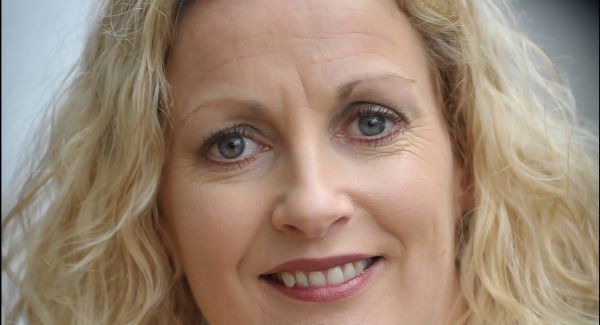
Sixty years on, it’s more complicated, and busier. Arts Council director Orlaith McBride is at the end of a hectic week at their Merrion Square offices, where a large chunk of next year’s €63.2m allocation has been disbursed to arts organisations.
Allocations are made by peer review, McBride says. “We have our standing priorities, to everything from Aosdana to the Abbey Theatre to touring. So we allocate to those. Then, we look at all areas of arts practice, of which we have 15, everything from theatre to visual arts to dance, but also arts participation, education. We put those 15 on the table, and then we allocate across those arts forms.”
The Arts Council has come a long way in six decades, but in the last few years what has been startling is the amount of money the body has lost, not the amount it is allocated.
In 2007, the council was granted €85m by the exchequer, and the talk was of reaching €100m. Next year, it will get €59.9m. To put that in perspective, the Vienna State Opera receives €56m a year from the Austrian government.
A cut of 30% seems disproportionate, and, it must be said, typical of the last few years, where areas of relatively small expense have been slashed. Arts spending is, politically, a soft target. It’s hard, after all, to imagine a Liveline programme dedicated to outrage over cuts to arts spending.
“I think, over the last two years, the cut has been proportionate,” says McBride. “But in 2008, 2009, 2010, we really suffered. We were in crisis management. For those years, we were discombobulated completely, because we were in shock, actually. We were trying to recover the situation. Now, there’s stability there and we know, more or less, where our funding is going, so we can be strategic and look to the future, as well as mind the present.”
This scale of cut comes in spite of a proliferation of reports by the Arts Council into the exceptional value for money of arts spending. Not only does most of the spend stay in local communities or end up back with the exchequer, but money spent on the arts has a high multiplier effect, because when people come out to see a show or an exhibition, they are taking taxis, buying drinks, going to restaurants.
All this seems to have fallen on deaf government ears. But McBride doesn’t think so. “No. I believe 3% of a reduction last year was testament to our ability to make an argument with the Government.
“When I go in and meet Brendan Howlin or Minister {Jimmy} Deenihan, we can clearly articulate that the arts are not the semi-detached thing that just allows us to feel good about ourselves, but that, actually, the arts are part of the economic activity of the State,” she says.
“All of those reports are necessary to strengthen our arguments when we are having discussions with the government departments. But it’s also true. It’s not as if the arts are somehow not contributing to the Irish State.”
The Arts Act ensures that the Arts Council is an independent organisation, free from political interference. Politicians do not ring up making representations on behalf of certain organisations, says McBride.
Even so, there are subtler forms of political influence: for instance, the recent public suggestions from Deenihan that organisations might look for ways to “raise funds independently of the taxpayer”. McBride has sought to clarify the role of philanthropy. “We were very clear when the minister had a philanthropy conference a couple of weeks ago. I stood up and was very clear that this is not about displacement funding. It’s about, unfortunately, replacement funding. An organisation should not be penalised, so that if it raises money its grant will be cut accordingly. The State can’t abdicate responsibility to the arts.”
The word ‘philanthropy’ conjures up images of capitalist tycoons buying respectability through patronage and endowments. Of course, Ireland, unlike the US, has no deep history of such people.
But McBride has other ideas about the meaning of ‘philanthropy’.
“You need to look at who’s supporting you,” she says. “If you’re Wexford Festival Opera, you need to look at who’s coming year on year, and ask ‘what are their connections? Could they possibly give to the festival’? Organisations have no tradition of that in this country. They have not been good at looking at audience data, but they are beginning to look at the potential of that. It’s not about saying there’s loads of philanthropic money over in America, if we could only bring it here. If you’re a tiny organisation, you’re not going to look to that. Organisations need to look at which individuals can support them, even if it’s to the tune of €100 a year through friends’ programmes. There’s no white knight over in the corner with loads of money, it’s about the people around us. This isn’t going to happen overnight, but we need to start somewhere. The reality is that I don’t know when we will ever get back to €85m, but we’ve created an infrastructure that needs to be supported.”
That infrastructure is another Celtic Tiger legacy. In keeping with the building craze, we spent lots on the bricks and mortar of arts infrastructure, on multidisciplinary centres. A great thing for local communities, to be sure, but the challenge is to prevent them becoming the arts equivalent of ghost estates.
“We have 58 venues that we support around the country,” says McBride. “Most of those would be local authority supported, as well. It’s a huge challenge for us to ensure there’s work out there that can go into those venues, so we invest a significant amount in touring. It’s important that people in Kerry, in Donegal, in Wexford, have access to high-quality work, as much as people in urban centres. Our touring budget is very significant and it has not reduced in the last few years. People are entitled to see work of a high standard. As someone who comes from the country, I am absolutely committed to having that spread.
“The arts have really flourished in the last 25 years in this country. People are seeing the arts happening in their own towns and communities. If you’re a young person in Sligo, you’re at Sligo Youth Theatre, Blue Raincoat, you can go up to the Model arts centre. There is activity.
“The arts are not something that happens up in Dublin for the bourgeoise. They’re local, bedded into the lives of people,” she says.
That local penetration is, for McBride, the signature achievement of the Arts Council. She speaks from experience, having helped found Tallaght Youth Theatre in the 1990s and having worked in regional and youth arts, before taking her role at the council.
“I went down to Birr recently, where they launched the local arts plan,” McBride says. “And everyone in the town was there in the theatre. It’s become normalised. There isn’t enough money, there isn’t enough activity, there isn’t enough investment, but I genuinely believe that people are connected into the arts in a way they, perhaps, were not 20 years ago.”
CONNECT WITH US TODAY



Be the first to know the latest news and updates

















