Entering a new cycle
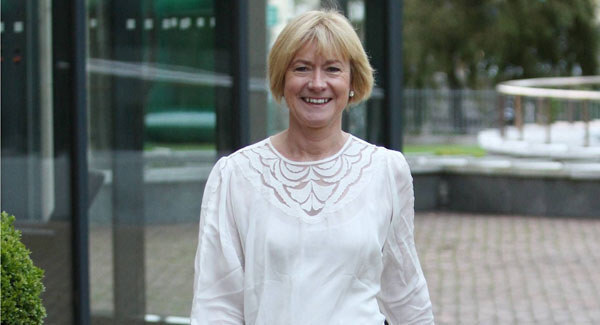
Medical director Dr Shirley McQuade attributes the reduction to two studies — the 2002 Women’s Health Initiative, (US) and the 2003 Million Women Study (UK). These linked HRT to increased risk of breast cancer and stroke. “At that point, a lot of women came off HRT. Doctors were reluctant to prescribe it,” says McQuade.
The knee-jerk reaction was in response to flawed reporting of the studies. “The British study didn’t ask women when, or for how long, they’d been on HRT. The US study included women who’d started using it when they were 60 or 70. When they looked at women who started HRT when they were peri-menopausal, they found these younger women didn’t have the same increased risks.
“For peri-menopausal women, the risk of breast cancer compared to someone not on HRT only starts increasing after the woman has been on it four or five years. Anyone experiencing menopause under age 45 would be recommended HRT to reduce osteoporosis and heart-disease risk,” says McQuade.
While researching for this feature, I asked a dozen high-profile Irish women to talk about their menopause — only three did. This doesn’t surprise McQuade. She says women compare notes with their friends about menopause but don’t talk about it with younger women. “There’s this taboo about age — menopause is an indication you’re getting older,” she says.
Menopause, with its potentially troublesome symptoms, isn’t a cheery topic. “People come with a multitude of symptoms, yet some mightn’t have hot flashes or night sweats,” says McQuade.
While many women use alternative remedies (black cohosh, red clover, soya), the jury’s out on their effectiveness.
McQuade says women of normal weight, who exercise and have a balanced diet, do better with menopause than women who don’t exercise, are overweight, drink lots of coffee, and smoke. “If you’re fit and lead a healthy lifestyle, symptoms are either less, or you’re able to cope better with them,” she says.
Menopause implies loss — of fertility, of the capacity for pregnancy, and, sometimes, of sex drive. It’s a transition: women have to redefine their femininity; reframe themselves as women.
In 2008, a Women’s Health Council survey of 39 Irish menopausal women found that some of them experienced grief at the permanent ending of menstruation. The majority of survey participants also reported a reduced interest in sex, compared to when they were younger.
“I was 35. My periods were irregular and I was feeling tired. The doctor said ‘you’re not even peri-menopausal — you’re menopausal’. I was relieved it wasn’t something else, but shocked — it never crossed my radar it could be that. ”
“There were about five years of really bad symptoms. The worst was hot flushes. Waking up in a lather of sweat, seven nights in a row, you feel you’re going loopy. Hot flushes tired me out so much because they envelop you.”
“From 35 to 40, I took HRT. It was fantastic, but I wasn’t comfortable about taking it for a long time, so I came off it. That was like going cold turkey — one day you’re fine, the next all the symptoms are back. I took black cohosh, which really worked well for me. I had the symptoms, on an off, through my 40s, with diminishing severity. Every so often, I still get the odd hot flush.”
“I’m quite happy not to have periods — it’s immensely liberating. I have the same energy as I’ve always had. It gave me a sense of my own mortality. I could put on all the anti-ageing creams I liked, but my body was still tramping along to its own clock. That was quite a shock, which took a while to get over. In the end, I had to accept I couldn’t control this, which, in itself, was liberating.
“Younger women worry a lot about what people think of them — older women are more confident, maybe because they’ve gone through this [menopause] and come out the other side.”
“I hadn’t wanted to have children. But when I realised it wasn’t my choice anymore, that I wouldn’t be able to have children, it made me feel, ‘I’m a person, I’m not a female person’. Previously, I’d had a choice as a woman — now that choice was taken.”
“I didn’t mind speaking about it. Maybe, because I was younger, I didn’t think people were going to label me some mad old bat. If you’re older and start talking about it, maybe they put you in the category of an old woman.
“In our culture, youth is prized so highly — the idea that you’re not in control of what’s happening to you is completely alien.
“People don’t want to talk about moving on from the glossy hair, the glossy skin.”
“I was 48. I had no warning. My periods just stopped. I had just left [my husband] Frank. I had young kids. I didn’t really expect it and I didn’t care until it got really bad, about 18 months in.”
“I had hot flushes, where I’d get up in the middle of the night and be drenched. I was roasting all the time. I remember doing festivals in Australia and being absolutely crimson red in the middle of a gig. I said ‘I’m having a moment’. And the women shouted: ‘down here, Mary, we call them power surges’.”
“I went to the doctor and said ‘give me the bloody drugs, quick’. I took HRT for almost two years. I thought that’d be the end of it — I didn’t know I’d be back to square one once I came off it. I went back to the gynaecologist and asked ‘what’s the story with the drugs’? She said she could give me 50 articles that say it’s OK and 50 that say it isn’t. I felt the risks outweighed the benefits, so I said ‘fuck it, I’ll just embrace it and ride it out’.
“I’m now down to one or two hot flushes a day. It doesn’t interrupt my sleep. I limit my coffee intake — a double espresso today had me crimson within minutes.”
“I think of the passing years as more of a watershed than menopause, in particular. I sailed through 51 to 54, but at 55 I said, ‘oh Jesus, my life is over’. I have no idea why 45 or 50 didn’t do it. The fear lasted a whole year. I didn’t want to go over that threshold. I feel grand now. I’ve got more gigs than ever. I’m making a documentary, writing a musical, I’ve got a new album out. I’m thoroughly embracing this third phase of my life.”
“I’m still a woman, just an older woman. I’m in far better shape than I ever was. I don’t think it’s a coincidence that I legged it into the salon and cut all my hair off. It’s heralding this new phase that I feel has come out in me in the last few months — I’ve made the transition from young woman to older, wiser, grandmother woman.”
“I talk about everything to everybody — for me, it’s the only way. I have no embarrassment about it. There’s a lot of stigma attached to growing old. Menopause signals the end of reproduction — I’ve realised it’s just another part of my journey. A lot of wisdom comes, too — I don’t get bothered as much by little things.”
“I’m probably going through it. My only indication is I stopped menstruating last year. I was a late starter, at 16 — now I’m a late finisher.”
“My friends talk about hot flushes, depression, insomnia, weight gain — I don’t feel any of that. If hot flushes mean you get very hot at times and you’re fine a couple of minutes later, I’ve noticed that in the last couple of months. People say they have to get up in the night and change their bedclothes. That hasn’t happened to me.”
“Maybe because of my general lifestyle. I eat healthily — fruit, vegetables, fish, chicken. I’ve been a recreational runner all my life. I still am.”
“I’ve always had lots of energy. I still do. But I don’t know what my levels are going to be like down the road, if I’m only going through menopause now. I live my life for the future rather than the past. It’s what’s happening tomorrow that interests me — I don’t tend to look back.”
“I was getting periods regularly up to last year. It was a relief when they stopped. I thought ‘yeah, that’s great, that’s done now’. Every woman wants to look her best and I’ll continue to do that. I don’t want to say ‘oh, now I’m 58 — I have to start behaving like I’m in a different phase’. I believe it’s about the way you feel inside about yourself, how at ease you are with yourself as a person, rather than about the physical changes.”
“It’s a natural process — what’s there to shy away from? The conversations seem mostly to happen among women who are going through it or have gone through it. Talking about it publicly might be difficult for some — I can understand why women are comfortable talking about it only to other women.”

CONNECT WITH US TODAY



Be the first to know the latest news and updates









