Logo branded for life
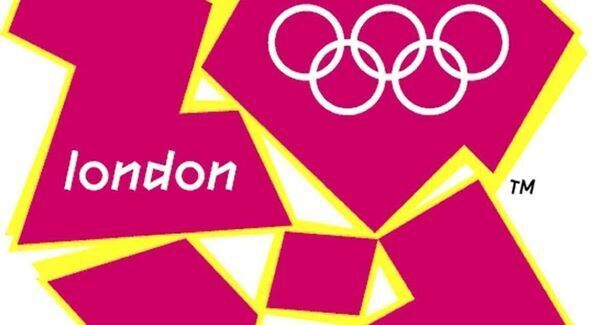
THE logo for the London 2012 Olympics was unveiled on Jun 4, 2007. It was like a bomb going off. On the streets and on web forums, there were hackneyed critiques (the kind voiced every time an Olympic logo is unfurled) — that its jagged representation of the year ‘2012’, with Olympic rings embedded in the zero, could have been cobbled together by a child.
But the vitriolic nature of the criticism caught the Olympic Committee off-guard.
The logo was described as graffiti, or, worse, as a distorted swastika. The author Tom Lutz said “it represented the multicoloured vomit spray across the capital’s pavements at 3am on your average Sunday morning.”
Someone likened it to the cartoon character Lisa Simpson performing fellatio.
Someone else said it was like a “toileting monkey”.
The Sun newspaper got a macaque monkey (and a blind woman) to improve the design.
Questions were tabled about it in parliament.
The then mayor of London, Ken Livingston, said it was “a catastrophic mistake” and that Wolff Olins, the brand consultancy that created it, shouldn’t be paid the £400,000 owed to them.
Thirty thousand people signed a petition to scrap it.
The designer Stephen Bailey said it was a “a puerile mess, an artistic flop and a commercial scandal”.
There was a whiff of manufactured outrage to the barbs. Lord Sebastian Coe, chairman of the Olympic Committee, said its edgy design was to appeal to the youth: “We weren’t going to come to you with a dull or dry corporate logo that will appear on a polo shirt and we’re all gardening in it.”
Shoppers approved. In Oct, 2008, Adidas reported that clothing branded with the logo accounted for 20% of sales, for merchandise that only took up 5% of its floor space at its flagship Oxford Street store.
Meanwhile, conspiracy theorists claimed that its five puzzle pieces, once unscrambled in a certain way, spelt the word ‘Zion’ (complete with dotted ‘i’), which is biblical for the city of Jerusalem.
Last year, Mohammad Aliabadi, the head of the National Olympic Committee in the Islamic Republic, wrote a letter to the International Olympic Committee president, Jacques Rogge, in which he complained it had been “spawned out of some people’s racist spirit”.
He said that “the use of the word ‘Zion’ by the designer of the Olympics logo … in the emblem of the Olympic Games 2012 is a very revolting act”.
A spokesperson for the London Olympics denied a pro-Israeli conspiracy in its design.
It seems to be the norm for Olympic logos to attract opprobrium.
The Sydney logo of 2000, with its boomerangs and the Sydney Opera House, comes to mind. It was lambasted for being bland and literal.
When the logo for the 2016 Olympics, in Rio de Janeiro, which resulted from a competition between 139 agencies, was unveiled on New Year’s Eve, 2010 it was criticised for being a rip-off of Henri Matisse’s famous painting The Dance.
The logo designs, which date to Paris in 1924, have rarely been abstract and eye-catching. The bold brushstrokes of Barcelona’s in 1992 and the simple, mesmerising swirl of Munich’s in 1972 are two exceptions.
Interestingly, Otl Aicher, the graphic artist of the 1972 logo, also gave us pictograms for the event’s different sports that summer (the familiar, angular men-at-work style), which have become ubiquitous today.
Something we won’t be seeing again is the promotional video for the 2012 logo.
It was hastily withdrawn after its premiere screening. Its juddering, florescent colours apparently caused 30 people to have epileptic fits on viewing it, according to Epilepsy Action, which castigated the Olympic Committee for not testing it for flashing images and for failing to carry a warning.
A Briton rang one London radio station claiming he suffered a seizure after it broadcast. “The logo came up on TV,” he said, “and I was thinking about the 2012 Games and then I was out.”
IT ain’t easy being an Olympic mascot. Waldi the dachshund (above) was the first official mascot, in 1972. He set a trend — animals have outnumbered humans four to one, but few (which include a beaver, a raccoon, a bear, a wolf, an owl, a bald eagle, a kookaburra, a platypus, and an echidna) have won gold in popularity stakes. Cobi the cat, from Barcelona ’92, is an exception. He parlayed his fame into a TV show, which eluded Izzy, the blue blob chosen for the Atlanta Olympics in 1996, who Time magazine said looked like “a sperm in sneakers”.
This year’s — the pair, Wenlock (inset, right) inspired by Much Wenlock, a town in Shropshire, England which hosted a precursor, in 1890, of the 1896 Athens Olympic Games) and Mendeville (named after the hospital in which the Paralympic Games were founded) have been pilloried. They resemble bottle-openers. They each have one eye, a ‘camera lens’ to see the world, and yellow lights on top, a nod to London’s famous black cabs. Critics say their design is a metaphor for humanity’s inability to evade global warming. It’s difficult to warm to their alien looks, which some have labelled “creepy”.