Life Hack: Doing the Christmas shop? Here’s how to pack your groceries
This will help avoid arguments at the tills
Life Hack: Doing the Christmas shop? Here’s how to pack your groceries

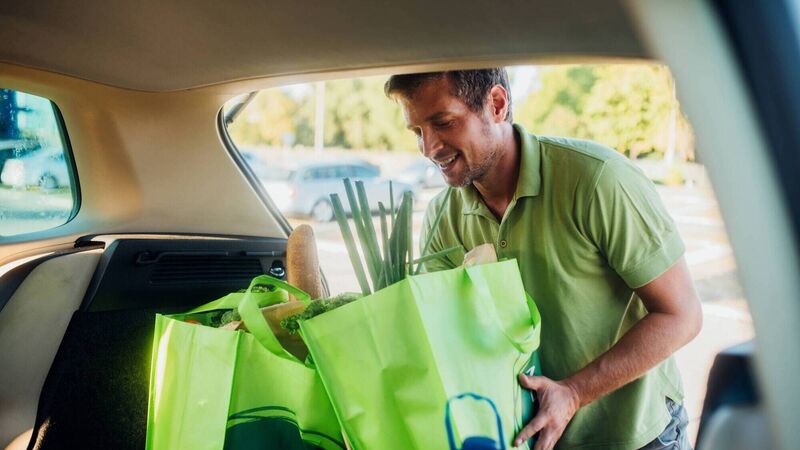
Don’t be afraid to move some bags into the car, utilising the footwell to keep more fragile groceries secure.

Christmas Day is only a few days away so chances are you’re probably going to do that final 'big shop' very soon. From placing items in the trolley and organising them into bags for the car to how to store them, here are a few pointers on packing groceries to prevent any festive arguments at the tills of your local supermarket.


In the trolley

True packing success starts with your trolley. We’ve all been the frantic person piling items haphazardly on the conveyor belt only to be packing them in a similarly chaotic method at the other end.

Instead, when placing items into the trolley as you make your way around the shop, try to keep like with like: all frozen foods stay together, all raw meat goes in one spot, keep fruit and vegetables in another section, etc. this means when you get to the till for your shopping to be scanned and packed, you can easily keep all those pre-arranged items together on your shopping bags. When all your meat comes through together it’s easy to get them all into the same bag, similar for your cleaning items, your fresh fruit and vegetables, and your frozen goods.

This will also speed up your unpacking at home, as typically every item in a bag will be destined for the same location, be it fridge, cupboard, freezer, or beyond.

In bags

As mentioned above, keeping like with like as they move into your shopping bags is key to prevent cross contamination and spoilage. If you’ve forgotten to do this in the trolley or feel you need extra oversight, you can also ask the cashier to help by placing similar items together as they’re being scanned.

By ensuring all frozen goods are bagged together, for example, you’re maintaining a temperature zone so they will take longer to defrost on the trip home, keeping the produce good for use. This also applies to cold fridge items such as milk, cheese, ham, and yogurts.

Another factor to consider when packing is weight. It may seem obvious but remember to keep lighter and more fragile items at the top of bags. You don’t want to unpack only to discover you’d placed your eggs at the bottom and they’ve all broken, or that your fresh loaf of bread has been pancaked under a bottle of Tanora.

Put your cans, bottles and heavy items at the bottom of bags and lighter, more fragile items such as bread, eggs and tomatoes on top — it was also make them less likely to fall due to being top-heavy.

Another good method to use is to make ‘walls’ around the sides of your bag with boxes such as cereal to protect items in the centre from any bumps and bangs as they’re being transported home.

And remember it’s important to keep raw meat separate from other foods to prevent their juices from leaking onto other foods and contaminating them. No one wants food poisoning for Christmas.

In the boot

Speaking of bringing them home, you don’t want all of your good work to be undone by careless placement in your car boot.

Place bags carefully inside the boot and make sure they are secure, and not likely to move around while you’re driving. Use bungee cords or cargo nets to secure them if necessary and, again, make sure delicate items are placed on top to prevent crushing.

If you don’t have anything to secure them, you can use crates or baskets to keep everything stable and stop items from rolling around. I keep a pop-up crate in my boot for this, and it also helps to transport several bags at once into my home when we arrive.

Don’t be afraid to move some bags into the car, utilising the footwell to keep more fragile groceries secure.

At home

When you get home, unpack by prioritising items that could spoil faster. This means you’re probably going to the freezer first to prevent foods from defrosting and keep them as fresh as possible. Then it’s on to the fridge and finally ambient temperature locations such as cupboards and pantries.

x

More in this section

Cookie Policy Privacy Policy Brand Safety FAQ Help Contact Us Terms and Conditions

© Examiner Echo Group Limited