Eight in 10 women say their caring responsibilities increased during lockdown
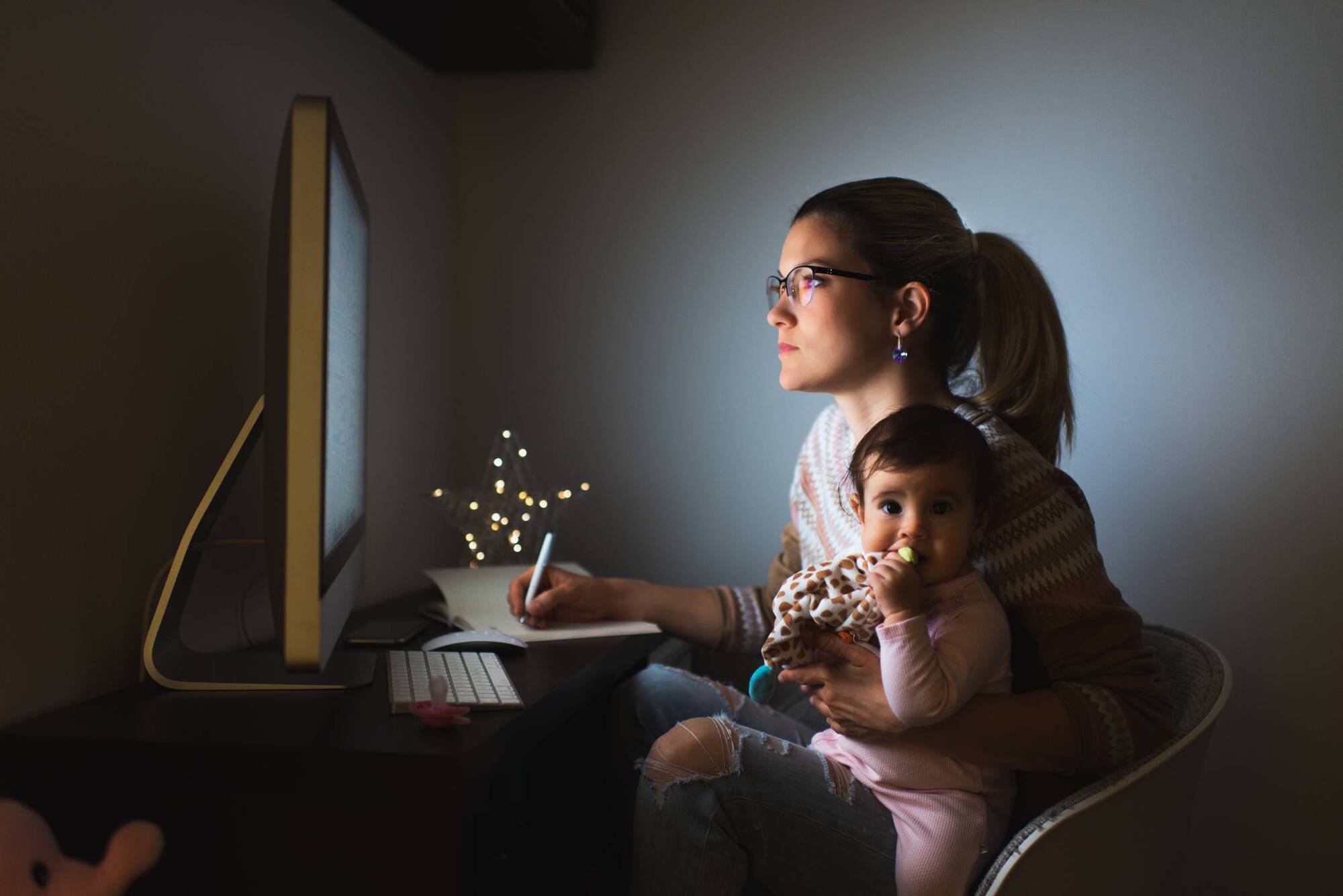
Seventy-one per cent of women surveyed were looking after children, adults — or both — in their own home. Picture: iStock
WHAT kept Sarah-Louise Boylan sane during the first lockdown was the business administration and digital skills course she was doing with An Cosán.
An Cosán is a national social enterprise serving communities struggling with inequality and poverty across Ireland – it originated in 1986 when the late Ann Louise Gilligan co-founded it with Katherine Zappone.
Based in Jobstown, Dublin, 26-year-old Sarah-Louise’s son, Gavin, had his second birthday shortly before Ireland went into lockdown in March. “It’s just me and him living in my apartment. I suffer from anxiety, and lockdown sent me into panic. I moved back with my parents for the first few weeks. My little boy suffers from his chest and I just had this dread of getting the illness.”
Sarah-Louise’s feeling of being overwhelmed and anxious this year is shared by many women, according to the National Women’s Council (NWC), who recently launched their report into women’s experiences of caring during Covid-19. More than 1,400 women participated in the online survey. Respondents included women working from home, working on the frontline and those engaged in fulltime care.
Seventy-one per cent of women surveyed were looking after children, adults – or both in their own home. More than eight in 10 said their caring responsibilities increased during lockdown. And the report highlights an unequal distribution of care responsibility – many women living with another adult reported caring wasn’t shared equally in their household, with the ‘lion’s share’ falling to them.
NWC director Orla O'Connor says the report highlights what women had been telling NWC: about the enormous pressures, stress and anxiety they experienced during the first lockdown. “In many homes, women were the primary person caring for the household. Many were juggling full-time care to children at home and/or care for older adults while doing their paid work from home or on the frontline,” she says, adding that lone parents – confined to their household – experienced significant difficulties.
O’Connor cites positive measures benefitting women in the second lockdown – the introduction of bubbles and schools/childcare facilities being open. But it’s imperative the Government takes urgent action to address Ireland’s care crisis, she says. “We need to significantly develop our public caring infrastructure, including public and affordable childcare, universal mental health services, universal social care services and better provision of paid family and care leave.“
Meanwhile, Sarah-Louise, with no green area for her toddler to play in, is grateful for what’s good in her life. “Gavin’s a model child. He amuses himself. He walks around singing. But there are days I just know he has cabin fever.”
- Sixty-two per cent of women surveyed were employed, 12% were full-time homemakers, nine per cent were self-employed – of the self-employed, 21% were essential workers.
- For 85% of women, caring responsibilities increased during lockdown – 52% said by ‘a lot’, 33% by ‘a little’ and 15% said caring duties didn’t increase.
- More than half of women said they’d less time for their mental health/wellbeing.
- Usual outlets women relied on for self-care pre-Covid (socialising with friends, having time to themselves, often while commuting), were no longer possible due to restrictions/increased responsibilities.
- See: exa.mn/CaringDuringCovid
CONNECT WITH US TODAY



Be the first to know the latest news and updates