Joe McNamee: What does it take to be the food capital of Ireland?
There has been a drive for some time to make Cork ‘Ireland’s Gastronomy Capital’, and to secure the official title of ‘World Region of Gastronomy’, by 2030

The early teens of this century saw the beginning of an inexorable Michelin rise in Ireland, with more and more restaurants around the country earning Michelin stars.

A new portfolio of starred restaurants was often sufficient to dub a destination the new ‘food capital of Ireland’. Kilkenny regularly touted itself as the ‘food capital of Ireland’, only second to San Sebastian, in Spain, in terms of stars per capita. Galway too was thus anointed, especially when Kai, Loam, and Aniar arrived on the scene.

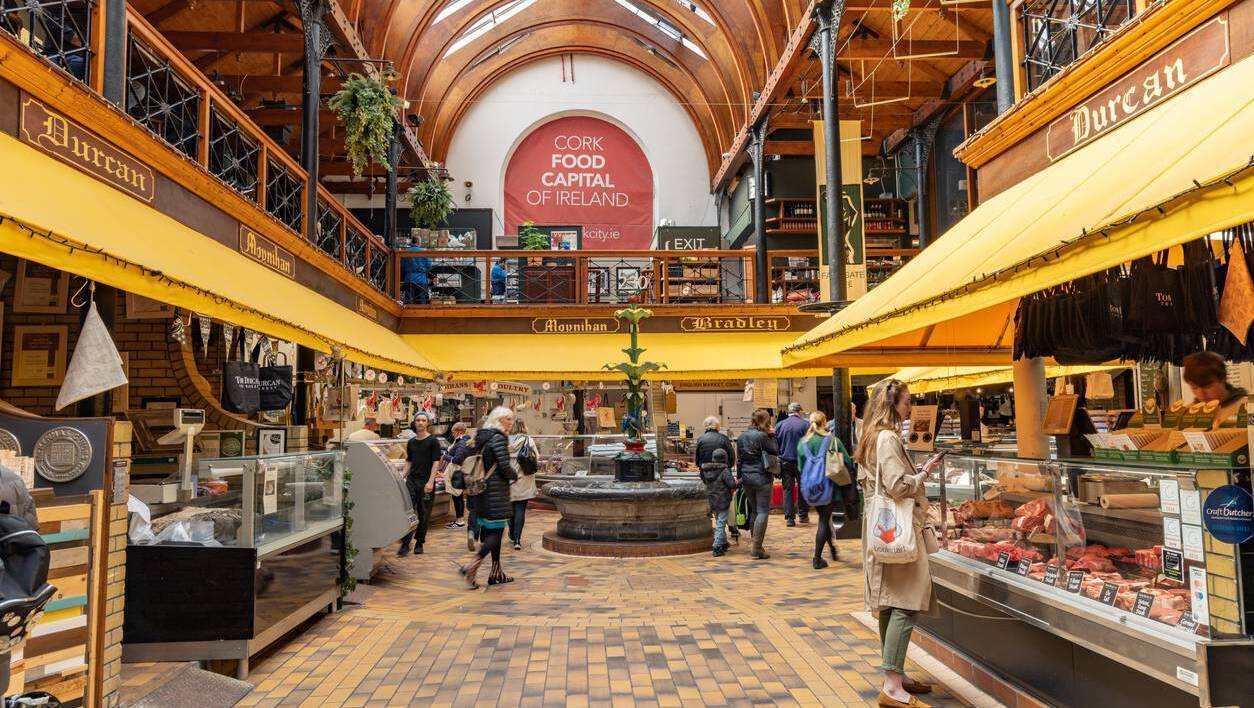
Meanwhile, in Cork City, bar a few outliers, the local dining scene was moribund, the best cooking happening in the county. All that remained of claims to being the Irish food capital were a storied history — food production and trade, and hospitality, earning Ireland’s first Michelin stars, in the 1970s — and a sign in the English Market that declared Cork the ‘food capital of Ireland’.

Meanwhile, the market, the envy of the entire country, was showing signs of prolonged neglect by Cork City Council, other than as a visual backdrop for marketing purposes. And frankly, if Michelin stars are the sole metric, then Dublin, a hospitality city state, must surely be the ‘food capital’ of Ireland.

Also applying that Michelin Star rubric means Paris is the food capital of France, second only to Tokyo in the world. Yet not even Parisians question that Lyon is actually France’s ‘food capital’, for such a designation is about so much more than the quantity of high-end restaurants. It is equally about the quality and availability of premium local produce, better still if there is a prolonged history of such traditions.

That is the difference between a ‘hospitality’ food capital and a ‘gastronomy’ food capital, where epicurean pleasures of the region are a part of daily life, not just restaurant meals.

Like Lyon, Cork is the point of confluence in a region of pronounced agricultural bounty and, like Lyon, it too has a long history of international trade — Lyon as a global hub for the silk trade and Cork as, formerly, the second most important provisioning port in the British Empire.

Such trade ensures local food culture was regularly exposed to culinary influences from abroad; in Cork’s case, giving rise to iconic spiced beef. As in Lyon, offal, especially tripe, remains a local delicacy. 

Unlike Lyon, however, where it is a staple on the menus of local restaurants, the Farmgate Cafe in the English Market is the only place in Cork to do likewise. Donagh O’Reilly, of A O’Reilly’s Tripe & Drisheen, also in the market, now relies mostly on Eastern European and Chinese customers and wouldn’t encourage his children to follow him into the business.

In other words, it is a dying food tradition, a marked difference between Cork and Lyon.

That decline is indicative of larger problems facing the English Market, which should be every bit as vital and vibrant as the local hospitality sector to constitute its role in defining a food capital. The city council badly needs to address long-running infrastructural issues and there is a marked decline in Corkonians doing their weekly shopping in the market.

To my mind, one of the biggest issues is the lack of fresh, locally grown Cork produce — though I nurture hopes the Cork Rooftop Farm stall will grow into that role. 

There has been a drive for some time to make Cork ‘Ireland’s Gastronomy Capital’, and to secure the official title of ‘World Region of Gastronomy’, by 2030. To be honest, one of the most proactive moves in that regard is Cork on a Fork food festival, a council initiative brilliantly helmed by festival director Niamh Murphy. From first faltering steps, it is now a wonderful and all-encompassing celebration of Cork’s food culture. It highlights Cork’s food offering, especially with nationally renowned Cork chefs evangelising on behalf of some of the very best produce in the world.

But it is only when Corkonians fully re-engage themselves with that superb produce on a daily basis in their own homes, that we will truly be able to say Cork is the food capital of Ireland.

TABLE TALK

Talk above of Cork’s food traditions leads nicely to my Grub Circus takeover (August 16) of St Peter’s, at Cork on a Fork. Focus includes Cork’s real bread bakers (including Grumpy Bakers), farmhouse cheese (including Milleens, Durrus, Gubbeen and Coolea) as well as local natural wine importers (Le Caveau; Brian’s Wines) and ‘Corktails’ from mixologist John Coleman and O’Mahony’s of Watergrasshill. Green Saffron sponsors the Kids Kook-off and celestial sounds come from the Grub Circus Dynamo Hum choir.

One of the best pop-ups this year, or any year, sees Tiblisi restaurant Poliphonia on a national tour, featuring classic Georgian cuisine, using fresh seasonal ingredients, and exquisite natural Georgian wines. Dates include: dinner at Allta in Dublin (August 9), Georgian Bottles and Bites at Dublin’s Lulus (August 10), and L’Atitude 51 (August 12). L51 then hosts a Georgian Supra (August 13) at St Peter’s, Cork, all culminating with a Georgian Dinner (August 16) in Levis, West Cork.

TODAY’S SPECIAL

Toffee crown from Grumpy Bakers.

A friend recently visited bearing a selection of Grumpy Bakers’ superb patisserie and viennoisserie, Toffee Crown (pictured, €5.50) very much the, yes, ‘crowning’ glory.

Laminated, delicate, flaky, crisp pastry with an airy, light crumb within, its bulbous dome is finely scored, the pastry then filled with Salt of Kinsale toffee cream filling, finally dipped in dark chocolate.

A time-consuming craft, its eating took mere minutes and only because we paused so often to roll eyes in ecstasy.

Yes, there are laminated confections in supermarkets and forecourt delis for half the price, but if it’s only price that concerns you, why not prevail upon your local woodworker for a bag of sawdust, akin to the difference between cheap par-baked imitations and Grumpy Bakers’ real deal. 

More in this section

Lifestyle

Newsletter

Eat better, live well and stay inspired with the Irish Examiner’s food, health, entertainment, travel and lifestyle coverage. Delivered to your inbox every Friday morning.

Cookie Policy Privacy Policy Brand Safety FAQ Help Contact Us Terms and Conditions

© Examiner Echo Group Limited