Suzanne Harrington: What kind of English family stays up late to count Irish swears on The Traitors?
'Potty mouths' and 'f-bombs' — or just people authentically denoting emphasis or conveying humour?

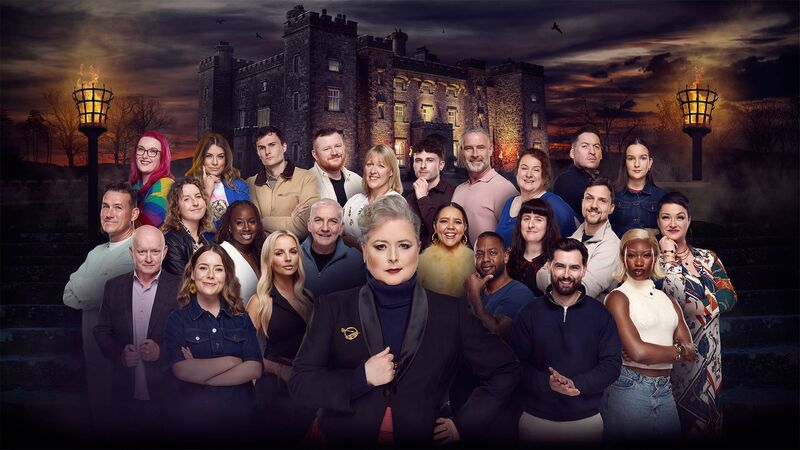
is being shown on the BBC and people are horrified. Specifically, English people are horrified at the swearing levels of Irish contestants — apparently there’s a lot of effing and jeffing on the Irish , presented from Slane Castle by the glorious Siobhan McSweeney, herself not averse to four-lettering her words.
Trigger warning — swear words are present in the following article, written using their actual letters rather than those daft asterisks, so if you are of a sensitive disposition you may want to read this sitting down.
“I am far from a prude but in Ireland is the F-word just part of normal speech,” tutted one complainant.
“There were 6 F’s in a minute…not a great look for a family show.”
Given how the BBC airs the Irish at 11.40pm, not 11.40am, you’d wonder what kind of English family stays up late to count Irish fucks, but this was reported in so it must be true. (No figures were given of how many people actually complained, but my guess is very, very few).
Another BBC viewer complained how “Using the F-word every second is a real distraction. I hope the swearer gets voted out”, while yet another — almost certainly not a qualified ethno-linguist or cultural anthropologist - suggested “It’s Ireland, fuck is part of the language.”
Actually, fuck — or its many, many international equivalents — is part of every language (apart from, ironically, Irish — our native tongue is famously lacking in actual swearwords, but great at wishing you ill — hence the Irish call it cursing, while the English call it swearing).
It’s a comical idea that the Irish swear more than the English — I have lived in England forever, and I can categorically state that they swear like sailors. Not all of them, obviously, just as not all Irish people swear.
The difference isn’t about Irish culture versus English culture, but about where you perceive yourself in society, and your personal definition of what’s socially acceptable and what isn’t. Literally, whether you give a fuck or not.
What’s important is differentiating between abusive swearing (in England this is called cunting someone off), which is aggressive and unpleasant, and conversational swearing, which is what many of us do to denote emphasis and emotional authenticity, or convey humour. (Want to make me cry with laughter? Put me in a room with a sweary toddler. I know you’d be laughing too, even if you were pretending not to be).
When swearing is used threateningly or abusively it’s never funny — unless maybe you’re reading about it retrospectively and from a safe distance; recent court cases include the drunk Cork man who called gardaí “horrible cunts”, the drunk Limerick man who called gardaí “Cork pricks”, the drunk Mullingar man who called gardaí “fat bastards”.
These all make for funny reading in the minor crimes page of the newspaper, but really what such stories signify is that these individuals, in terms of anger management and alcohol dependency, seem a bit fucked up. They probably need professional help. Although not with their swearing.
What the conversation around the Irish and swearing fails to acknowledge is class. ‘The Irish’ are not a homogenous blob, anymore than are ‘The English’ — in both countries, predominantly sweary people tend to fall into two categories at opposite ends of the social spectrum: the upper classes and the working classes, neither of whom tend to give a XXXX about what people think of them, and will pepper their conversations with all kinds of bleep-words.
The Royal Family is famously sweary behind closed palace doors — just as when you go into any no-frills London pub your ears will be pepper-sprayed by all kinds of 'facks' and 'cants'. Posh actress Olivia Coleman’s favourite word is cunt: “Chaucer wrote it down….it’s very cultured.”
Would the same English viewers who complained to the BBC about Irish swearing have walked out of the cinema when Coleman and her equally posh co-star Benedict Cumberbatch unleashed an apocalypse of swear words on each other during their recent film ? Unlikely.
Posh people are allowed to swear. We think it’s hilarious when a posh voice utters a swear word. Yet when non-posh people swear, our innate classism — whether we are English or Irish — makes them seem common and / or threatening. (Nor do the major swear words directly translate.
In Spanish, cunt is a non-swear word, used almost affectionately by grannies in the street; proper Spanish swear words tend to centre around religious words like ‘host’.
In French, English’s most offensive four-letter word just means idiot or irritant.)
In English and Irish cultures, it’s the middle classes who are most prone to swearword-induced pearl-clutching. The aspirational, those keenest on being perceived as respectable. This is why the Irish invented 'feck', which doesn’t exist in English English — it’s for when we want to create emphasis, while equally wanting to denote our social respectability by substituting one vowel for another. That little vowel has traditionally been the difference between having to go to confession, or not. It is the linguistic equivalent of the Connie Dodger (younger readers will have to google that one). Feck is uniquely Irish. You can say it on the radio. It’s golf-club friendly.
I grew up in a non-swearing household — my religious dad would be genuinely upset by what he called ‘bad language’, saying that swearing was vulgar, unnecessary, and a sign of limited vocabulary. Once, when he almost severed a finger by sticking his hand inside a lawnmower, he screamed out ‘fiddlesticks!’ as blood gushed all over the garden. As a result of such restraint, my sister and I are champion swearers, and I am proud to say, so are our children. (Although they know where and when not to swear — context is all).
Swearing is actually good for you. Had my dad shouted a proper swear word when he stuck his hand in the lawnmower, he may have done himself a favour — research has shown how swearing helps with pain relief.
And according to studies done at Yale, people who swear are happier, more intelligent, more honest, and more authentic. Personally, I’m not sure if I trust people who never swear — what are they hiding?
Nor does the swearing-as-a-sign-of-limited-vocabulary argument stand up — another study from 2015 deconstructs the poverty of vocabulary myth, showing instead how swearing can be indicative of linguistic creativity and dexterity. Just ask Kneecap — hyper-fluent, super-articulate, in both Irish and English. And joyfully reclaiming old English insults like Fenian cunt, a term which English audiences enthusiastically sing along to at their gigs.
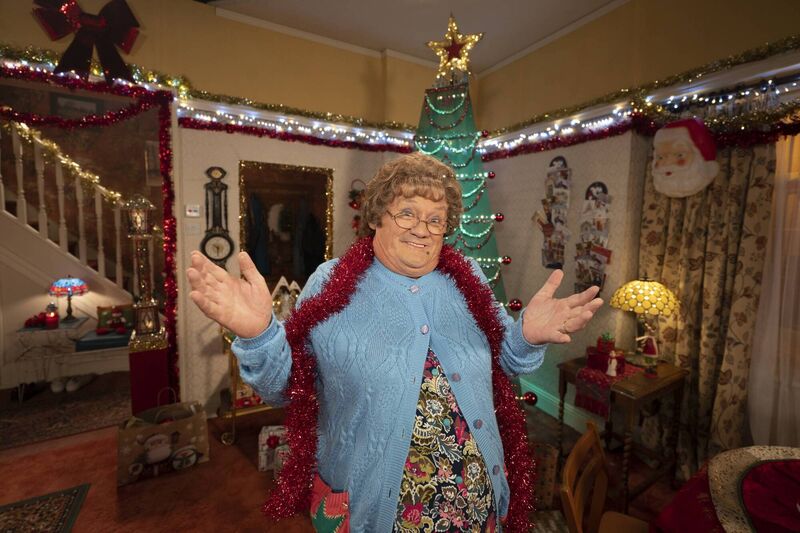
Also, it’s not like the English have never heard Irish swearing before — for reasons nobody has yet figured out has long enjoyed prime time popularity on the BBC, with its creator Brendan Carroll refusing to tone down the swearing as he said it would compromise the show’s linguistic authenticity. Um, ok.
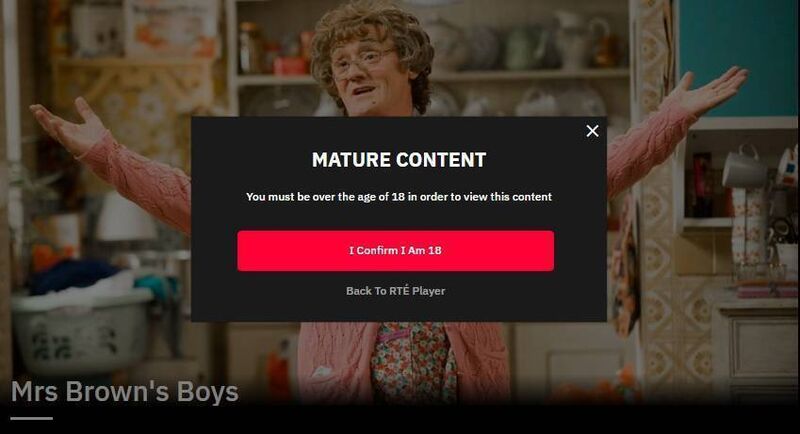
This does not mean that the language used in reflects ‘the Irish’ — just ‘the Irish’ of Brendan Carroll’s experience. It's hardly representative. Generations of Irish people from all social backgrounds find swearing shocking, ill-mannered, crude, offensive. They come from households which, as my gran used to say “wouldn’t say ‘ass’ for a pound.”
Instead, milder words are used — eejit, gobshite, langer, clown, gowl — just as the English use terms like pillock, plonker, donkey, doughnut — and, my favourite... wazzock.
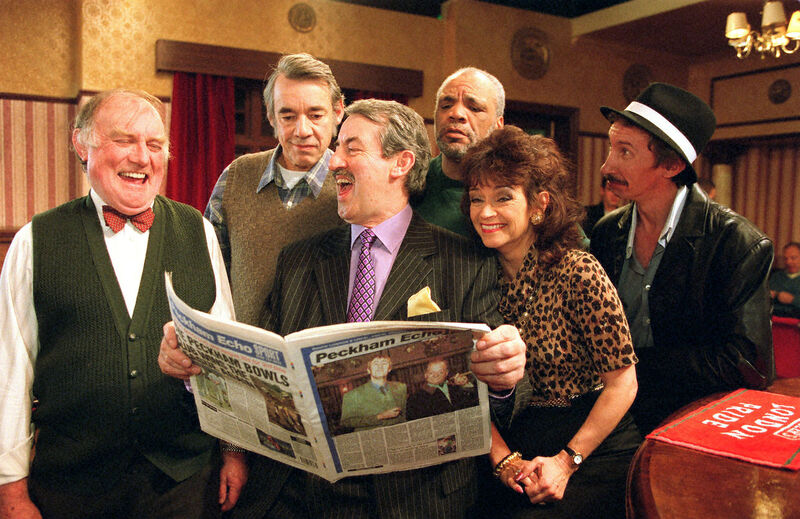
When it comes to insulting each other, there’s an inherent creativity at play — Boris Johnson the cockwomble, Donald Trump the shitgibbon — but sometimes you just need to swear straightforwardly. To spit out some expletives, like a pressure cooker spitting out steam. No matter what your background or where you are from, swearing is language’s spice — too much is overpowering, none at all is bland. A healthy sprinkling, contextually appropriate, can bring words to life.
The only bad way to swear is abusively — but again, you don’t need swear words to be abusive.
Just ask America. Armed to the teeth, shooting each other dead on a daily basis, yet fainting in horror if anyone utters a swear word in public. Using infantilising terminology — F-bomb, potty-mouth — while regarding swear words as more shocking than guns. And don’t get me started on fucking swear-jars.