Séamas O'Reilly: The Second Annual Séamie Awards — recognising 2024's most recent TV to date
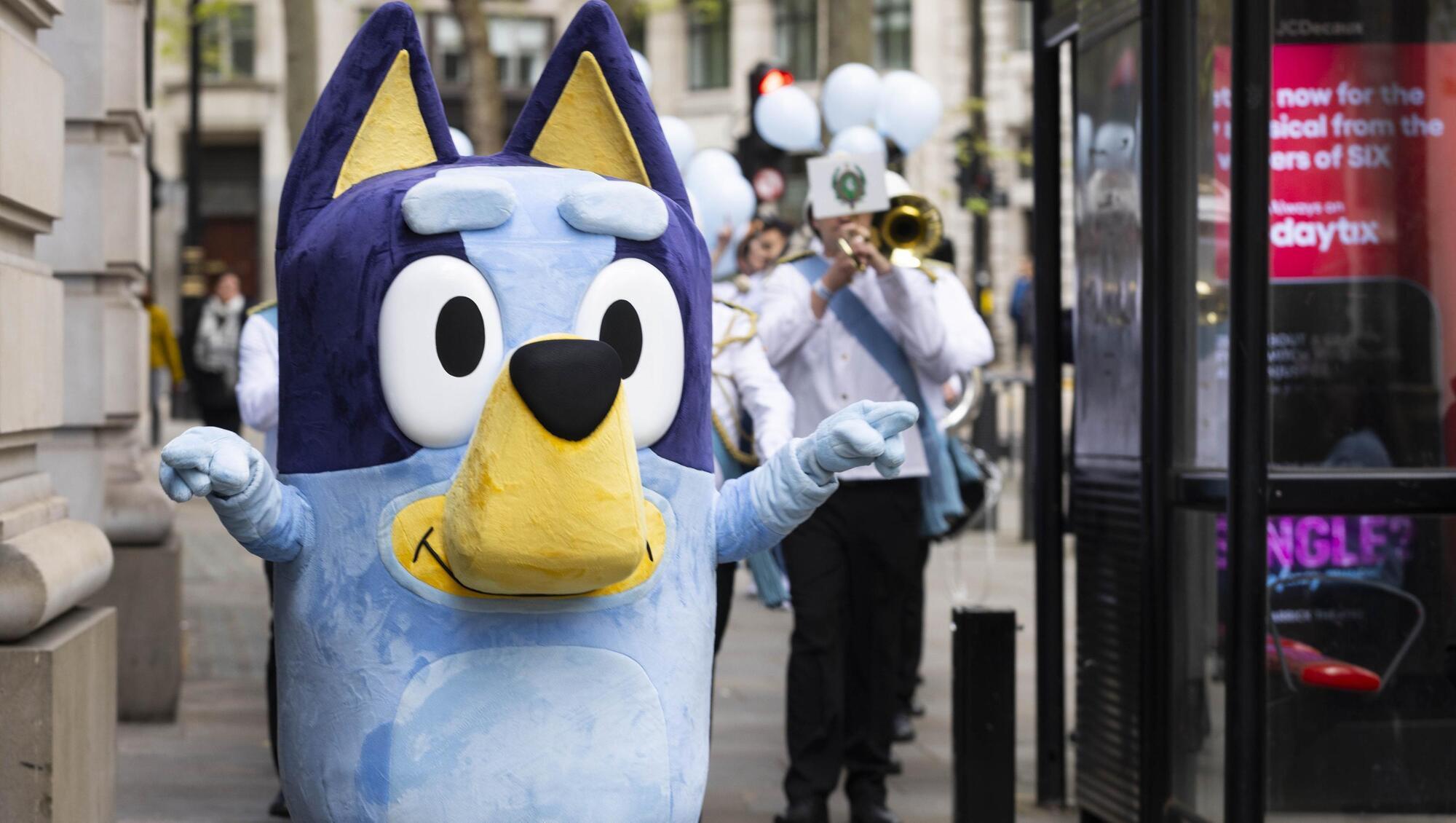
Australian kids' TV favourite Bluey is presented with the first Special Recognition Award for Cultural Impact at Australia House in London, narrowly beating the Examiner to a in-person booking to receive a Séamie Award.
When John Logie Baird invented the first television in 1925, he could never have imagined that, 99 years later, 2 billion sets would be beaming content around the globe, and FX’s would be once again miscategorised as a comedy so it could win a suite of Emmy Awards this September.
What this tells us is that TV has come a long way since then (its invention, not September) but still our methods of surveying the cream of its crop have stagnated, beset by award shows incapable of truly connecting with viewers.
For that reason, it is left to me to pick up the slack. And so, I return with another outing for the undisputed Gold Standard in TV appreciation, The Second Annual Séamie Awards.
A returning category to start us off, and an easy win for season two, whose last series might as well have been a dream I had.
This is a quality enhanced by the fact that so many of the show’s characters – like Daemon, Aemon and Aegon, to name just three members of the Targaryen clan - sound like separate anagrams of one insurance company.
The show has a slower pace than its parent property Game Of Thrones, although it’s still filled with enough cliffhangers and drama that I rushed to every episode.
It all seemed quite memorable at the time but, while running the risk of spoiling next year’s ballot, if you asked me to give you even the faintest precis of what those events were, I’d simply run away.
An easy win here for BBC’s , a show about horrible people who do impenetrable work in blandly dressed offices.
was certainly spoken of before now, even if every single still from the series looked like something you’d get if you put “sad office worker bad meeting stock photo” into a google image search.
Upon the emergence of its third series, however, Industrymania appeared to arise from nowhere, as if I’d returned to school after a single sick day to find everyone in my class but me was now proficient in skateboarding.
Innumerable memes, posts and breathless think pieces delivered their verdict on each episode as if we had, all of us, spent the past three years hanging on every word of these… stock traders? Wealth managers?
It doesn’t matter, despite its awful human characters and the inscrutable work they do, is a toothy, compelling drama that deserves the hype, however late it’s been in arriving.
There are very few televisual benefits to having small children.
Were I to write an unedited list of the worst children’s shows I’ve been made to watch all year, this edition of the would need to be 19,000 pages long and delivered to your house via forklift truck.
Happily, there are some kids’ shows that are actually, genuinely quite good and none are better than .
The Australian dog cartoon, broadcast on the BBC, is not merely the best kids’ show on TV, but quite possibly the best show on TV full stop and this year’s extra-long special episode “The Sign” may be its finest work yet.
Philistines might stump for here, namely the revelations that its fictional prognostications on the legacy of the Murdoch dynasty may actually have come to fruition, amid claims from Lachlan Murdoch that his brother James leaked stories from their family to the show’s producers.
But, inarguably, the gong this year must go to , AMC’s superlative mini-series about the ill-fated Franklin expedition of 1845, which resulted in the death or disappearance of every single sailor searching for the North West Passage from Canada to the East.
The show, starring Ciaran Hinds and Jared Harris, has developed a rabidly cultish fandom – this author among them – one of whom, Fabiënne Tetteroo, was inspired to track down DNA evidence of Captain James Fitzjames, and managed to identify his remains after 176 years.
Who says fans don’t contribute anything?
The continuing instability of television has created a glut of cancelled projects in 2024, notably on streaming platforms experiencing the turbulence of divided attentions, dwindling profits, and the still rippling knock-on effects of last year’s actors and writers strikes.
Throw toxic fandom debates into the mix and you get the sort of perfect storm that called time on the decidedly imperfect, but still pretty good, Star Wars spinoff on Disney+.
Netflix’s decision to mash the panic button on Greek myth fantasy also stood out.
Despite receiving generally favourable reviews, and looking like it cost the GDP of a small nation - with star turns from Jeff Goldblum and Billie Piper, no less – it was cancelled just three weeks after it was launched to massive fanfare.
The tone and execution of the show were a bit arch, in the manner of being invited to a local theatre Shakespeare production that’s been modernised so everyone’s vaping on hoverboards, but cancelling such a big bet so soon seems as sadist as anything Hades could offer.
Even Netflix was outdone by HBO’s badly named service Max, which put the kyebosh on at least twelve projects, including much-loved queer pirate caper .
But it is 2023 Seamie Award Winner that takes top honours here, by virtue of the fact it was cancelled by HBO, before being picked up by Netflix, where it garnered wider audiences and even greater critical acclaim, and a low enough viewership that a second series now seems unlikely.
To cancel the best sci-fi show on television once in a calendar year is unfortunate. Twice just seems careless.