Suzanne Harrington: Boring everyday alcohol killed Amy Winehouse — deadly dull yet deadly
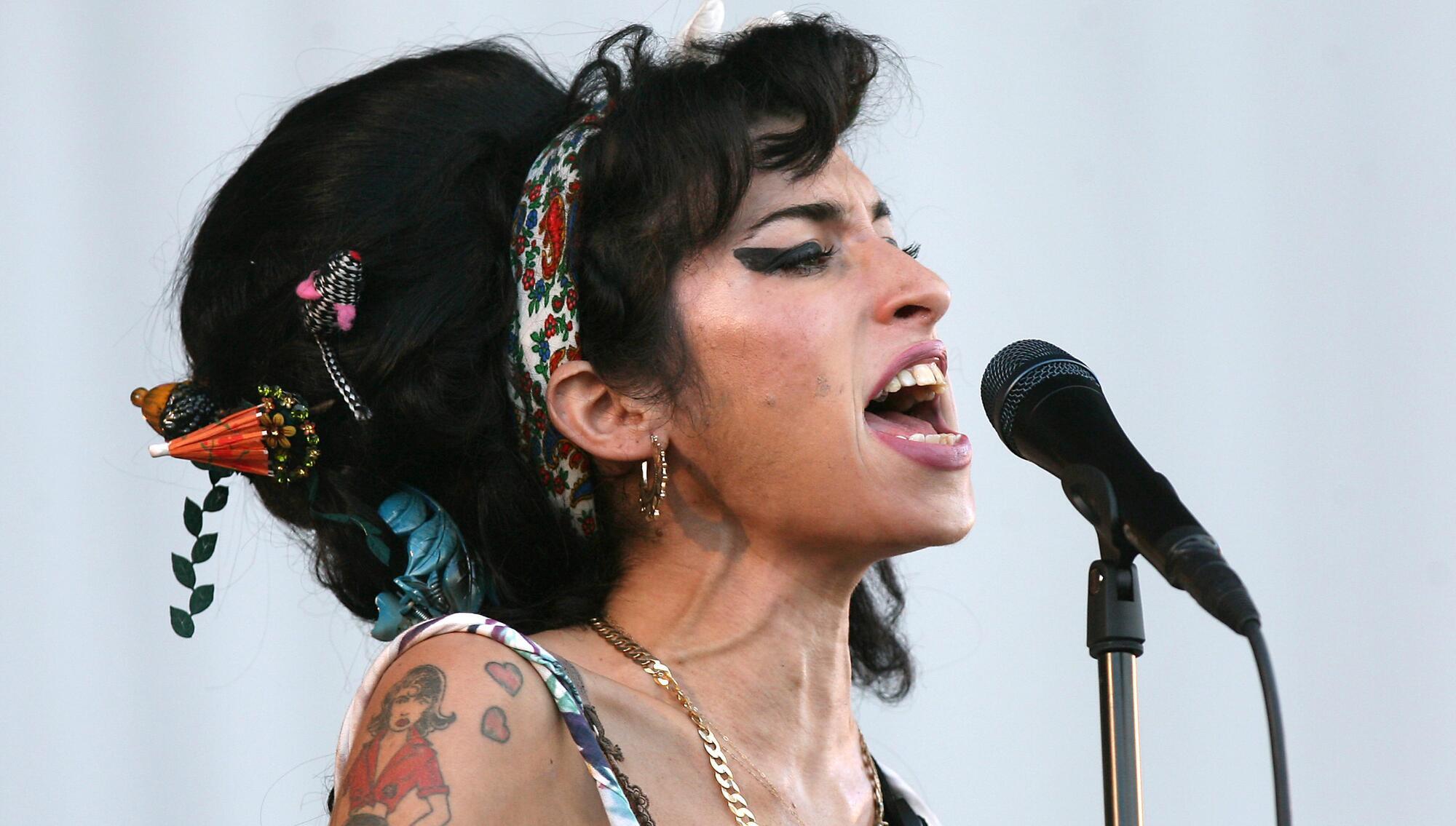
Amy Winehouse, pictured in 2008.

My favourite Amy Winehouse moment is when she sang “Free-eee Blakey my fella” at Nelson Mandela’s 90th birthday party in 2008 in Hyde Park, London.
Gordon Brown, then prime minister, had to explain to Mr Mandela who Amy was, and why she had changed the song’s original lyrics to sing about another incarcerated person.
“You know, Nelson Mandela and my husband have a great deal in common,” Amy apparently quipped. “Both of them have spent a great deal of time in prison.”
Well, yes. One for 27 years facing down a dastardly apartheid regime, the other 27 months for ABH.
The thing about Amy Winehouse is that she was very funny and very clever.
This razor-sharp irreverence does not come across in Sam Taylor-Johnson’s beautiful film about her, nor does Amy’s writing genius; instead, the film focuses on the obsessive love – and disastrous co-dependency - between her and Blake.
We see a more sugar-and-spice version of Amy. Even so, it’s hard to watch her heartbreak this close up.
Acres have already been written about the film.
Many critics tore into it, dismissing its chronological inaccuracy, its lack of villains, its focus on all-consuming love rather than a blow-by-blow retelling of the chaos which engulfed Camden Town’s next-gen Sid and Nancy, leather and chains replaced by beehives and pork pie hats.
There’s a poignant mirroring between the words of Deborah Spungen – Nancy’s mum - in her 1983 book , when she writes about the genuine love between her daughter and Sid Vicious, and Amy’s mum Janis, who has spoken publicly about the “intimate and genuine love” between Amy and Blake, how “pure” it was, despite all the complications.
But we want villains.
For the tabloids, Blake was the obvious choice, the young addict who got Amy into crack and heroin before he got clean.
In Asif Kapeda’s 2015 mesmerising documentary of collaged footage, it was her dad Mitch, intoxicated by celebrity.
In Sam Taylor-Johnson’s film, it’s the paparazzi, in Amy’s face like rabid dogs, feeding ferocious tabloids who splurged her every stumble across their pages.
There were no villains. Just addiction – and ultimately not even to anything scandalous or illegal.
Just alcohol, and a fatal internalisation of that message to women that nothing tastes as good as skinny feels.
Amy puked and drank, puked and drank, puked and drank, long before she met an equally lost young guy called Blake, long before her raw pain won her all those Grammys, long before packs of paps imprisoned her in her Camden home.
Alcohol is what killed Amy Winehouse, probably exacerbated by years of bulimia. Boring everyday supermarket alcohol. Deadly dull yet deadly.
It doesn’t make for much of a story, so in the absence of toxicology reports about crack or smack, we added villains.
We blamed her fella, we blamed her dad, we spiced up her life and death with added stories.
While still alive, to those trying to control her narrative, she’d snap, “I ain’t no fackin' Spice Girl.” She was herself, entirely, all the way.