Bernard O'Shea: Decisions, decisions... and the paradox of choice
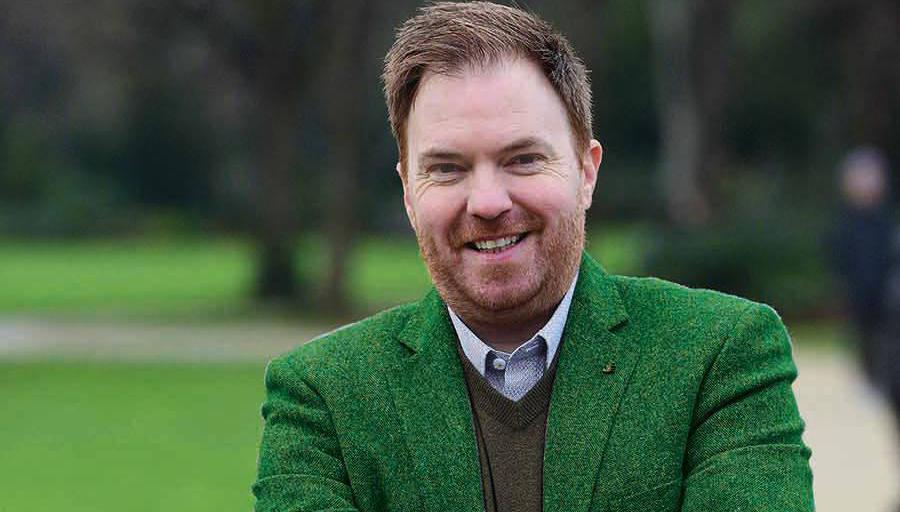
Bernard O'Shea. Photograph Moya Nolan
My trusty old six-string has been by my side since I was 14. I named her Susan.
She's seen better days, a bit worn around the edges, a few chips here and there -- much like myself.
Susan has a beautiful tone with its aged spruce top.
Unfortunately, it's gone too fragile, and as I prepare to write stand-up again and tour, I know she won't take the rough and ready punishment of being flung in and out of the car boot and being accidentally drenched in stale pints.
But recently, a thought struck me: perhaps it's time Susan retired. It may be time I got a new guitar.
That thought was two months ago. Two months, countless hours on Thomann, Reverb, and scouring every music shop I can get to.
Reviews, comments, comparison videos, guitars that are sustainably sourced, guitars with frets made of stardust. You name it, the internet has it.
And now, here I am, stuck in the vast quicksand of 'decision paralysis'.
I spent nearly two hours last week talking to a fellow comedian and troubadour, John Colleary, about the minute details of Gibson headstocks. This is not normal for me. I'm an impulse buyer and always have been.
But it's not just me. I've noticed my kids spend more time deciding what to watch than actually watching it.
Last week, they spent a good 45 minutes scrolling Netflix, only to watch a show they've seen twelve times already.
I’ve watched the US Office seven times and the entire Frasier series well into double digits, yet there have been more comedy shows produced in the last ten years than in the entirety of the '80s and ’90s.
Scientifically speaking, my woes and those of my offspring aren't unique. According to a study from Psychology Today, our brains, marvellous as they are, have a threshold.
Too many choices throw its metaphorical hands in the air, leading to indecision and, sometimes, dissatisfaction with our eventual choice.
It's called the "Paradox of Choice" -- more isn't always merrier.
The phrase was coined in the 2004 book, "The Paradox of Choice: Why More is Less", by Barry Schwartz.
He delves into a quirky problem: sometimes, we need more options.
Schwartz points out that when we're swamped with choices, we often freeze up or worry about what we might miss.
Furthermore, with so many choices, we always hope for the absolute best, and we can feel let down.
Then there is the undeniable force of digital marketing, an area where I've worked.
Digital marketing is a constantly evolving phenomenon.
Remember those flashy online ads and many promotional emails back in the day?
Well, as search engines like Google became popular, businesses tried to appear on top of search results. Also, they paid for ads that matched our online queries.
Then came social media -- sites like Facebook and Instagram began showing us ads based on our likes, shares, and chats.
And even though I'm fully conscious of it, I'm still drawn in by and influenced by it.
Historically, our ancestors had limited options. Da Vinci didn't have 67 shades of blue to pick from; he made do.
Beckett, Behan, and Joyce didn't dither between an Apple Mac or PC, they just wrote.
Joni Mitchell, who reinvented the acoustic guitar's sound with alternative tunings, didn't have YouTube. Was their creativity, perhaps even their happiness, better off for it?
If you're wondering how to navigate this labyrinth of choices, I've learned this in the last eight weeks of guitar browsing.
- Information Diet: Too much of anything needs to be corrected. Stick to 3-5 trusted sources. Any more, and you're just reheating the cold soup.
- The Nostalgia Test: Think back. Remember the old days. What did young you want? Start there.
- Seek Expert Opinion: I don't mean Dave from the pub who "knows a guy". Real experts. Luckily I've John, who knows guitars intimately. You could go to one of his shows and ask him afterwards (don't tell him I sent you.)
We may be missing the point in our quest for perfection, armed with every snippet of information the digital age throws at us.
Much like music, life's beauty isn't always in the perfect notes - but often in the unexpected ones.