Damien Enright: Bananas, bulldozers and the miracle of uplands water
But what is still growing is fresh and green, and silvery with rain drops shining in the cloud-piercing sunlight
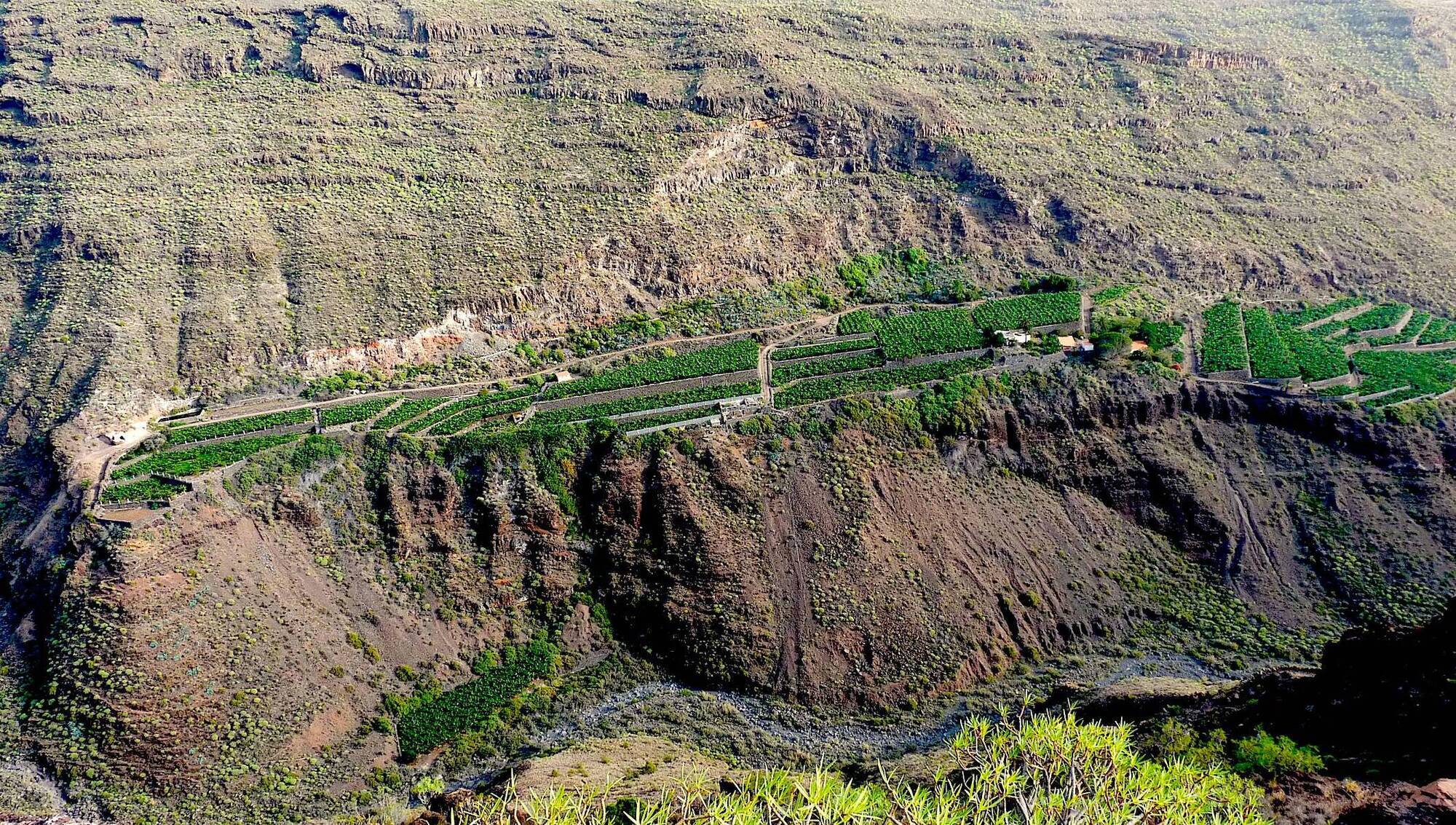
A commercial banana plantation in the Canary Islands. The miracle of water on dry uplands is evident. Similar plantations on La Palma were subsumed by lava in the recent volcanoes


A commercial banana plantation in the Canary Islands. The miracle of water on dry uplands is evident. Similar plantations on La Palma were subsumed by lava in the recent volcanoes

I believe the weather in Ireland during recent weeks has been “glorious”. So I am told when I phone friends at home. Here, in La Gomera, it’s raining so, by local standards, it’s glorious too. Looking out the bedroom window this morning, it was captivating to see how the brown shelter-less fields (now cleared of the banana trees that up to two years ago occupied them) were now black, once black gold for the farmers, now gold whatever colour it is, now re-zoned as development land.

But what is still growing — and there is still growth everywhere, wild plants and weeds, some left to survive until they’re bulldozed, some sprung up almost overnight — is fresh and green, and silvery with rain drops shining in the cloud-piercing sunlight. The chiffchaffs sing: they chorus especially enthusiastically, birds so tiny and well camouflaged that we almost never see but know, by their constant chirping that they are there. They inhabit the mango and avocado trees that are still cultivated and harvested along the camino that leads from the road into our house, and the banana plantations still tended and nurtured by regular irrigation.

Some banana trees were knocked by the gusts of wind from Africa which I mentioned last week. Some have been propped up by expandable metal poles, like lightweight versions of the acrows universally used on building sites. These days, when the ‘piñas’ of bananas reach a certain weight, they are dressed in a custom-made, silvery, ecological plastic sack which holds the water vapour they would lose in the warm climate of these islands, and the piñas grows to maturity — gaining weight up to 50kg – within. Thus, the need for irrigation is reduced a little.

Damien Enright.
Damien Enright.

Water is always precious in these islands, always in short supply and needing to be rationed. If a field comes up for sale, the first question will be “Does it have water?” and then, how much, followed by how often is it supplied via the aqueducts, the intricate system of “acequia”, channels about 18 inches wide, walled with field stones to a height of about two feet, carrying water from a reservoir or spring.

The wild growth consists of the once-commercial plants no longer harvested that still survive, unwatered, on field boundaries — “plate cactus” grown for the cochineal bugs that lived on them and produced a valuable carmine dye to decorate cakes and colour paints and textiles; “cotton-bud trees”, as I call them, with large lemon-yellow flowers and seed ‘caskets’ that in maturity open to reveal a ball of fluffy white cotton as big as a bantam egg, soft; passion fruits growing on wild vines along plantation walls; coffee bushes, which abound, wild and laden with hundreds of pea-like pods; and then, the castor-oil plants, a widespread weed from which the oil can be extracted but no longer is.

I enjoyed a new taste in bananas the other day. One of my oldest friends on this island, an artisan shoe-maker — who in his small workshop in a banana grove surely makes the best, hand-made, endurable and beautiful made-to-measure shoes, slippers, boots, bags, belts and wallets that I have ever seen es — sent me home, after a chat, with a bag of avocados and oranges and a ‘hand’ of a dozen small, fat homegrown bananas which he said were “platanos manzano”, apple bananas, which I’d probably never sampled before.

I can only say that they were delicious and I would recommend them to all my readers. It came as a surprise to experience a distinctly apple-ly taste. The sharpness of apples, in the sweetness and firm flesh of a banana, was perfect, as if the flavours were made for one another, which it seems they were. When young they taste of apples, when mature the skins go black and they taste of pineapples.

Bananas, Domingo told me, originated in Indonesia. As I already know, they come in 100 different varieties growing in 100 regions. I’ve been fortunate enough to see, and sometimes savour, bananas growing on wild trees in the Caribbean, in India, Sri Lanka, Thailand, Malaysia, Africa etcetera. I think I’ve mentioned before that a banana with a cup of coffee, iced or hot, makes a great pick-me-up. Both stand here on my desk this mid-morning, ready to provide a noontime booster. As usual, I have the shutters closed on the window behind my monitor screen, to keep out the sun. My wife tells me the sky is still cloudy and the six old men who matitudinally gather to play dominos under a fig tree haven’t yet made their appearance today.

x

More in this section

Lifestyle

Newsletter

Eat better, live well and stay inspired with the Irish Examiner’s food, health, entertainment, travel and lifestyle coverage. Delivered to your inbox every Friday morning.

Cookie Policy Privacy Policy Brand Safety FAQ Help Contact Us Terms and Conditions

© Examiner Echo Group Limited