Caroline O'Donoghue: We can change our society
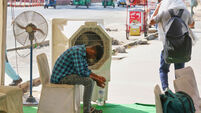
Last I checked, we were not all dead - enough of us changed our behaviour, didn't travel, and we are still functioning as a civilisation
Caroline O'Donoghue: We can change our society

'If the pandemic has taught us anything, it’s that the world actually can radically change for the common good.'

I have had about six false starts at starting this column today. It’s Monday, and the climate change report just came out. It has once again been confirmed to the avoidance of all reasonable doubt that the planet is rapidly dying, and that we will be dying along with it. 

There’s absolutely no two ways about this: if we do not cut carbon emissions, the global temperature will continue to rise, and vast numbers of people and wildlife will lose their lives. But how do you write about that? How do you sit at your laptop as a columnist, neither an expert in the environment nor the economy, unable to think of anything else yet equally unqualified to give an original thought on it?

I am in several Whatsapp groups, and they’re all chiming away. “About to go meet with my accountant,” my friend Monica jokes. “We’re going to talk about saving money for my raft.”

This is the tone: gallows humour, combined with mordant suggestions of hope.

“Carrie Johnson is a massive eco-warrior,” says Sophie, and then we all become even more depressed because a dying planet is one thing, but hoping the dying planet will be saved because the prime minister’s wife likes alpacas is quite another.

I look online and I talk to friends, and I notice a common theme of hopelessness begins to appear. I understand hopelessness. There have been just so many disappointments. Not one person has gone through the last two years without having a major personal or professional setback. Every study seems to say we are poorer and sadder than ever.

Political change has been reduced down to fleeting, moralistic bonfires rather than the sustained change of larger movements. We have been hearing about how the same 20 companies are behind carbon emissions forever, and still no one is holding them to account. It is hard to believe in anything getting done. And it is hard to believe in each other.

“What I’m afraid of,” my friend Ella says, “is that no one wants to change anything. Everyone loves cars. Everyone loves plastic. No one’s going to change.” I’m feeling so hopeless that I almost just nod mutely and agree with her.

But no, I think. That’s not true. And the proof is right in front of us.

If the pandemic has taught us anything, it’s that the world actually can radically change for the common good. 

This is not a fable. We lived through it. Governments all over the world decided that the safety of their citizens was more important than anything else. 

On an individual level, we decided to stay home, to wear masks, to install hand sanitisers in every shop and train station. We did not do this for ourselves. We did it for each other. We, the products of the egomaniacal 20th century, decided as a global population to make less money, to travel less, to have less fun.

You can sneer at this if you like. You can say that not everyone did it; that the governments failed us; that many died and many more — particularly disabled communities — were crushed under the heel of the regime I just praised. But I am taking a wider and more unsubtle view, and here it is: that, last I checked, we were not all dead. Enough of us changed our behaviour. Enough of us did not travel. Enough companies and governments took appropriate caution and provided reasonable financial support and — while many of us are worse off, and I do not want to downplay that — we are still functioning as a civilisation.

And that’s what’s on the line, when we’re talking about the climate crisis. Civilisation.

Here’s an unpleasant anecdote: I had a friend once with an extremely racist mother. Like many racists, she insisted that she had no problem with people of colour, but said that her worldview was based on a realism — that she knew how people ‘really’ were. She was bitingly cruel about a mixed-race child we knew because she thought it was ‘unfair’ that the child would never be ‘accepted’ by ‘either side’. This was not just a frightening and vicious opinion — it was also patently untrue. That child is almost a teenager now and has had nothing but love from both families, and both cultures. The friend’s racist mother was clearly working from a poisonous worldview she had been brought up with, and underpinning that worldview was the belief that people don’t change.

That people don’t get kinder, or wiser, or that society doesn’t move on from the biases that might have infected one generation but not another.

I bring this up because the more we submit to hopelessness, and the more cynical we become about what ‘people are like’, the more we insist on the greed of one another, the less we will receive. If we don’t honestly believe in change, then how on earth can we expect it? For many countries, state-funded healthcare still sounds like a pipe dream. After all, who wants to pay for a stranger’s medicine? And yet, after the Second World War, the British population voted for it. There is something about having bombs fall out of the sky that changes you, I think: you no longer believe that bad luck and ill health is for ‘other people’.

No one is asking for a utopia here, and there was nothing utopian about how we behaved during the pandemic. But we radically changed how we live our lives in order to benefit the common good. It is possible. And, I believe, we can do it again. We can change our society; we can reduce emissions; we can lobby governments. Don’t stop believing in change, and don’t stop pushing for it, either.

x

CLIMATE & SUSTAINABILITY HUB

More in this section

Lifestyle

Newsletter

The best food, health, entertainment and lifestyle content from the Irish Examiner, direct to your inbox.

Cookie Policy Privacy Policy Brand Safety FAQ Help Contact Us Terms and Conditions

© Examiner Echo Group Limited