Louise O'Neill: 'What’s the best way to learn Irish as an adult?'
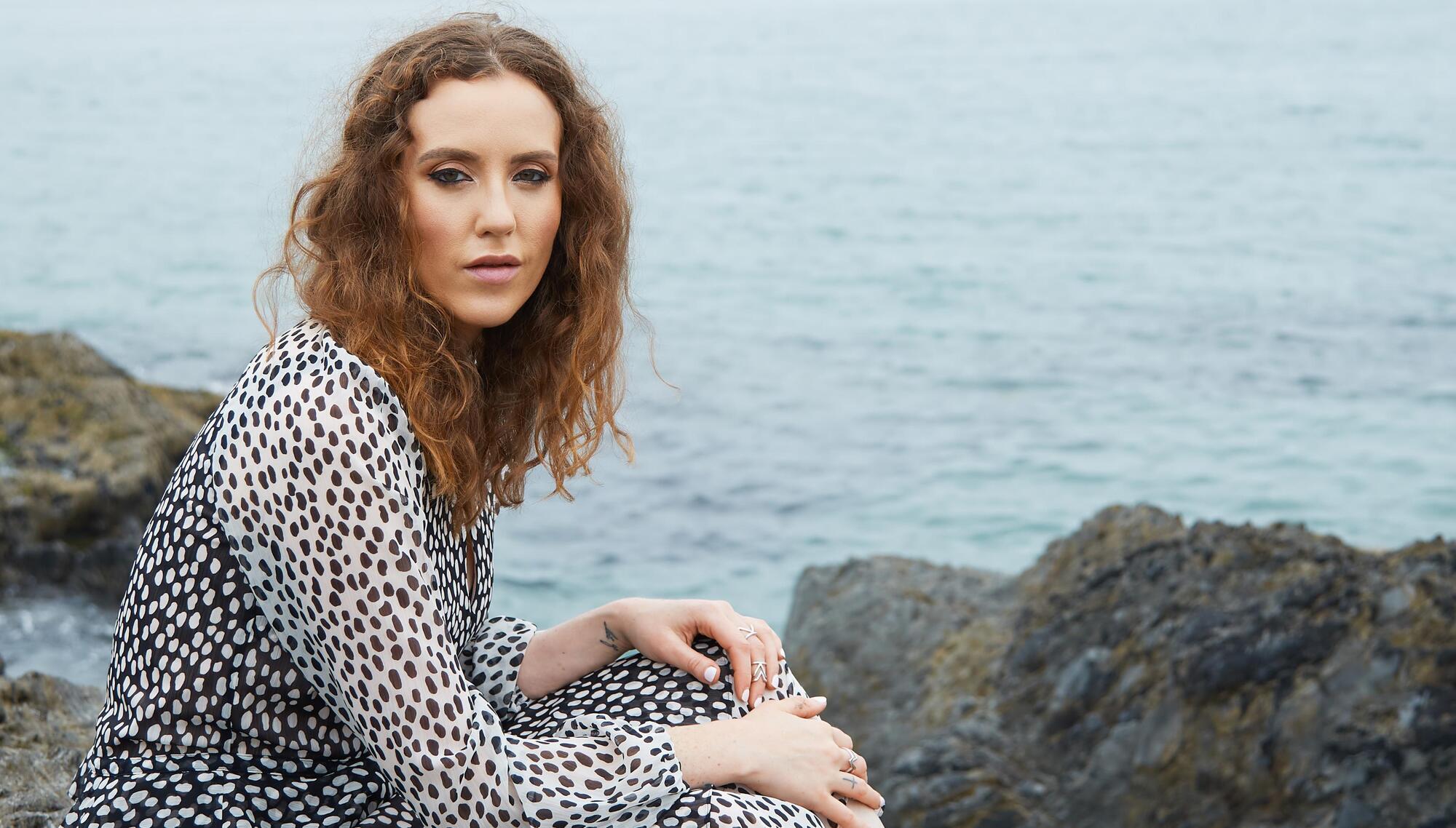
Louise O'Neill started attending an online Irish class with Gaelchultúr. Picture: Miki Barlok
It’s a rather damning indictment of our education system that after fourteen years of learning Irish, the only thing I still remember how to say is – “An bhfuil cead agam dul go dtí an leithreas?”
Mention the words ‘Peig’ and the ‘modh coinníollach’ to anyone who has gone to an Irish school and the majority will take a step back, their faces paling.
I didn’t actually read Peig Sayer’s eponymous memoir; instead we read sections of a novel about a middle-class Dublin teenager whose mother found a stash of needles and heroin under his bed, which had been added to the Leaving Cert syllabus in an attempt to speak to the ‘realities’ of teenagers’ lives.
Heroin was definitely not part of this teenager’s life - I had expected his mother to unearth a naggin and a bong fashioned from a 7up bottle – and while I’m not saying Gafa was the reason why I decided to attend university in Dublin, I’m not not saying that either.
Those thrilling three chapters aside, Irish was one of my weaker subjects. I learned huge chunks of text off by heart, regurgitating them in exams while not fully understanding what I was saying. (I got a B at Higher Level, which again, says a great deal about our education system.)
To this day, I have a recurring nightmare where I’m taking my Leaving Cert and I open the exam paper to the reading comprehension section. I’m glued to my seat, staring in terror as the words dance on the page, and I realise I don’t have a clue what any of it means.
What was the point, I thought? Why did we bother to learn it anyway? Wouldn’t that time be better spent improving our French/Spanish/German? (We should have been learning Mandarin, of course, but we knew so little in 2003.)
It wasn’t until I was living in New York that I began to regret my lack of fluency. My sister and a friend visited, both primary school teachers, and they whispered to each other as gaeilge on the subway. “What?” I would whine while they ignored me. “What did you say?”
My closest friend at ELLE was born and raised in Portland but spoke perfect Korean to her parents when they phoned, and I wished I was able to do the same. “Do you speak any Gaelic?” colleagues at the magazine would ask and I would smile regretfully and say no.
My new novel is set on an Irish- speaking island off the coast of west Cork and while I wanted to include Irish phrases throughout, I didn’t feel confident to do so myself. I texted my friend, Traolach O'Buachalla, incessantly, asking him how to say this in Irish and how to say that in Irish, and he would send me voice messages explaining his answers, the words rolling off his tongue so beautifully that it sounded like a melody.
And then this summer, the year of staycationing, I would be chatting to locals in Dingle and Cape Clear, thinking how much nicer it would be if I had the cúpla focal to give to them but my mind went blank. I couldn’t remember any of it. (And I can’t just ask to use the toilet, over and over again. That’s the sort of behaviour that freaks people out.)
“What’s the best way to learn Irish as an adult?” I asked Instagram afterwards.
Watch TG4, someone said. Listen to Irish podcasts, another recommended. A number of people mentioned Gaelchultúr, a company which gives Irish language classes, promising that it was informal and relaxed - Peig Sayers is most definitely not part of this curriculum - and Gaelchultúr were kind enough to offer me a place on their elementary online programme.
I started this week. It’s a small group and I was surprised by how many foreigners were taking the class, explaining how their love of traditional Irish music and mythology left them wanting to learn more. It’s a humbling experience, I can tell you, to realise that the American and Spanish woman in your group are both better at your native language than you are but I refuse to become despondent. I don’t have an exam to sit this time, I have nothing to prove.
All I want is to be able to have a conversation. And this language of ours is too beautiful to allow die, too valuable to lie fallow. In his new book, “Thirty-Two Words for Field: Lost Words of the Irish Landscape”, Manchán Magan says that, “Irish is as much a story as a language, and most stories never really die. Even if they are not retold every day, they linger in the depths of our mind. Every speaker is a narrator of this epic tale, and every word carries within it a piece of the plot.”
I want to carry my piece of the plot now.
The Miracle on Ebenezer Street by Catherine Doyle. Looking for the perfect stocking filler for the child in your life? Look no further than this magical re-telling of A Christmas Carol. Doyle has breathed new life into this much loved and oft-retold tale, sprinkling it with her inimitable warmth, charm and humour.
Pillow Queens released In Waiting this week and it’s an emotional, empowering, and utterly joyous piece of work. The closing track, Donaghmede, is a standout.