Secret Diary of an Irish teacher: What school stories will we tell our children?

Listening to older people reminds us of how far we’ve come. It also highlights our blind spots.
Listening to older people reminds us of how far we’ve come. It also highlights our blind spots.
Picture the scene. I’m out the back, listening to my parents describe their schooldays.
Squinting in the sun, my father recalls being whipped on the back of his bare legs playing sport. The next day, his mother marched into school to complain about the red welts up her boy’s thighs.
"She was ahead of her time."
"Wouldn’t all parents complain?" I ask naively.
"Back then, parents fell in line with teachers. I didn’t want her to see the marks because I assumed she’d be cross with me."
"‘So teachers were respected then?"
"‘No, they were feared," his eyes sharpen. "Something very different."
"I remember sitting in class. You could hear a pin drop, waiting for some cruel teacher to stride in. I was weak at Irish so I’d be put me up front. He’d perch on the edge of my desk, and turn to the rest of the class to mock and ridicule me. He’d lift me up by the ears, calling me a woolly-headed fellow."
Surprisingly, he remembers loving school regardless, liking many teachers, sharing a special camaraderie with his classmates that endures to this day.
My mum’s memories follow.
"I remember we wore outdoor shoes and berets. We’d file into a long cloakroom, hang up our berets and coats, and slip into our lighter, cleaner indoor shoes. I remember the poor lay sisters who’d do all the cleaning, polishing the wood in classrooms and corridors."
She explains the difference to me between lay sisters and the ‘Mothers’ who taught her. The cruel distinction reminds me of the categorised women in Atwood’s .
"They, the Mothers, came to the convents with handsome dowries; the lay sisters were poor and weren’t respected. Mother Clotilde is one teacher I remember. She’d say, 'Look after your necks girls.' I should have listened," my mum jokes.
Although her school produced many professionals, she recalls similar tips around appearance and social etiquette. Many girls left her school in fifth year without qualifications.
"And those poor children in the other school who we weren’t to have anything to do with. The children from poorer backgrounds, many of them illegitimate or orphaned."
Her comment reminds me of Catherine Corless’s recollection of the children from the Mother and Baby Home in Tuam.
How far we’ve come, in terms of fairness, inclusion and respect.
My three children are counting down the weeks to school. Heading off in the morning, I’ve never seen a glimmer of fear in their eyes.
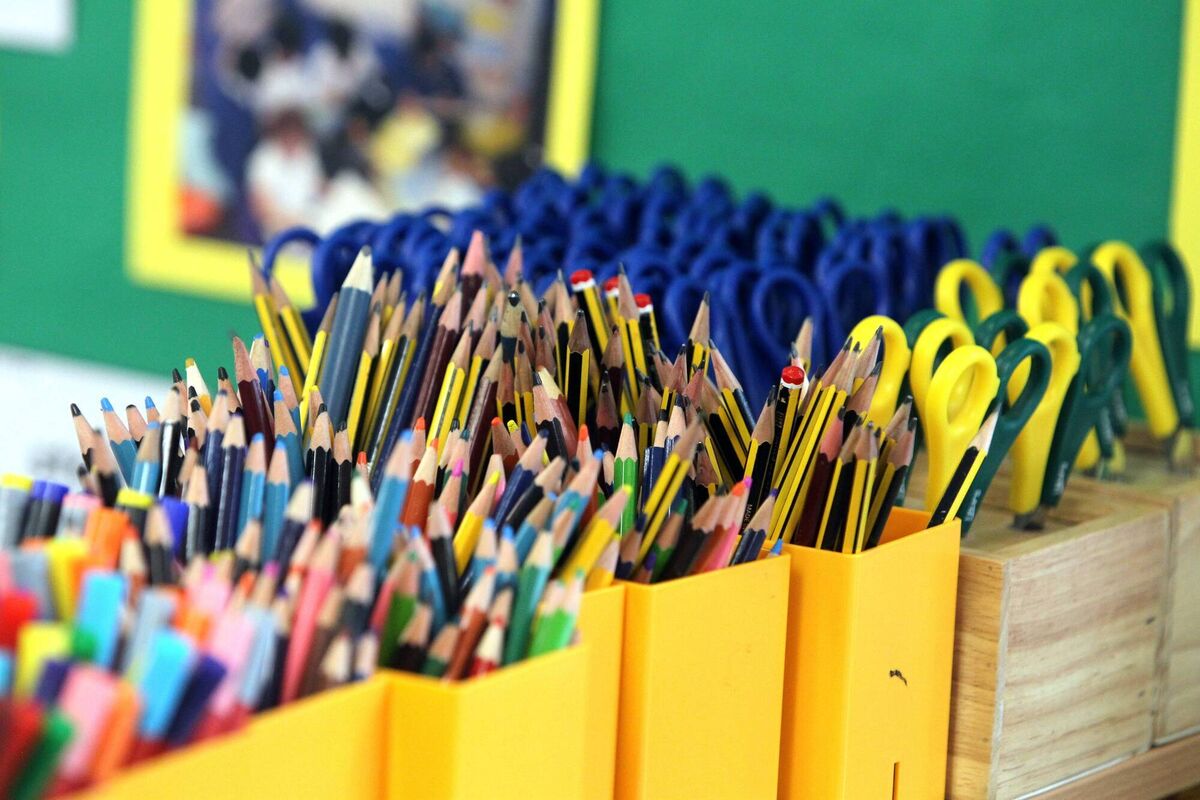
We’ve already started the ‘new pencil case’ conversations. The silent, hard classrooms of my parents’ past are well and truly in the past where they belong.
But it’s important to hear about them. As Maya Angelou said, “There is no greater agony than bearing an untold story inside you.”
My parents were comparatively lucky, but past abuse leaves an indelible mark, and for good reason. We must not forget.
But something else surfaces for me, listening to my parents’ recollections. Is it truly the case that these silent, fearful classrooms are gone for all children in Ireland? Or have we simply shifted the focus, narrowed the lens?
Last week a mural was erected in Cork City created by young people who attend the Cork Migrant Centre. It calls for an end to direct provision.
It reminds us that suffering is still happening. Just as my dad had his mother, these youngsters have their champions, like Dr Naomi Masheti of CMC who says "the artwork is them shouting, you must look at us, see us and listen to us."
A recent report from The Ombudsman for Children states that these children are suffering from racism and discrimination in their communities.
In our communities. We still have a lot of work to do. Parents must celebrate diversity at home and children must carry these empathetic attitudes into school with them.
Schools must continue to ask questions. Why are minority students still reporting instances of racism? Why do we still study books on racism by predominantly white authors?
How is it that in a national study of Deis schools in Ireland, 92% of traveller students were categorised as ‘below average ability’ by their teachers?
Why do one-fifth of migrant children drop out of school, compared to one-tenth of those with Irish parents? How is it that children with special needs still exist on the periphery looking in?
How can we gasp at past abuses and not work to prevent them in our own context?
My mother understood as a child that some people were considered less important; our children see something similar in schools today. But it comes in the form of absence, rather than hierarchy. All teachers in our primaries must speak Irish to a university standard.
What does this mean? Nobody educated outside this system, without Irish, teaches our young.
This is a form of institutional racism, not by intention, but by outcome. An article in recently highlighted that 95% of our teaching profession identify as white Irish, compared to 85% of the population. How many children will never have a teacher who looks and sounds like them?
What stories will our children be telling years from now? How will they sound to their kids?
Very possibly, a lot like my parents’ stories sound to me now.