'People are intrigued by them': Meet the pioneers making wine in Ireland
Ireland has never been regarded as wine country, but a handful of pioneers have paved the way for a new generation to embrace the art of winemaking, writes Leslie Williams
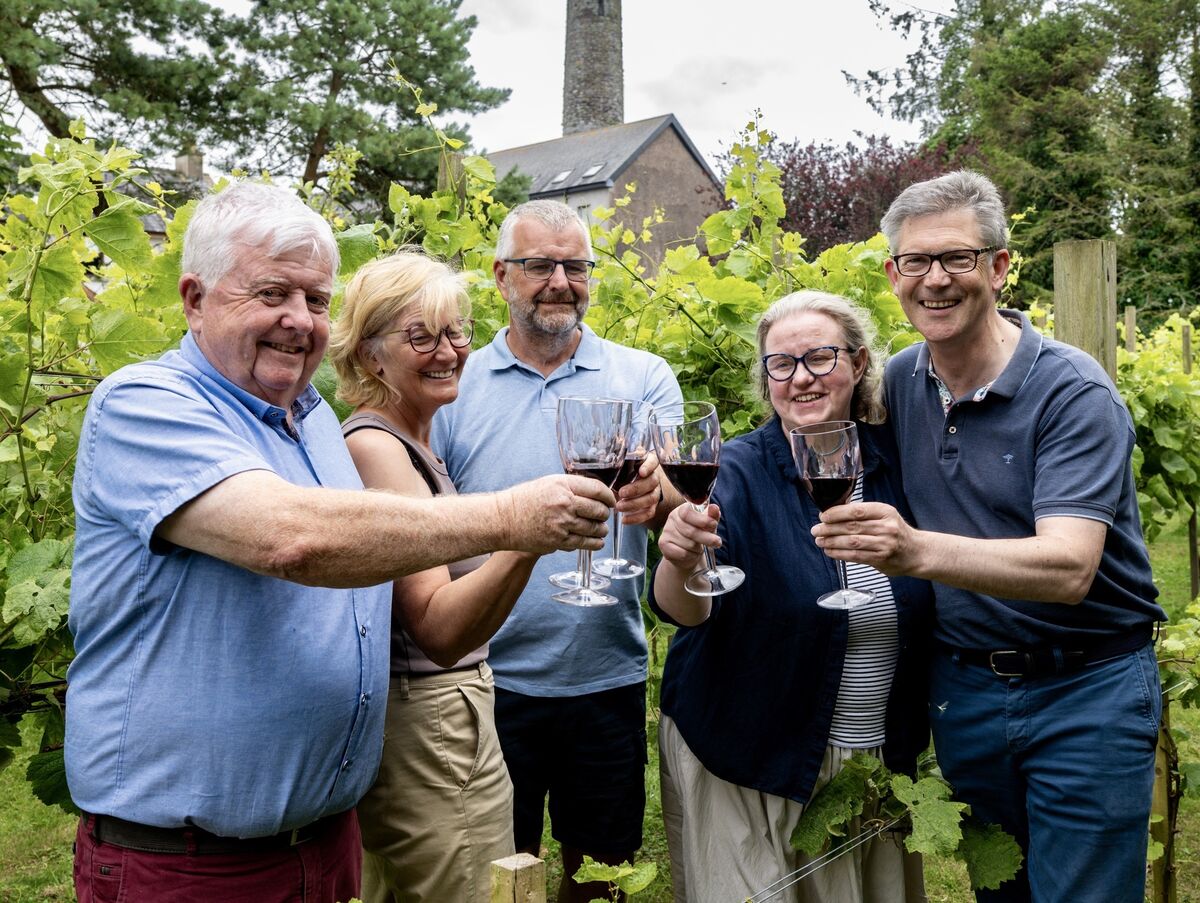
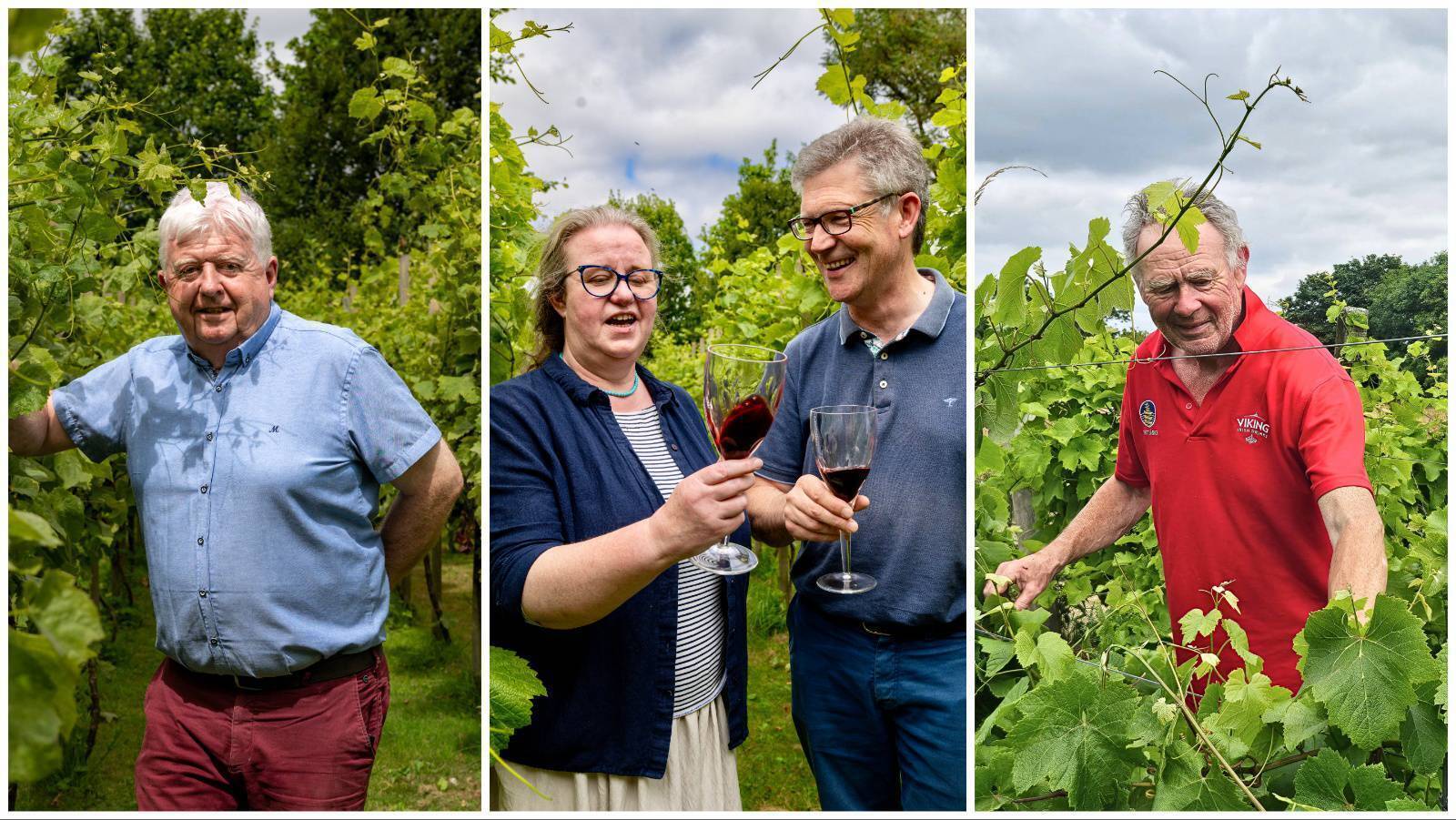
Ger Wall, Aoife and Colm McCan, and David Dennison

Ger Wall, Aoife and Colm McCan, and David Dennison

When German-born Thomas Walk planted Rondo vines outside his holiday home in Kinsale four decades ago, few could have imagined he was laying the foundations for Ireland’s modern wine industry. Today, his vineyard is one of 27 represented by the Irish Winegrowers Association.
But Ireland’s relationship with vines goes back much further. In the 8th century, the Venerable Bede wrote that Ireland “abounds in milk, honey… and vines”. More recently, a grape pip found in an ancient cereal-drying kiln in Kells was radiocarbon dated to the 7th century AD, suggesting grapes were present here centuries ago.

More than 99% of the wines most of us drink are made from vitis vinifera grapes such as chardonnay, merlot and cabernet sauvignon. These varieties flourish in warmer wine-growing regions like France, Italy, Spain and Portugal.

But a new generation of growers are embracing disease-resistant hybrid grapes which can survive in cooler, wetter climates like Ireland. And, after one of the sunniest years in recent memory, growers believe 2026 could be a landmark vintage.

The pioneers

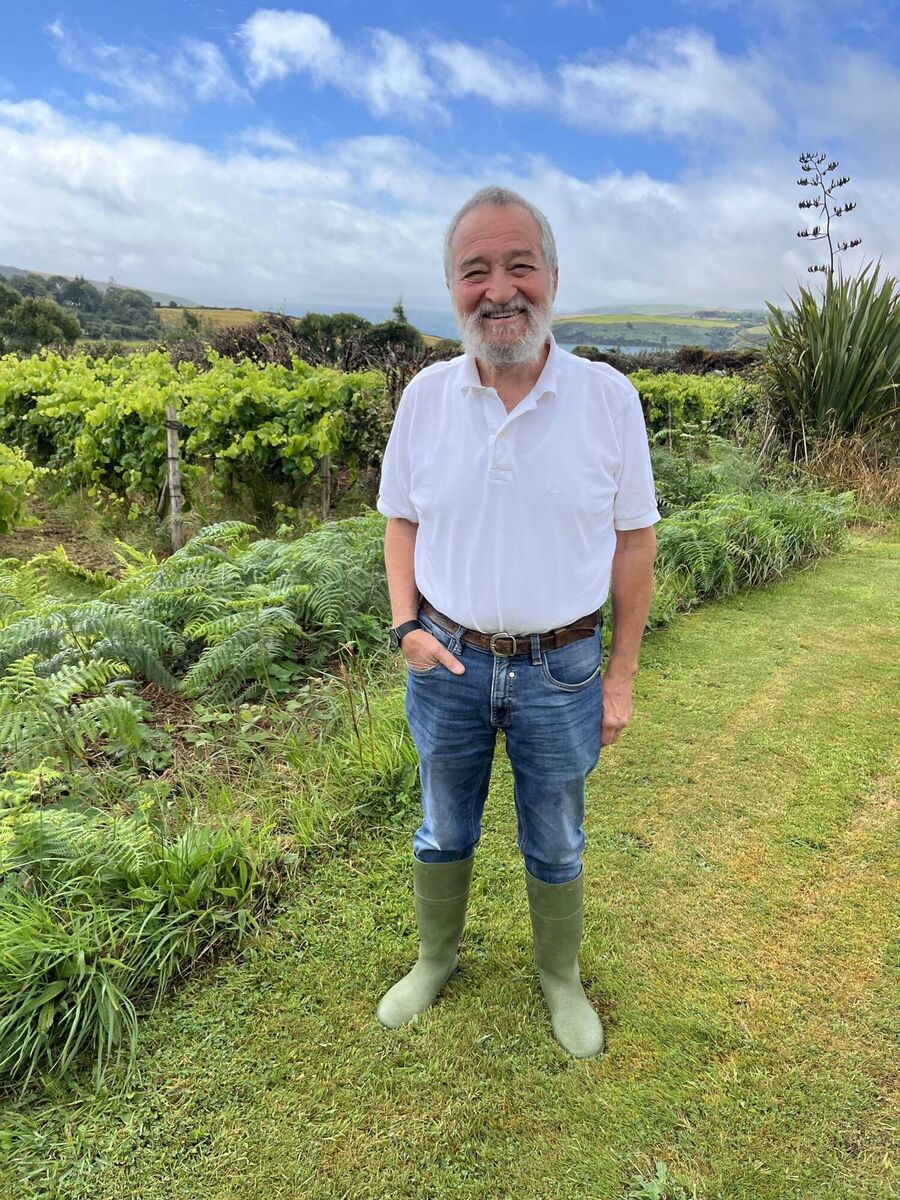
Thomas Walk. Picture: John Wilson

Thomas Walk planted his first vines in 1985. He tried nine different varieties initially, none of which were sucessful. Then, he planted GM6494-5, a hybrid grape developed by Dr Becker in Geisenheim University in Germany, now known as rondo. He was the first to grow it outside a German research centre and happily found it thrived in the Irish climate.

“We believe we were the first to grow red grapes in Ireland,” says Walk, who is passionate about farming organically and sustainability to encourage diversity.

“We have 25 different species of flower in the vineyard, and the humming of thousands of insects brings us pleasure throughout the year.”

Until recently, Walk’s wines were sold exclusively in Germany, but by the time you read this, they should be available in 1601 Kinsale and the Ballymaloe Pop-Up wine shop (approximately €40 for the Rondo red and €65 for the sparkling).

“Thomas’s vineyard set up is as good as any I’ve seen in many years of visiting vineyards,” Ken Murphy of 1601 says.

“The Velvet red is supremely drinkable, fresh and bright. It’s a lovely summer red. The sparkling is also delicious.”

Another of Ireland’s earliest wine producers is David Llewellyn of Lusca Vineyard in Lusk, Dublin.

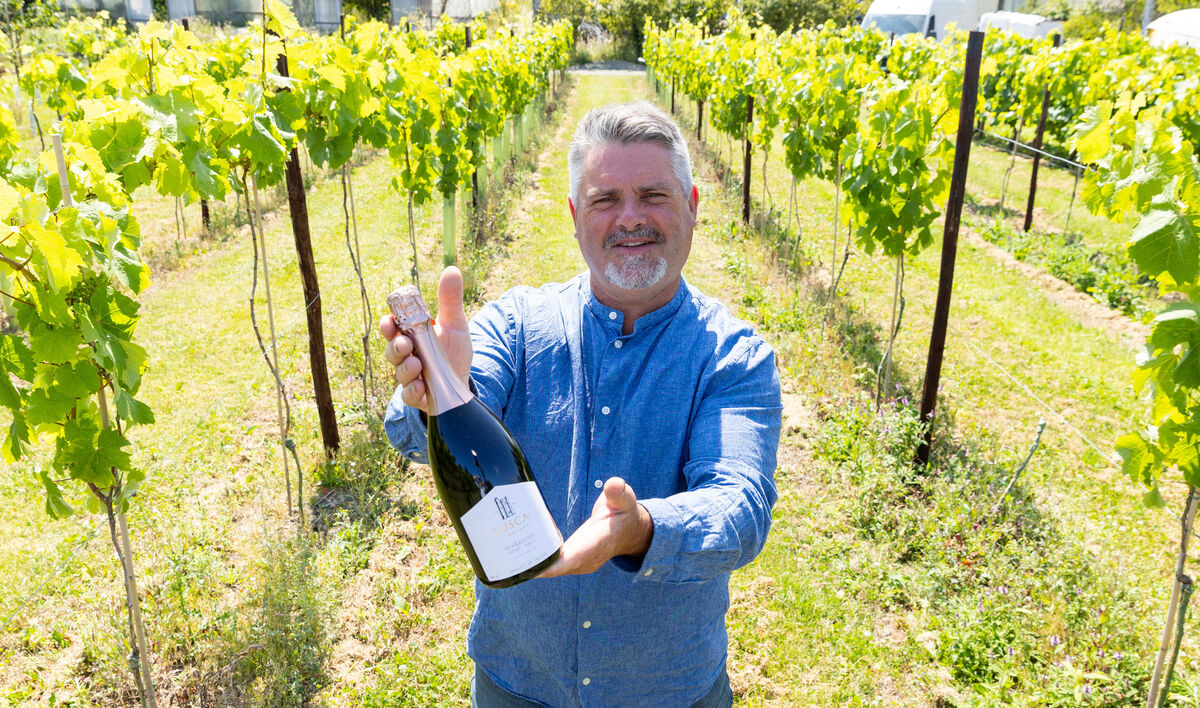
David Llewellyn at Llewellyn's Orchard in Lusk, Co. Dublin. Picture: Gareth Chaney

Llewellyn was always fascinated by horticulture, initially propagating and selling vines for home planting, but in the early 2000s he decided to plant all his stocks and create a vineyard. Now, alongside apples, pears and cherries, he produces around 2,000 bottles of wine a year and has “learned a few things” about the process.

“You simply cannot ripen grapes like sauvignon blanc or syrah outdoors in Ireland in my experience,” he says. “And not all hybrids work here either... the only grapes I have full confidence in are rondo for reds and Madeleine Angevine for whites, everything else is hit and miss.”

His experimental 2024 madeleine angevine sparkling wine has a gorgeous floral muscat and citrus aroma, less sharp acidity, and more body than any of the Irish whites I’ve tasted to date. Lusca 2022 sparkling rosé had cherry and raspberry aromas, while his rondo 2020 poured a dark purple with pleasing fleshy berry fruits.

Never one to stop experimenting, Llewellyn also has an appassimento-style rondo from the warm 2018 vintage maturing in barrel and has collaborated with Galway restaurateur JP McMahon on a bone-dry sparkling wine called Ruby. (Lusca wines are available from wineonline.ie and selected independent retailers, including The Wine Centre in Kilkenny. The rondo retails at €62, the sparkling rosé €70.)

A new generation

Much newer to grape growing is Frenchman Arnaud Clopin of Domaine Kavanagh in Gorey in the sunny south east. Arnaud has just about 2.5 acres under vine, all white grapes including solaris, sauvignac and his best performer souvignier gris. His oldest vines are seven years old. Clopin has really had to fight the Irish climate and was forced to spend significant money on drainage as well as on (organic) pest control.

The birds just love our grapes, they even manage to get in under my netting somehow. We had problems with slugs, daddy-long-legs and every other pest you can imagine. We played ‘whack-a-mole’ in the first few years.

His first attempt at growing grapes ended in heartbreak when all 700 vines died after three years, just as they were about to produce fruit. Clopin named that first vineyard the “Dead Poets Society”. Undeterred, he started again, planting 4,500 vines in a second site he christened “Field of Dreams”. The latter is looking supremely healthy with bunches already forming on every vine.

“In 2025, we got 1,000 bottles of Fáda wine and this year we expect 3,000 bottles,” he says. (In 2024, they left the fruit for the birds in an effort to strengthen the vines. That gamble certainly paid off.)

Named after the fada in his wife Áine’s name and on the French slang word for ‘crazy’, I tasted the bone-dry white in his spotless winery in Gorey town and found it bone dry, cleanly made and a fine match for some fish and chips very nicely the following day. (Fáda is available from lakavwines.ie and selected independent wine merchants, including Myles Doyle in Gorey and Baggot St Wines. RRP €39.95)

The future of Irish wine

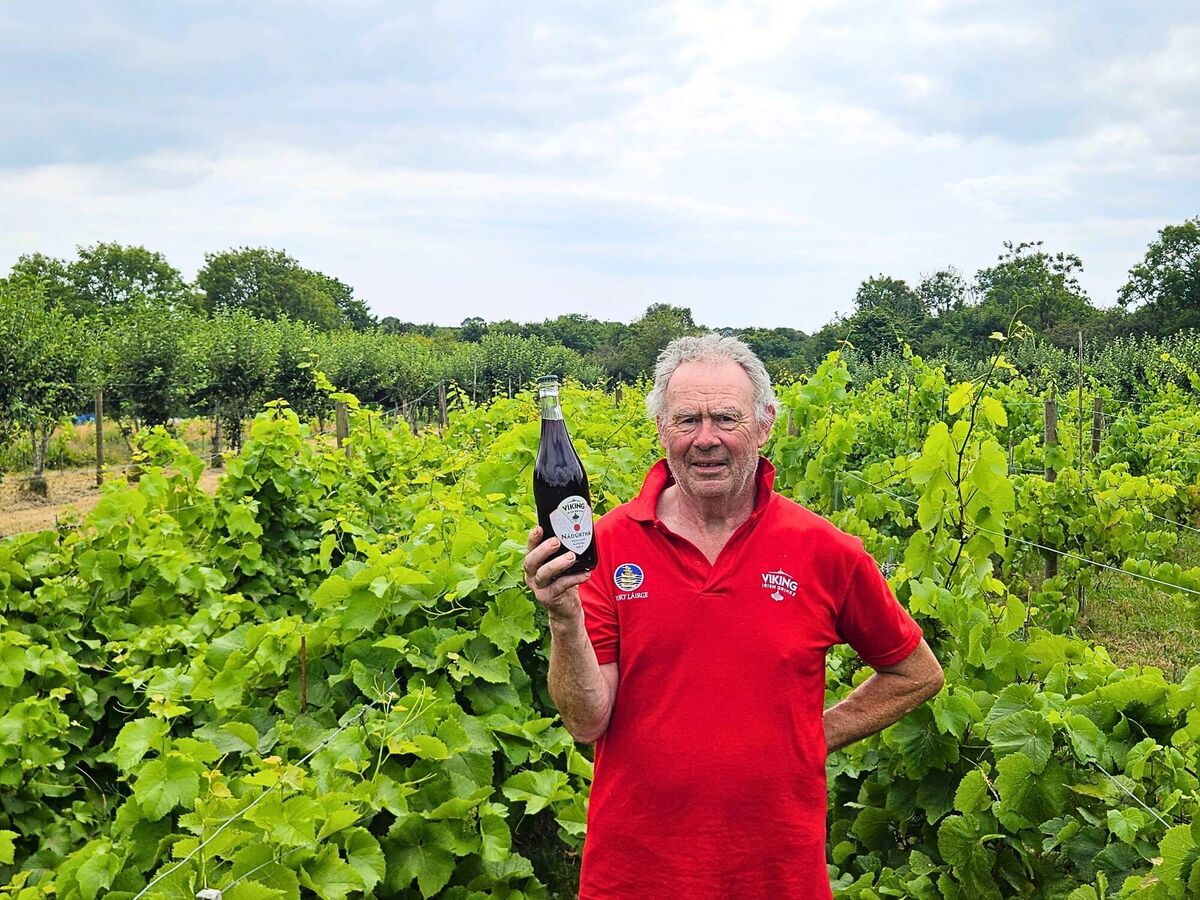
David Dennison of Viking Drinks

Former sommelier David Dennison of Viking Drinks might be the most prominent example of just how much potential there is for Ireland’s winemakers.

At his Waterford vineyard, he is producing reds, whites, sparkling wines and pét-nats under the Nádúrtha label, and has launched Ireland’s first vineyard tours, tastings and viticulture courses.

“Two thirds of the two-day course is viticulture (planting, training, pruning etc) plus a module on winemaking.

“Winemaking deserves a course all to itself of course... maybe I’ll introduce that in the future,” he says.

Dennison is also educating the next generation through his connection with Waterford’s SETU Culinary Arts programme, where the students often engage in vineyard work.

It was Dennison who recently set up the Irish Winemakers Association which now represents 27 vineyards. It is early days still, but he hopes to affiliate with the CEVI, the European Confederation of Independent Winegrowers.

“Ideally Irish vineyards will eventually have a protected name and designated regions, he says.

“As more growers come on stream and volume increases, so will the viability of Irish wine,” he says. While comparisons with England are inevitable, he believes Ireland should embrace its own strengths rather than imitate its neighbour.

“We are a maritime climate. We simply can’t ripen chardonnay and pinot noir like they can.”

He believes Ireland’s future lies in fresh, sustainable wines with naturally lower alcohol levels.

“[That is] exactly what the market wants these days,” Dennison points out.

There are more vineyards coming on stream soon, including Triskelion in Kilkenny and the Irish Wine Estates in Offaly. Dutchman Paulus Willem Heemskerk has spent €4m planting 36,000 vines in Co Meath and is expecting to have 90,000 bottles for sale by 2029.

So, there is plenty of enthusiasm from the growers side – but what about the Irish consumer?

“There is no getting away from the fact that Irish wines are expensive to produce and thus will carry a high price,” Morgan Vanderkamer of Waterford’s Union Wine Bar and President of the Irish Guild of Sommeliers tells me.

“Consumers are drawn to what they know and price is a big consideration, especially when they are at Burgundy price levels.”

She says “luxury hotels and restaurants like us will have a role to play” in promoting Irish wine, particularly to tourists.

“Ireland is where Canada was in the 80s, Canadian wines took a long time to gain the wide acceptance and popularity they currently have,” she says.

“Ireland’s growers need to cooperate, commit to quality and be crystal clear about their production methods,” she says. (Her comments echo a lesson from Canada, where controversy erupted over wines labelled “Produced in Canada” that were made using imported grapes, damaging the native Canadian wine industry to this day.)

Carmel Boyle, head sommelier at Ballyfin Demesne admits, for now at least, Irish wine is “not an easy sell”.

“They all require hand selling,” she says.

“People are intrigued by them, we do get questions but not all customers are willing to take a chance on a full bottle,” she continues. Ballyfin already stocks David Dennison’s wines and plans to add more Irish producers, including Lusca, and Boyle regularly includes Irish wines in her tasting menu wine matches, so diners get the chance to taste Irish wine as part of their meal. She is enthusiastic about
adding more to the roster.

“I need a few on the list to create momentum,” she says. “The more the better.”

Irish winemakers abroad

Ray O'Connor MW launched his first wine this year

Wines like Château Lynch-Bages and Château Léoville Barton remind us that while winemaking in Ireland may feel novel, our countrymen have a long history of making their mark elsewhere.

And today, a new generation is building international reputations.

Among them are Liam and Sinéad Cabot in Slovenia, Dermot Sugrue in England, Simon Tyrrell in France’s Rhône Valley, Róisín Curley MW in Burgundy and Cork-born Ray O’Connor MW who launched his first wine this year: a Coteaux d’Aix-en-Provence rosé now stocked by O’Briens. Originally from Glounthaune, Co Cork, he says working in bars and restaurants while travelling is where he “caught the wine bug”.

Ray passed the notoriously difficult Master of Wine exams in 2020, making him one of just 416 MWs in the world.

“As an Ambassador for Vin de Provence my first wine had to be a rosé. I really wanted to showcase the glacial style wine style of ’Aix en Provence.

“The wines are brisker, fresher and so easy to drink,” he says.

A taste of success for Cork producers

Ger Wall, Anne Wall, Aidan Wall, Aoife McCan and Colm McCan among the vines at “Martha’s Vineyard” in Cloyne, Co. Cork. The small family vineyard is named in honour of Ger and Aidan’s late mother, Martha. Picture: Chani Anderson

Fancy giving winemaking a go yourself? A growing number of Irish hobbyists are proving you don’t need acres of land to grow grapes.


In Shanagarry, Co Cork, Colm and Aoife McCan have 150 hybrid vines in a field behind their home, and are part of a small collective of vine growers in Cork.

“We are having fun with a plant we love,” they say. “We are in an exposed site which means wind is a problem and our grapes ripen slower than our friend Ger’s just 2km away.”

The appropriately named Ger Wall lives in Cloyne and has 200 vines in his walled back garden including rondo, solaris, pinot noir and riesling. Last year he produced 18 bottles of wine.

“We are hoping for an even better harvest this season,” he says.

They’re far from alone. Hobby growers are springing up across the country, from Youghal to Kimmage and all points in-between.

If you’d like to get started, Goatstown-based Steve Doyle has been propagating vines for more than 30 years through irishgrapevines.ie, with bundles of 25 rondo vines starting from around €100.

More in this section

ieFood

Newsletter

Sign up for our weekly journey into the best of Ireland’s food scene with recipes, reviews and stories from our award‑winning food writers.

Cookie Policy Privacy Policy Brand Safety FAQ Help Contact Us Terms and Conditions

© Examiner Echo Group Limited