I spent a day with Cork turkey farmers before Christmas — here's what I learned
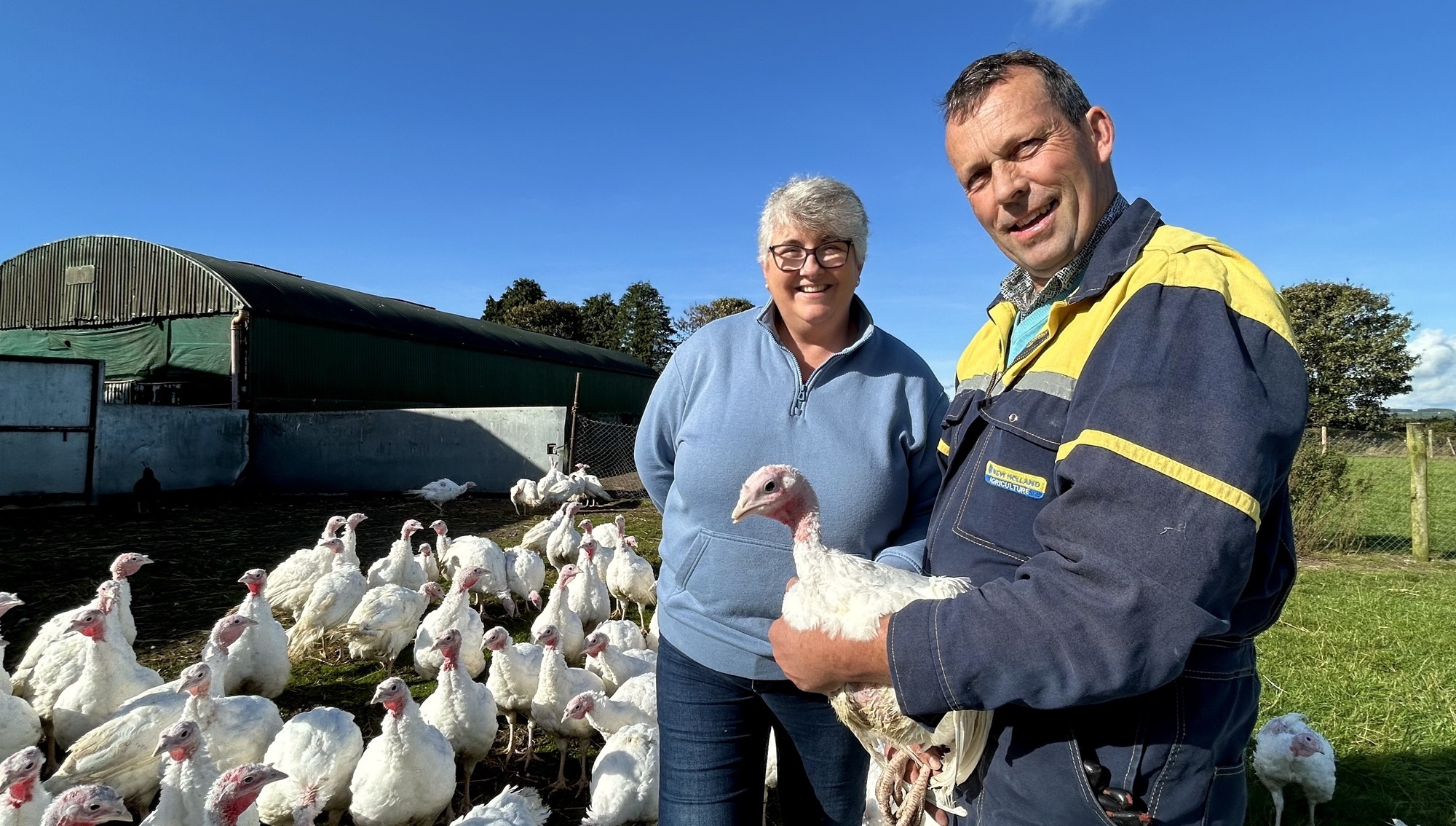
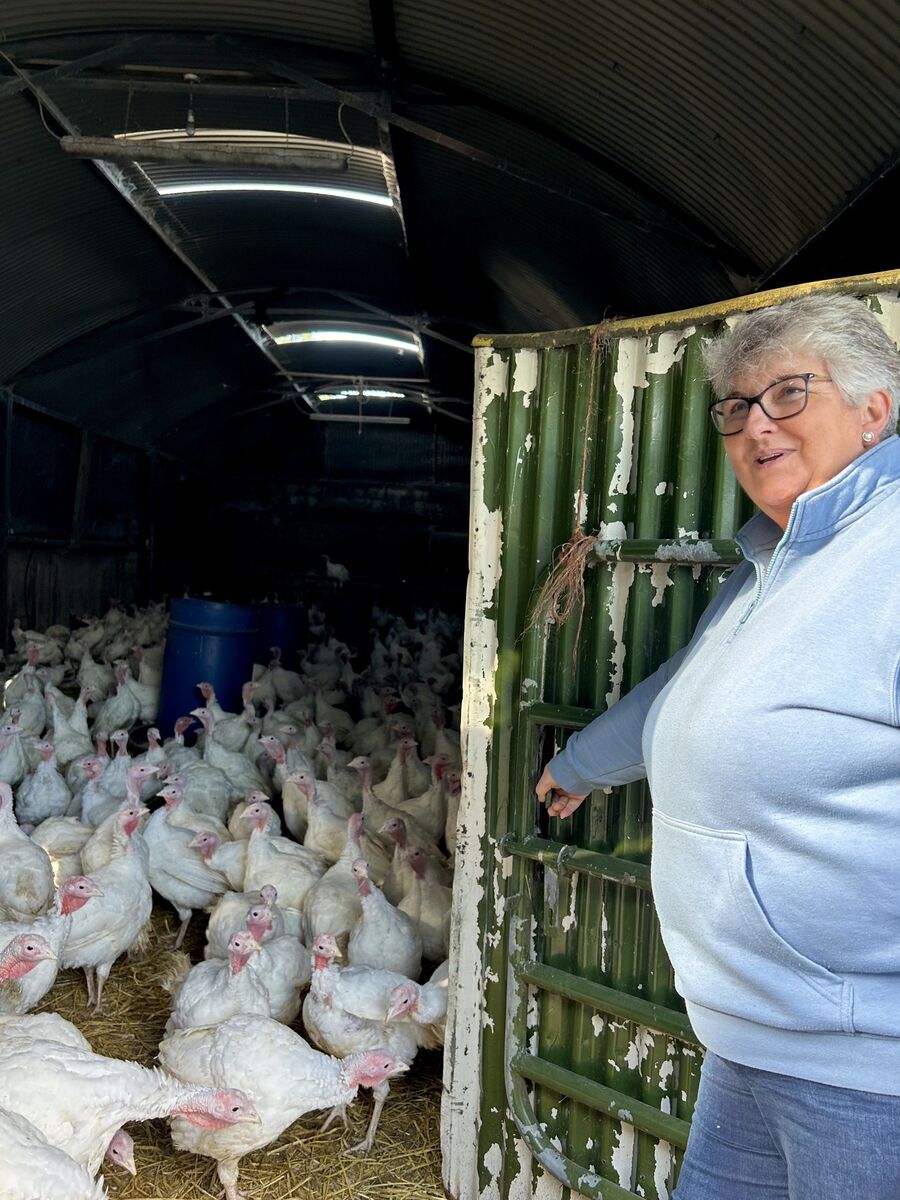
Denise and Sean Healy on their farm in Carrignavar, Co Cork. Pictures: Joe McNamee
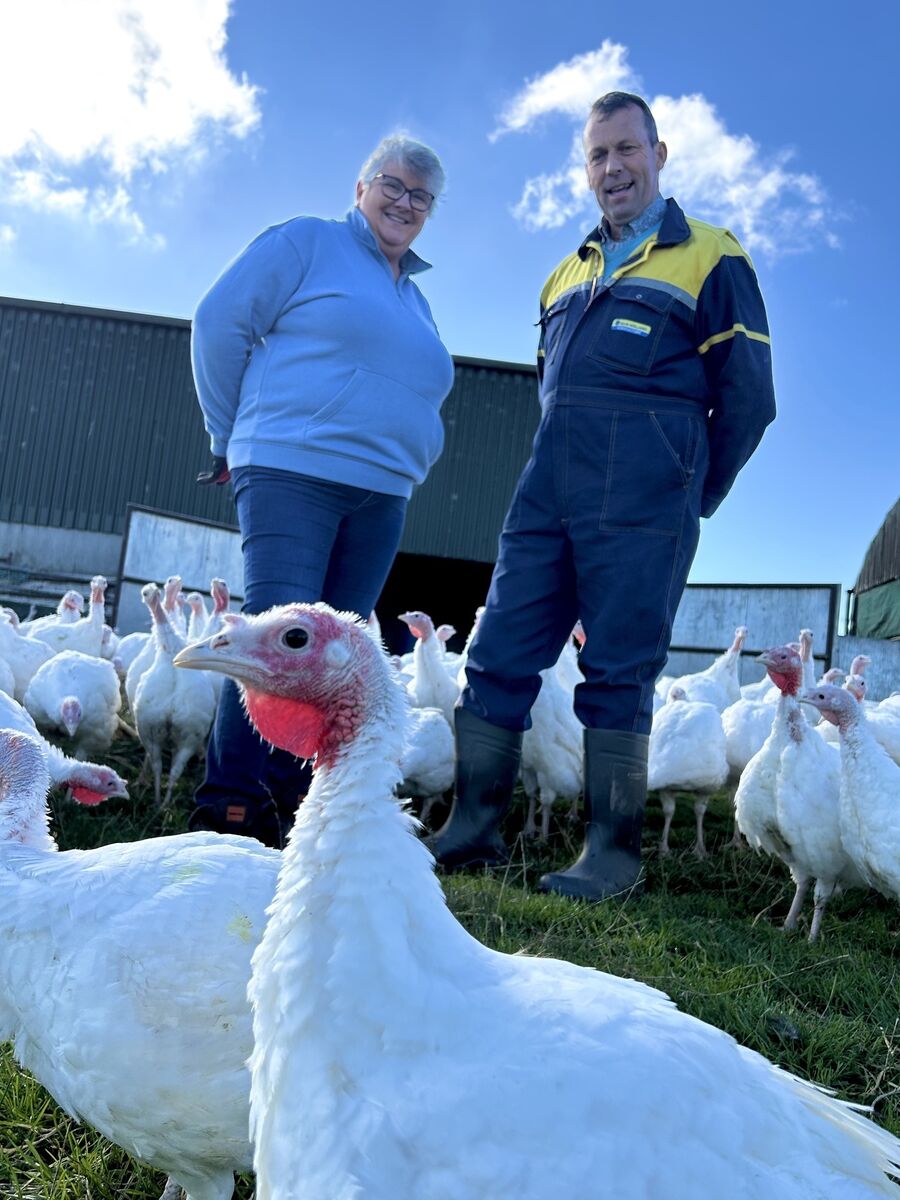
I eat turkey just once a year. Carvery turkey with ham reminds me of bad boarding school dinners and I’d eat buckets of cold porridge before low fat/high protein ‘healthy option’, industrially-produced turkey slices. But if you serve me up a glistening, golden roasted bird with all the trimmings on Christmas Day, then I’ll be yours forever.
The Christmas turkey can be quite the palaver, especially if that palaver begins with sourcing. For some years, I cooked superb, local, free range birds from Tom Clancy (Ballycotton Free Range) until he, like too many other small farmers, was squeezed out by the industrial food system. I gave up turkey altogether. Then I learned of Denise Healy, married to dairy farmer Sean Healy, and living in Carrignavar, 10 miles north of Cork city.

“When I first came to this farm, about 34 years ago, there were no turkeys, just a few hens, but I grew up with turkeys at home,” says Denise.
“My mother and father always had turkeys. I remember no Christmas without a turkey. Wouldn’t be Christmas without it.
“My first Christmas here, there was something missing. So I went to my parents just to help out. The following year I had 20 turkeys myself. And it grew from there, word of mouth.
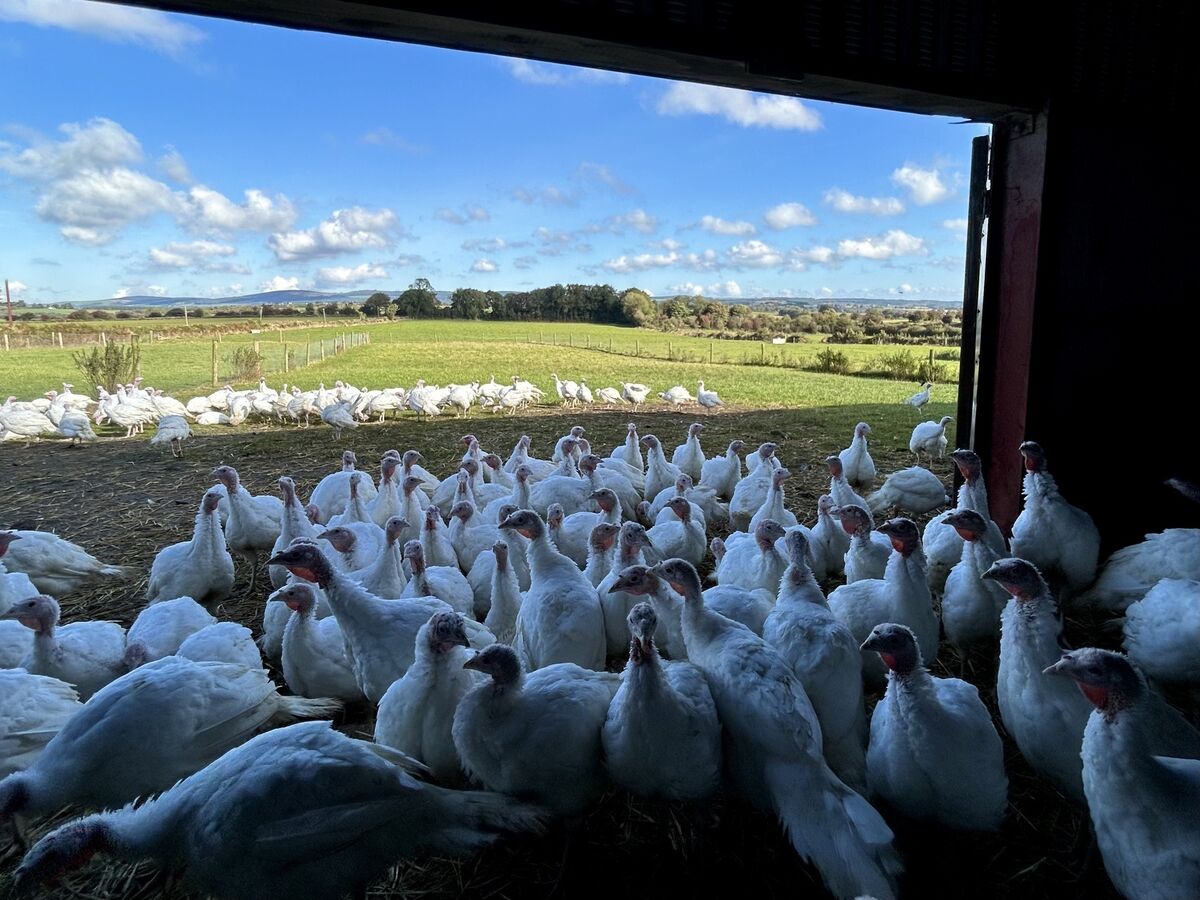
“My father’s birds would have been barn-reared, but when I started to go up in numbers, I just wanted to get them out into the field. I love free range, organic — though we will never be an organic farm because of the expense, there would be no return. The market is so small and niche, you can’t go out and charge €200 for an organic bird when you could get a free range for less than €100, but I love to get them as pure as possible.”
The process begins in July when Denise gets three-week-old chicks from the North.
“This year was fantastic, brilliant weather, so, about a week after I got them down, they were well settled and out on the grass — if it is wet and cold, they take longer, maybe six weeks before they’re out.

“Everything is a novelty to them. They’ll dig holes and they love grit. When the first rain shower comes, they hate it initially, but it makes the feathers waterproof and then they go, oh, it’s OK. When they first experience an aeroplane passing overhead, the shadow crossing the land like this big bird passing over the paddock, they race for indoors, but they get immune to it after a while.
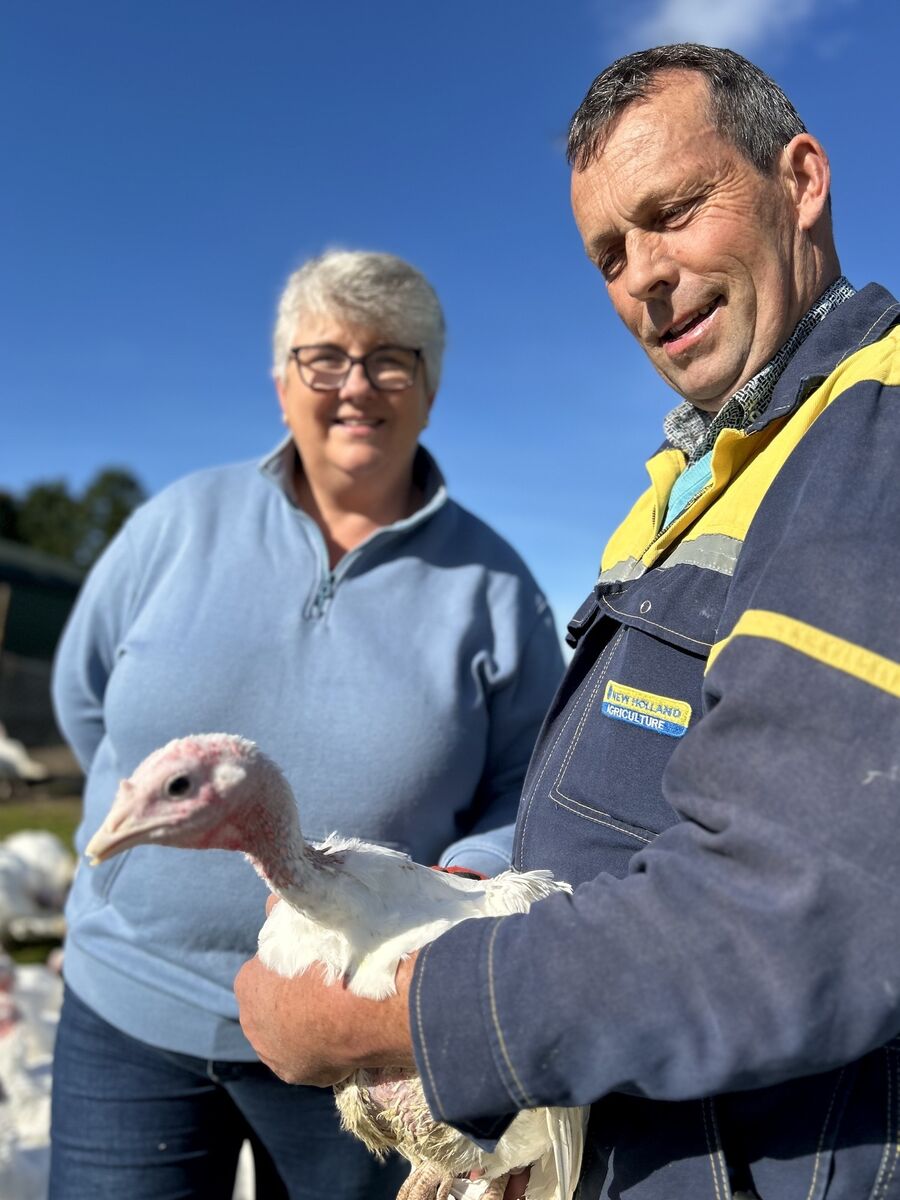
“They can be as stubborn as mules when it’s time for bed. They’re like children, you’re better off to use reverse psychology, try to get them to do the opposite of what you want them to do.”
The outdoor life is not without threat, though.
“Buzzards can actually lift them when they’re small,” Denise explains. “There are two buzzards down the road we keep an eye on but foxes would be the main one. Mink would be another; they just come in and kill, they could destroy a whole shed of turkeys. One year, the cat had kittens and was trying to feed them and came in to help herself. You learn over the years to find whatever hole there is into the shed and block it.”
The daily routine is pretty straightforward.
“After milking, around 8.30am, we’d go down and walk through, checking everything, looking for any turkey that’s damaged from fighting or whatever during the night, and checking the house is still sealed the way it should be.
“A bird could be getting bullied and not getting enough feed. So I just isolate them for a week or so, give them feed and a bit of TLC and they come around, they’re fine.

“After the check, I open the door and let them out for the day. In the evening, we milk around 4pm, and then we round them up. Sometimes if it’s wet, they’re already in. If it’s fine like today, it could take a while, so I just put on the lights in the house, have our dinner and when you come back, it’s dark so they’re all inside, so we shut them up for the night. There’s no trouble in them.”
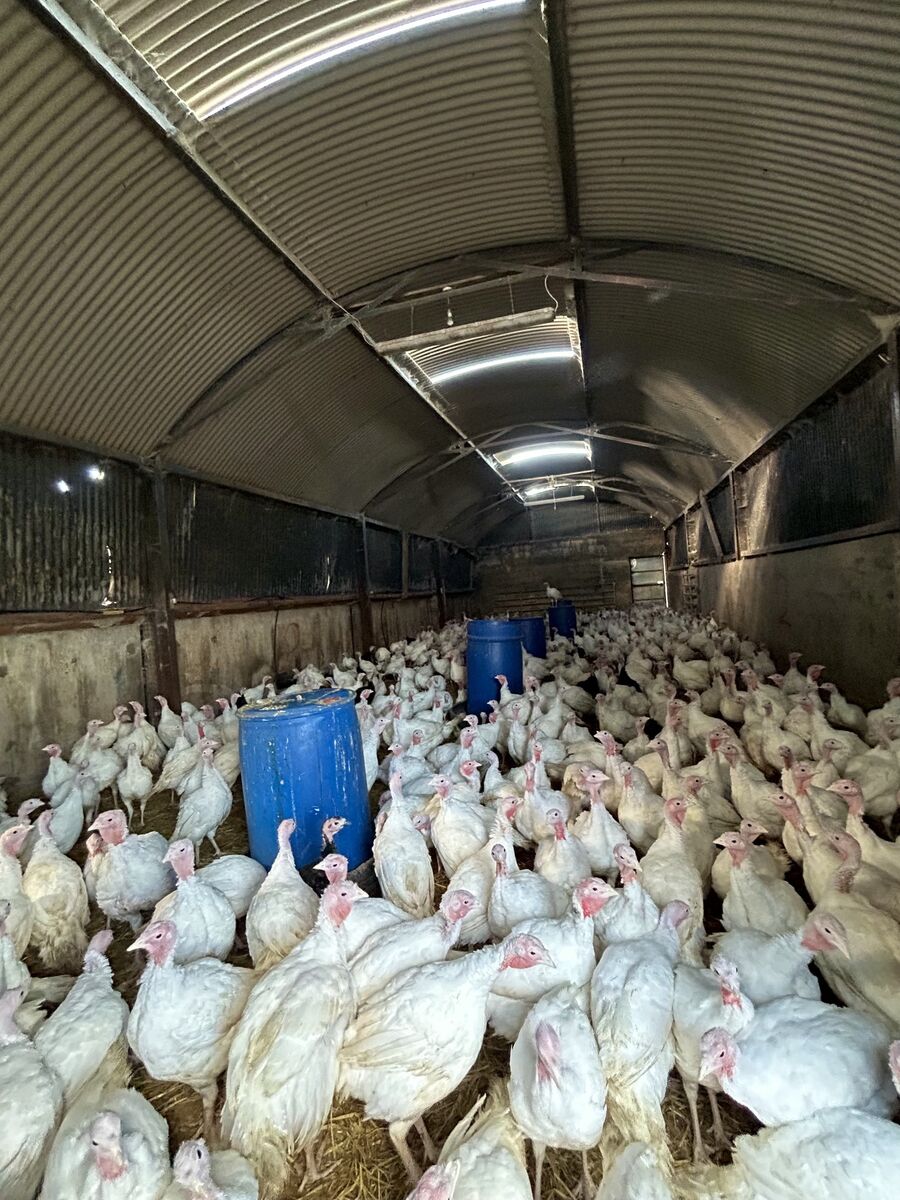
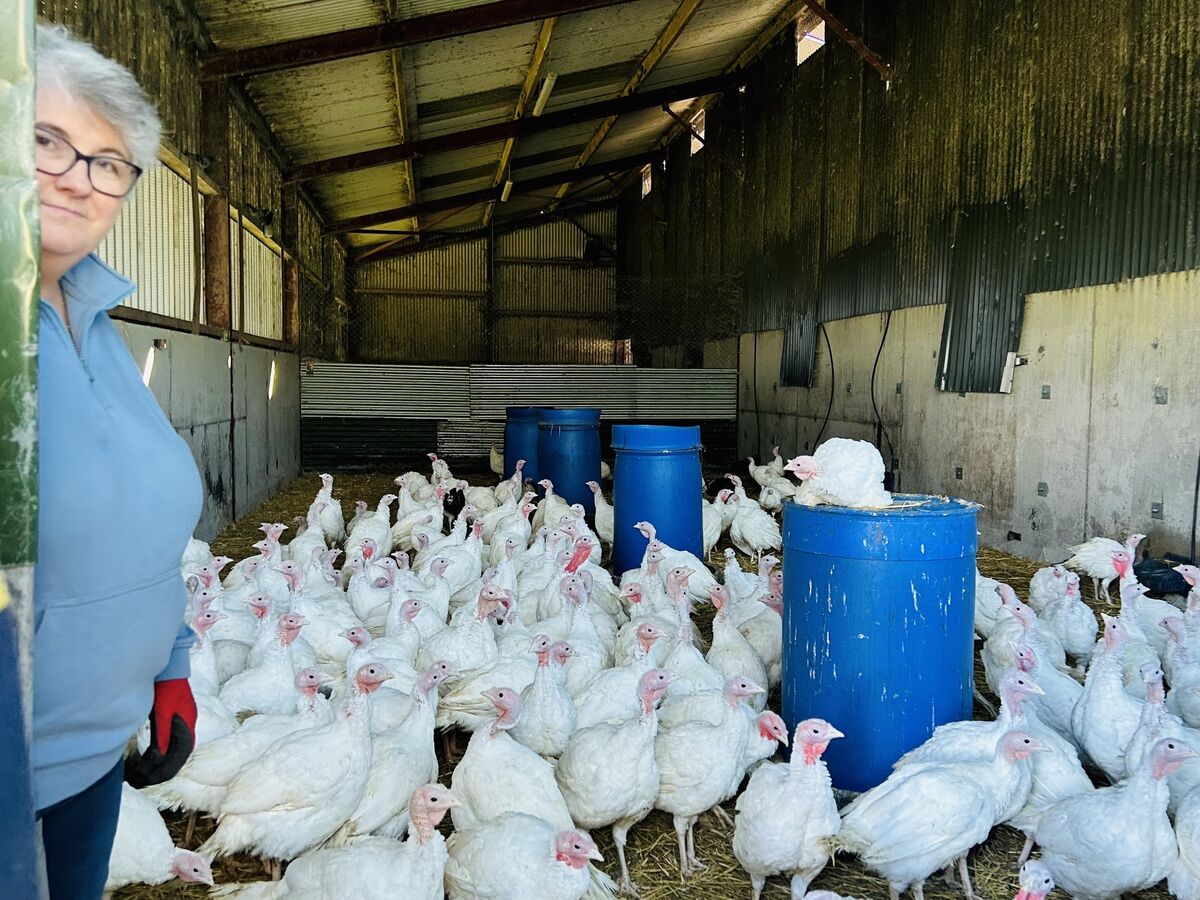
In November, they are brought inside for good to finish them for slaughter.
“I really have to watch them at that stage for gaining the weight because they won’t be exercising as much. It’s harder to gauge the weight when they’re locked into the house. People are paying top price for the turkey, so I’m very mindful of giving them what they want, the right weight for the amount of people being fed.”
Slaughtering begins around December 6, and Denise is a rarity in being able to slaughter on her own farm, the last poultry farmer in Munster trained and licensed to do so. As more and more small abattoirs close down all over Ireland, the few remaining small livestock producers are forced to travel further, often long distances, to find an alternative.
“I did a course with the Department of Agriculture, how to kill turkeys and do it right. You have to keep up to date with skills, every year there is something new. Long ago, we broke their necks but now they are stunned. Instant and painless.”
Slaughtering and plucking takes up to a week, and then they dry age, hanging for 14 days in the cold room. What’s more, each of the 1,000 birds is hand-plucked.

“I don’t have a machine — which, anyway, only takes off big feathers — they’re all hand finished. And I don’t like wet plucking [dunking birds in boiling water to loosen the feathers, negatively impacting the eventual cooking]. If I went down the road of industrial processing, I might as well send them off somewhere else. I feel a premium product should be hand plucked.”
Denise supplies turkeys to several butchers around Cork, including O’Sullivan’s and O’Mahony’s in Cork’s English Market, but she relishes the tradition of selling directly to almost 400 customers each year. It is all about the personal interaction, even when dealing with online queries.
“I get a lot of online queries but I prefer to speak to them instead of texting over and back, a quick phone call. At least you know who’s on the other side and who you’re dealing with. I make a point of meeting every single customer and I give them what they want, not what they think they need. I ask how many they’re having for dinner and are they planning on eating it right through Christmas, sandwiches, curries and so on. I hate food waste and I like to give a customer value for their money. There’s plenty of other things you need to buy at Christmas.”
On December 23, customers come to Healy’s Farm for their free range birds. (Denise also opens for collection from 7am to 12pm on Christmas Eve.)

“Yeah, it is mental, they start arriving from 8am and we’re there til 8pm at night. We have over 400 home orders and you know how narrow my lane is. Whatever a customer wants, I’ll do it for them. Different cuts, boning, rolling, crowns, butterflied, wishbone removed, legs cut off for soup, halved, if they want half for Christmas Day and the other half for New Year’s Day. And they get them wrapped in greaseproof paper in a cardboard box, with some herbs and a recipe card with cooking guidelines, depending on the weight — I don’t like plastic bags, I think it affects the quality of the meat.
“I’m not going to retire to the Riviera doing this, it’s a family business, and a passion for me. I love the buzz of Christmas time. I love meeting my customers, giving them that personal attention. I couldn’t do that if I had 10,000 turkeys going out.
“I have kids coming to me since they were in car seats and now they’re 15, 16 and it’s their Christmas thing every year and they never miss the trip. They’ve gone from looking for a few sweets to maybe getting a fiver for a drink. I have parents coming who came here as kids. The tradition is huge for me, I got it from my parents and my father still comes out. He’s still stuck on it, and he loves the banter. He’d be sending the kids off for a bucket of steam or one year, he sent a young fella for a bag of fallopian tubes — he got a lesson in biology right there and then! It’s just having the craic.”

Once Christmas is over, the big clean up begins. Because of EU nitrate derogations which restrict the amount of slurry that can be spread on farmland, all straw used in the bird houses which is full of poultry manure has to be removed from the farm. Previously, Denise passed it on to a mushroom farmer in Wexford but had to cover the sizeable expense of hiring an artic truck to collect it. So, a big fan of circular food economies and ‘staying local’, she’s delighted with her new ‘disposal system’.
“I met Brian [McCarthy, proprietor of Cork Rooftop Farm, whose outdoor market garden farm is just a few miles away] last year and he was delighted to take it, he lets it rot down for a year then uses it on the vegetables. So I was able to sort a tractor and trailer and get it over to Brian, it took the pinch out of the overall costs. There are so many hidden costs, packaging, offal, €600 alone to dispose of the feathers.
“Then we do a massive clean down for calving season when the bird houses go back to Sean for his calves. The changeover happens in the middle of January, so for the first two weeks, we just lay down and do nothing, kind of holidays. When the calves are finished in May or June, they go back to being turkey houses all over again in July.”
“It’s a family run operation and it connects you to your food in a very special way and it would be such a shame to see those traditions being lost. But I’m a very optimistic person, the wheel always turns. You see small artisan producers coming up with different ideas and processes, and you know there’s hope for everyone. A new generation will take that on board and say, oh yeah, we can do this, we can make it, and they won’t be afraid to try things. So I’ll just keep fighting for as long as I can, keep your produce local and support local.”
Looks like turkey is back on the menu for my Christmas dinner!
- Joe visited Healy’s Farm earlier this year just before current national biosecurity measures were implemented for food health and safety, and which Denise fully supports.