Seafood Made Simple: How to make a classic fish and chips
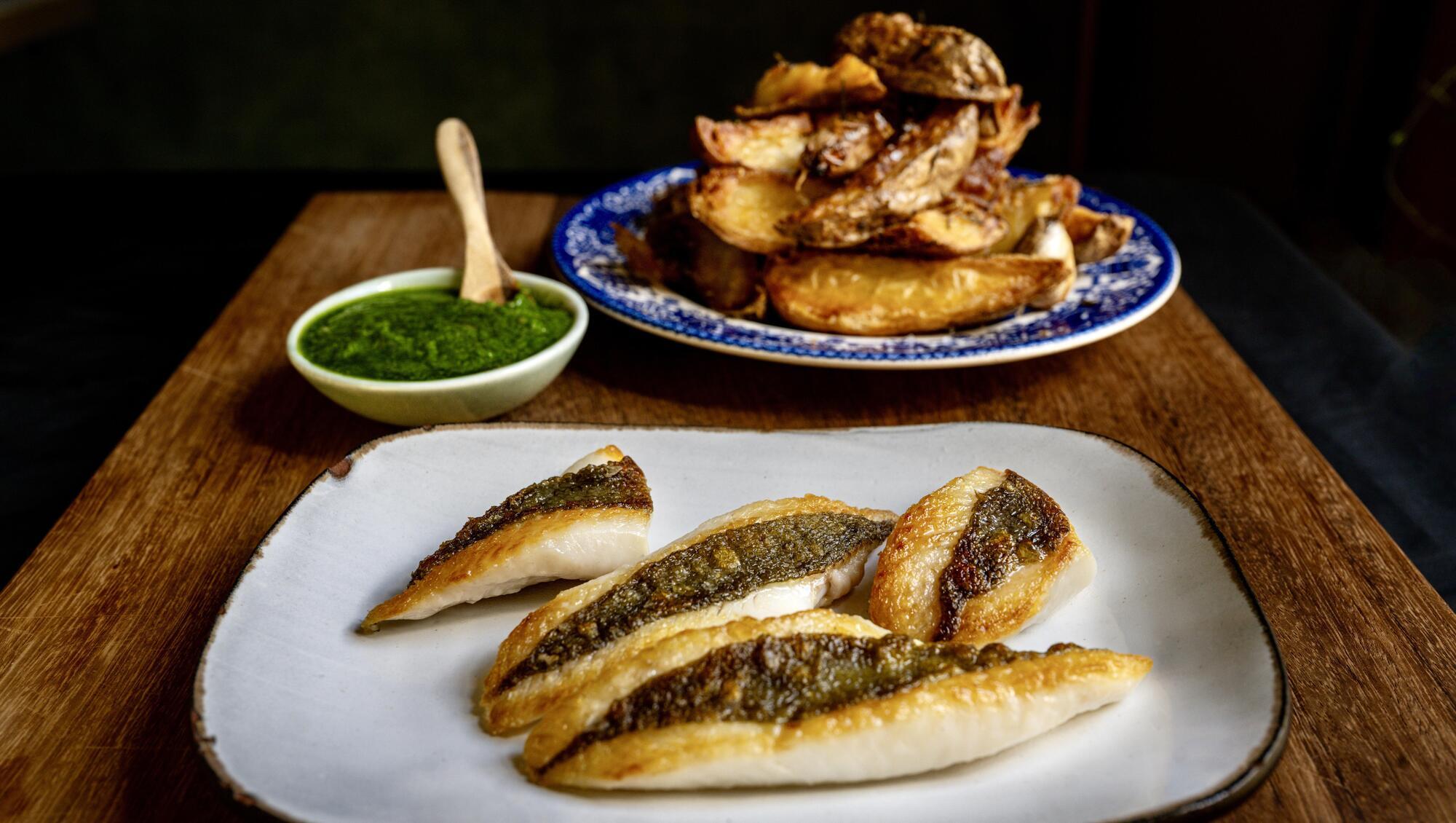
This weekend, I’m sharing my preferred method for making chips at home. I’ve opted for some skin-on wedge-shaped chunks, but slice as you wish if you’d prefer a typical chip.
Seafood Made Simple: How to make a classic fish and chips

Dory, wedges and salsa verde. Picture: Chani Anderson

Fish and chips, in any of its forms, is always a winner.

This weekend, I’m sharing my preferred method for making chips at home. I’ve opted for some skin-on wedge-shaped chunks, but slice as you wish if you’d prefer a typical chip. 

I adopt the same method one would use to produce the perfect roast potato, par-boiling the spud before roasting in a preheated oven, allowing for maximum crunch.

Adding some unpeeled cloves of garlic and rosemary to the potatoes whilst simmering in salted water brings so much flavour; don’t discard them after draining as they’ll crisp up wonderfully in the oven. 

Choose a floury potato variety for this recipe, such as Maris Pipers or Rooster potatoes.

Salsa verde is one of those classic sauces served with seafood. It’s a brilliant recipe to have in your repertoire if you’ve got herbs growing in the garden this time of the year.

Any soft herbs will work like tarragon, chervil, fennel fronds, even a little lovage perhaps. 

Swap the capers for a fresh or pickled jalapeno and mint and dill for some fresh coriander if you’d like something with a little heat. 

I’ve used a food processor for ease here, but you can, of course, finely chop all the ingredients to achieve more of a salsa style sauce.

Flat fish in the summer months are just fabulous. For this recipe, I’ve used john dory, a brilliant fish for home cooking as the skin, once patted dry, acts as a fantastic nonstick barrier. 

Pretty much every fish in the sea will work for this recipe so pick what’s freshest!

Lemon sole, megrim and plaice are all excellent substitutions.

Dory is on the trickier side to prepare whole as it has ferociously sharp fins, so do ask your fishmonger to fillet it for you.

John Dory, potato wedges and salsa verde

recipe by:Aishling Moore

Dory is on the trickier side to prepare whole as it has ferociously sharp fins, so do ask your fishmonger to fillet it for you.

John Dory, potato wedges and salsa verde

Servings

4

Preparation Time

30 mins

Cooking Time

60 mins

Total Time

1 hours 30 mins

Course

Main

Ingredients

  • For the potato wedges:

  • 500g potatoes

  • 6 cloves of garlic

  • ½ bunch of rosemary

  • 2 tbsp rapeseed oil

  • For the John Dory:

  • 4 x 130g fillets of john dory

  • 2 tbsp rapeseed oil

  • Fine sea salt

  • For the salsa verde:

  • 1 bunch flatleaf parsley

  • 2 sprigs of mint

  • 2 sprigs of dill

  • 1 tsp capers

  • 1 lemon, juice and zest

  • 1 clove of garlic, minced

  • 3 tbsp rapeseed oil

  • Sea salt

Method

  1. For the potato wedges, preheat oven to 190°C/Gas mark 5.

  2. Slice the potatoes into evenly sized wedges.

  3. Place in a large saucepan along with the garlic cloves and rosemary. Fill to cover with cold water and season generously with salt. Place on a medium heat and simmer until tender. Approximately 10-12 minutes.

  4. Remove from the heat and drain off the water through a colander. Toss the potatoes and allow to steam for 3 minutes.

  5. Place the potatoes along with the garlic and rosemary on a large roasting tray and drizzle with rapeseed oil and toss to coat. Season and bake in the oven for 30-35 minutes. Turning the wedges halfway through.

  6. To make the salsa verde, roughly chop the herbs and place in a food processor along with the remaining ingredients. Pulse to combine. Taste to adjust seasoning.

  7. Remove the fish from the fridge 15 minutes before you intend to cook it. Pat dry to remove any excess moisture and season with fine sea salt.

  8. Preheat your frying pan on a medium-high heat for 2 minutes.

  9. Add the rapeseed oil before placing the John Dory in the pan, laying the fillet down and away from you, to avoid oil splatters. Once in the pan, do not disturb the fillet or move the pan. Allow the crust of caramelisation to develop evenly, approximately 2-3 minutes. Using a fish slice, confidently lift the fillet from the pan and place on a baking tray.

  10. Transfer to the preheated oven for between 1-2 minutes, depending on the size of the fish.


Fish tales


  • Preheating your frying pan is the most crucial step in pan frying a piece of fish. The goal is to achieve an even temperature across the full surface area of the pan. Cold pockets will cause your fish to stick.
  • No matter what piece of fish you are cooking when removing from a pan always lift from the tail end of the fish. It causes less damage to the skin.
  • Make sure you’re using a pan that’s large enough for the number of portions you’re cooking. Avoid overcrowding the pan, each addition to a cooking surface reduces the temperature of the pan. Work in batches if needs be.
  • The salsa verde will keep for up two days in the fridge. Sauces, like these, however, are best made on the day.
  • To get ahead, I often par boil my wedges the day before. Spending the night in the fridge helps the potatoes to dry out, resulting in a crisper chip.

x

More in this section

ieFood

Newsletter

Sign up for our weekly journey into the best of Ireland’s food scene with recipes, reviews and stories from our award‑winning food writers.

Cookie Policy Privacy Policy Brand Safety FAQ Help Contact Us Terms and Conditions

© Examiner Echo Group Limited