Back to basics with three recipes from Anna Haugh that anyone can cook at home
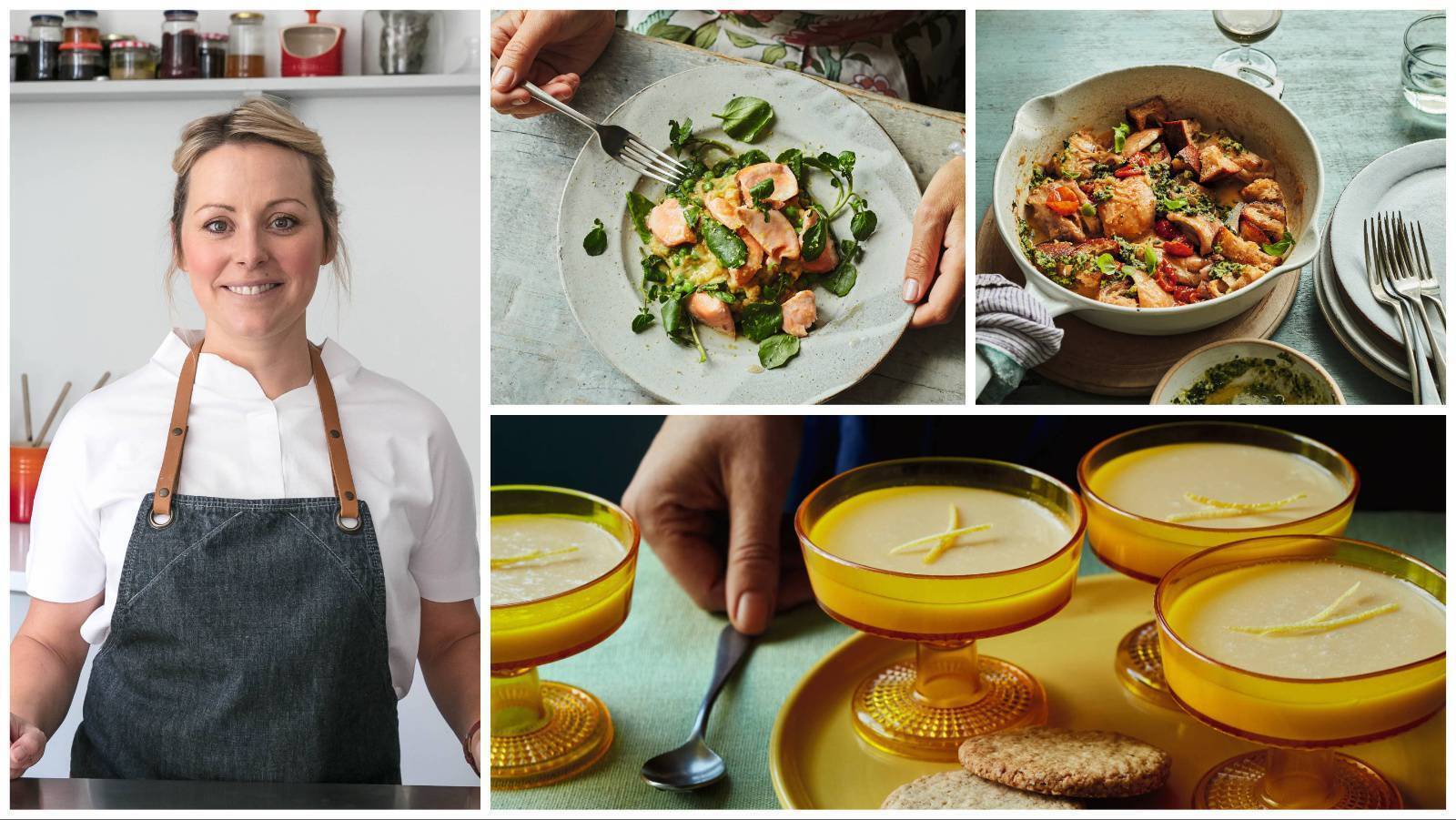
Anna Haugh’s first book could have been a vehicle to showcase her restaurant Myrtle. Instead, she went back to basics, focusing on recipes we can all cook at home. Interview by Ali Dunworth
Back to basics with three recipes from Anna Haugh that anyone can cook at home

Cooking with Anna is Anna Haugh's first book and it’s a masterpiece in bringing together decades’ worth of experience from fine dining kitchens and translating them for the home cook. Photography by Laura Edwards
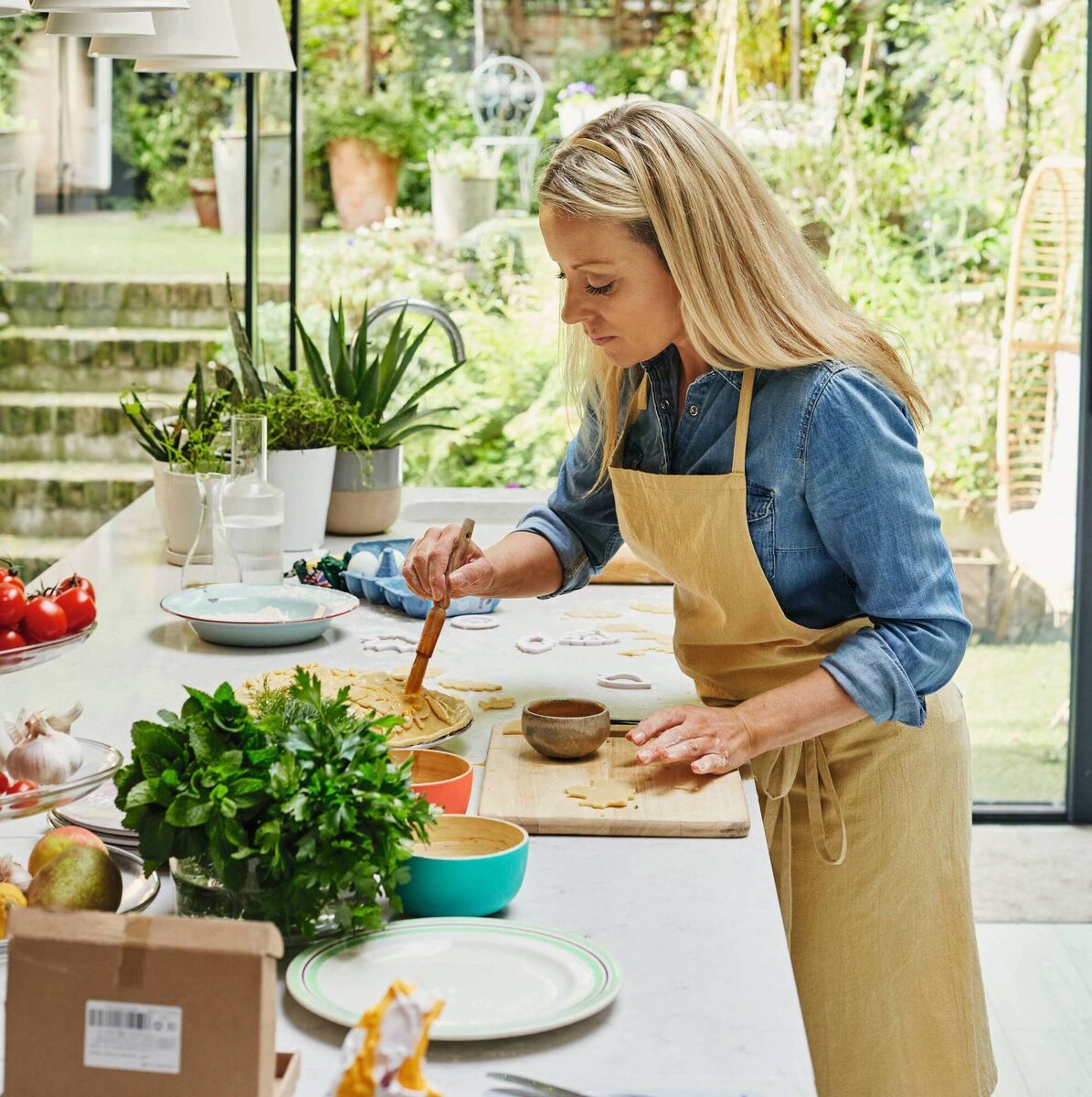
Anna Haugh dedicates her new book Cooking with Anna to Liz Dunne, ‘the woman who saw the chef in me before I even knew I was one’.

Anna always loved being in the kitchen, she tells me, from “as soon as I could stand”, but it wasn’t until Liz, her best friend’s mother suggested cheffing that she thought about it as a career. “Liz turned to me one day and said ‘you should be a chef, when you’re in the kitchen you change, you become more alive’.” 

Anna was still in school, so she took the idea to her guidance counsellor who cracked up laughing. “She slapped her thigh, tears came out of her eyes, and she was like, ‘Oh Anna, thank you so much, you’ve absolutely made my day’. Then she told me I should be a teacher”.

Despite this first rejection, the seed was planted and when Anna spent a summer in Jersey working in a café she ended up in the kitchen opening tins of fruit. 

“And something in my stomach genuinely just clicked. I was like, this is it. I belong here! I think the kitchen is a vocation, like when a holy person goes into a church and something clicks and they’re like ‘this is where I want to spend all of my life’. That happened to me and that’s what I’ve done.”

This vocational calling led her to Dublin’s DIT to study Culinary Arts and then on to work with Derry Clarke in L’Ecrivain before embarking on her pilgrimage to London. Here, she built an impressive CV, working with Shane Osborn at Pied à Terre, Philip Howard at The Square and Gordon Ramsay before opening her own restaurant, Myrtle, in Chelsea in 2019. 

The kitchens she trained in were high-stress, busy, and shouty at times, but Anna credits these chefs and restaurants with really teaching her to cook.

“They were the real university of training for fine dining food. They weren’t necessarily the most appealing environments for most people but I loved it. I loved it. I thrived in that environment.” 

It wasn’t all about the cooking either; she learned resourcefulness, and how not to waste. Anna writes ‘even in peeling there is the opportunity for creativity’ and these insights and tricks of the trade are peppered throughout her book. Banana skins become a delicious no-waste vegan pulled pork, she urges us to use lemon zest to infuse olive oil or sugar or to repurpose gazpacho as a base for a tomato martini.

Home cooking has always been a big part of Anna’s life

Cooking with Anna is her first book and it’s a masterpiece in bringing together decades’ worth of experience from fine dining kitchens and translating them for the home cook. It’s full of recipes you will want to cook that feel manageable with the solid knowledge that a chef of Anna’s calibre can bring. It’s very much aimed at the home cook but I wondered if l she had thought about doing a big glossy cheffy book? A book showcasing Myrtle, her Irish restaurant in London, seems like a no-brainer. 

“Yes! I went through an emotional rollercoaster. I started with so many more recipes and many of them were cheffy. I went around in circles,” she admits.

It wasn’t until she started the process of putting the book together, testing the recipes and planning photographs that she felt the final concept took shape. 

“I realised when we were doing the book [that] it’s about much more than the food. The text matters, the photograph matters, and it’s not just about beauty, it’s a piece of information to give you. There has to be functionality to everything.”

The home cook became the person she focused on. 

“I thought, who’s this book for? Is it for my ego? Is it that I want other chefs to look at it and tell me that it’s good? That was a real battle. But chefs, they’re not my target market for this. So I just kept thinking about who’s going to buy this book.” 

She thought about the people who come to her cooking demos and ask questions and viewers who watch her cooking on TV.

Home cooking has always been a big part of Anna’s life.

I feel very lucky to have grown up in a house where they really understood food. My mam was about the nourishment and my dad, the curiosity, and those two worked really well together.

Anna learnt to cook from her mother, ‘my first head chef’ and references her throughout the book in recipes and dishes that won’t be unfamiliar to many Irish readers. There’s Mammy’s apple tart on a plate, her shepherd’s pie with forked spuds and her white coddle which Anna calls ‘real coddle’ adding, ‘if anyone has a problem with that, they can talk to my mam’.”

Cataloguing and passing on these dishes is important to her. 

“I think every Irish chef should be trying to protect what our parents and our grandparents cooked.” 

Her own home cooking happens between shifts at Myrtle, at home with her partner Rich, her son Oisín and stepson Henry and she cooks a lot. 

“If I’m not in Myrtle I cook at home every single day. There are loads of recipes in there that I cook every week or two weeks or once a month.”

The book has a great vegetable section where carrots and parsnips are not just side dishes but are brought front and centre in her bright, doable recipes and fish is another section that stands out and is really useable linking, once again, back to her childhood. She writes about eating fish three times a week, of her Dad quizzing the fishmongers and of vivid memories ‘of glorious gurnard dinners’.

Throughout the book, and it seems, Anna’s career, she has in fact ended up being a teacher in so many ways so I wonder was her guidance counsellor right all along? 

“Essentially she wasn’t wrong!” Anna agrees. “To be a good chef you have to be a teacher. Yeah, so she wasn’t technically wrong, she saw something in my personality, I guess.”

And Anna is a joy to learn from. We know that from watching her on our TV screens and now Cooking with Anna delivers that same warmth, in the dishes and the writing.

Chicken Fricasse with Pesto & Sun-dried Tomatoes

The name here might sound fancy, but my goodness is it a simple dish. There are layers upon layers of flavour, but it’s easily put together while relaxing to a favourite podcast.
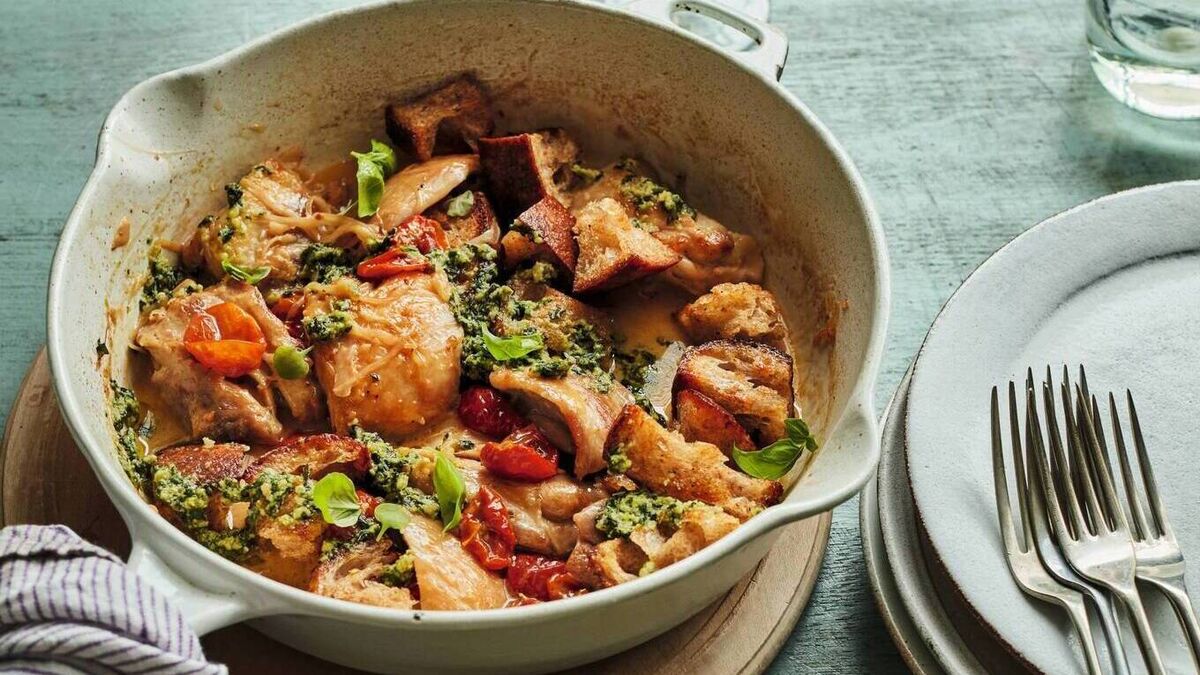
Chicken Fricasse with Pesto & Sun-dried Tomatoes

Servings

2

Preparation Time

5 mins

Cooking Time

40 mins

Total Time

45 mins

Course

Main

Ingredients

  • For the pesto

  • 1 tbsp pine nuts

  • bunch of basil

  • 1 garlic clove, crushed or finely grated

  • 1 lemon

  • 40g (about 2½ tbsp) extra virgin olive oil

  • 20g (4 tsp) vegetable oil

  • 40g finely grated Parmesan cheese, or vintage Cheddar

  • sea salt

  • For the chicken

  • 2 tbsp vegetable oil

  • 300g skin-on boneless chicken thighs

  • 1 garlic clove, finely sliced

  • 1 shallot, finely sliced

  • 100g white wine

  • 100g chicken stock

  • 40g salted butter

  • 50g semi-dried tomatoes (the bright red ones)

Method

  1. Put the pine nuts, basil and garlic in a food processor. Zest in the lemon and pulse-blend to keep some texture adding both types of oil slowly along with a pinch of salt, then finally stir in the Parmesan or Cheddar. Taste and add a squeeze of lemon juice.

  2. For the chicken, heat a sauté pan over a medium-high heat and add the oil and a sprinkle of salt. Add the chicken, skin side down, and cook until caramelised.

  3. Add the garlic and shallot and stir until softened, then pour in the wine and boil until it has nearly disappeared. Pour in the stock and bring to the boil, then stir in the butter and semi-dried tomatoes. Taste to see if it needs more salt.

  4. Serve the fricassee with the pesto.

Monday Night Salmon with Chickpea, Peas & Watercress

Usually, after a weekend, I want to eat something light and on the healthy side, but I never want to spend ages in the kitchen. So it has worked out that I make a version of this recipe most Mondays!
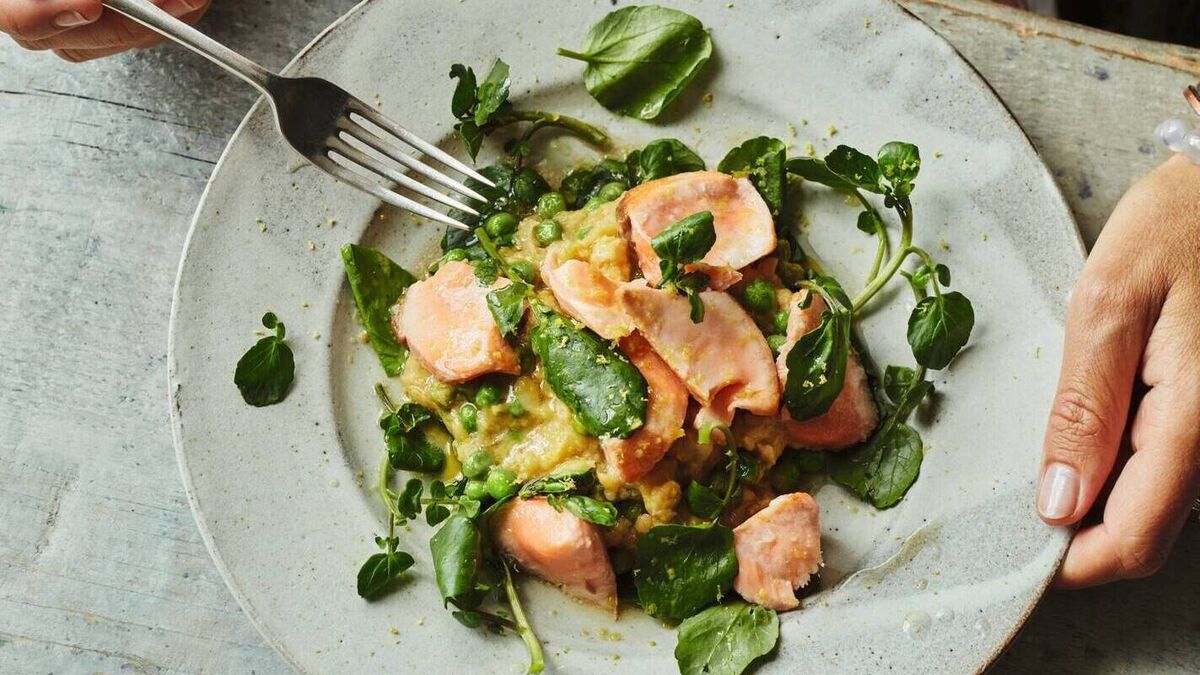
Monday Night Salmon with Chickpea, Peas & Watercress

Servings

2

Preparation Time

5 mins

Cooking Time

10 mins

Total Time

15 mins

Course

Main

Ingredients

  • 2×100g salmon fillets, skin on or off, as you prefer

  • 200g canned chickpeas (drained weight)

  • 40g (about 2½ tbsp)

  • extra virgin olive oil

  • 100g frozen peas

  • finely grated zest and juice of 2 lemons

  • 80g watercress, or rocket

  • sea salt and freshly ground black pepper

Method

  1. Preheat the oven to 180°C fan.

  2. Season the salmon with salt and pepper and place on a baking tray. Cook in the oven for 10 minutes. Check it is cooked by inserting a skewer.

  3. Meanwhile, pour the chickpeas on to a large plate and crush with a fork.

  4. Put the extra virgin olive oil in a pot with a pinch of salt and add the chickpeas and your frozen peas. Set over a low heat and slowly warm up, adding the zest and juice of 1 lemon. Give it a mix and taste to see if it needs more salt.

  5. Take a handful of watercress or rocket and place it in the centre of the plates.

  6. Spoon your chickpea and pea mix over and flake the salmon on top.

  7. Add the remaining lemon zest and a squeeze of the juice and you’re ready to go.

Lemon, Lemongrass & Cardamom Posset

Recipes don’t get much easier than this. At the end, you have a luscious pudding that your friends and family will rave about. You can serve it with shortbread biscuits on the side, or lovely sweet oat cakes.
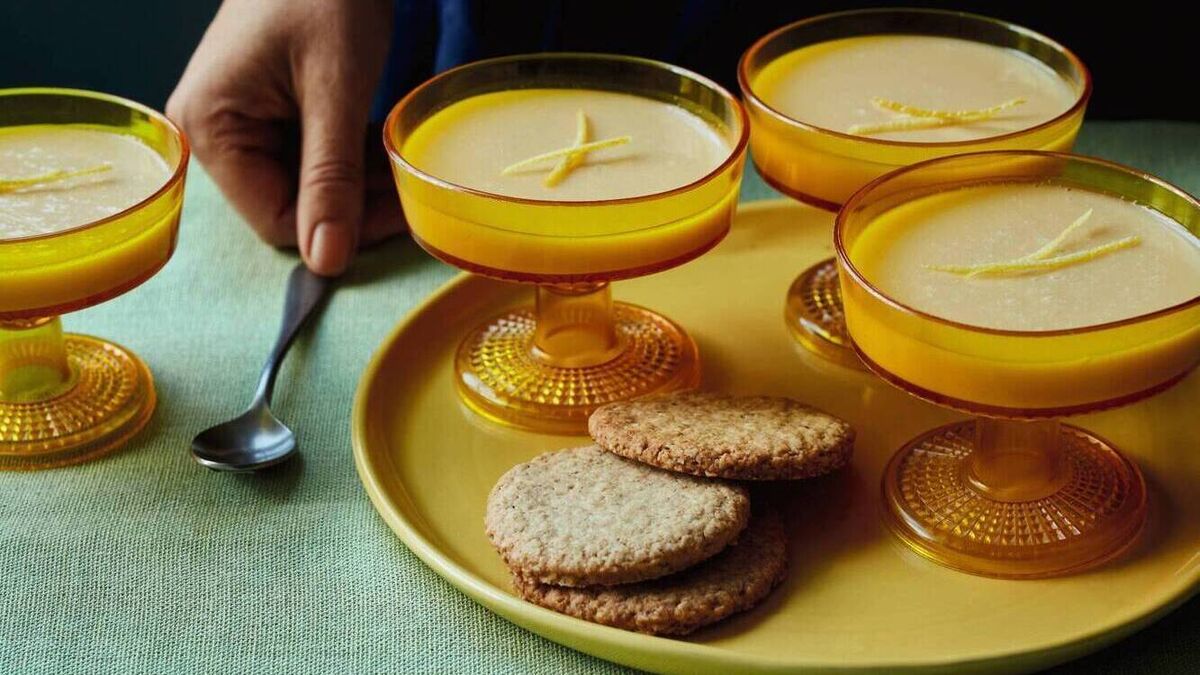
Lemon, Lemongrass & Cardamom Posset

Servings

6

Preparation Time

8 hours 0 mins

Cooking Time

30 mins

Total Time

8 hours 30 mins

Course

Dessert

Ingredients

  • For the lemon reduction

  • Juice of 2 lemons (see below)

  • seeds of 4 green cardamom pods, crushed

  • For the posset

  • 200g caster sugar

  • 500g double cream

  • 2 lemongrass stalks, trimmed

  • To serve

  • finely grated lemon zest

  • small mint leaves

  • Oat cakes or shortbread biscuits

Method

  1. First make the reduction: put the lemon juice in a saucepan and reduce by half. Once done, add the ground cardamom seeds, return to the boil, then leave to cool.

  2. Add all the other ingredients for the posset, bruising the lemongrass stalks with the back of a heavy knife or a rolling pin to release their aroma, then bring to the boil.

  3. Pass through a sieve, then pour into 6 glasses. Do not move the glasses for 10 minutes: this will allow the posset to set slightly, so when you do move them to the fridge, the mix doesn’t splash up the sides of the glasses.

  4. Leave for as long as you can in the fridge, ideally overnight. Serve with lemon zest and ripped mint leaves on top and oat cakes on the side.

  5. Tricks of the trade: Don’t waste the zest of lemons when you only need their juice for a recipe. Instead, infuse the zest in a bottle of olive oil, or put it in a tub of granulated sugar.

  6. This citrus-scented sugar is a secret weapon which will gently flavour cakes and other bakes. Or, of course, just freeze the zest as it is for another time.

Cooking with Anna by Anna Haugh is published by Bloomsbury.

  • Interview by Ali Dunworth
  • Photography by Laura Edwards
  • Recipes by Anna Haugh

More in this section

ieFood

Newsletter

Feast on delicious recipes and eat your way across the island with the best reviews from our award-winning food writers.

Cookie Policy Privacy Policy Brand Safety FAQ Help Contact Us Terms and Conditions

© Examiner Echo Group Limited