Expert tips on how to save money in the kitchen and three budget-friendly dinner recipes
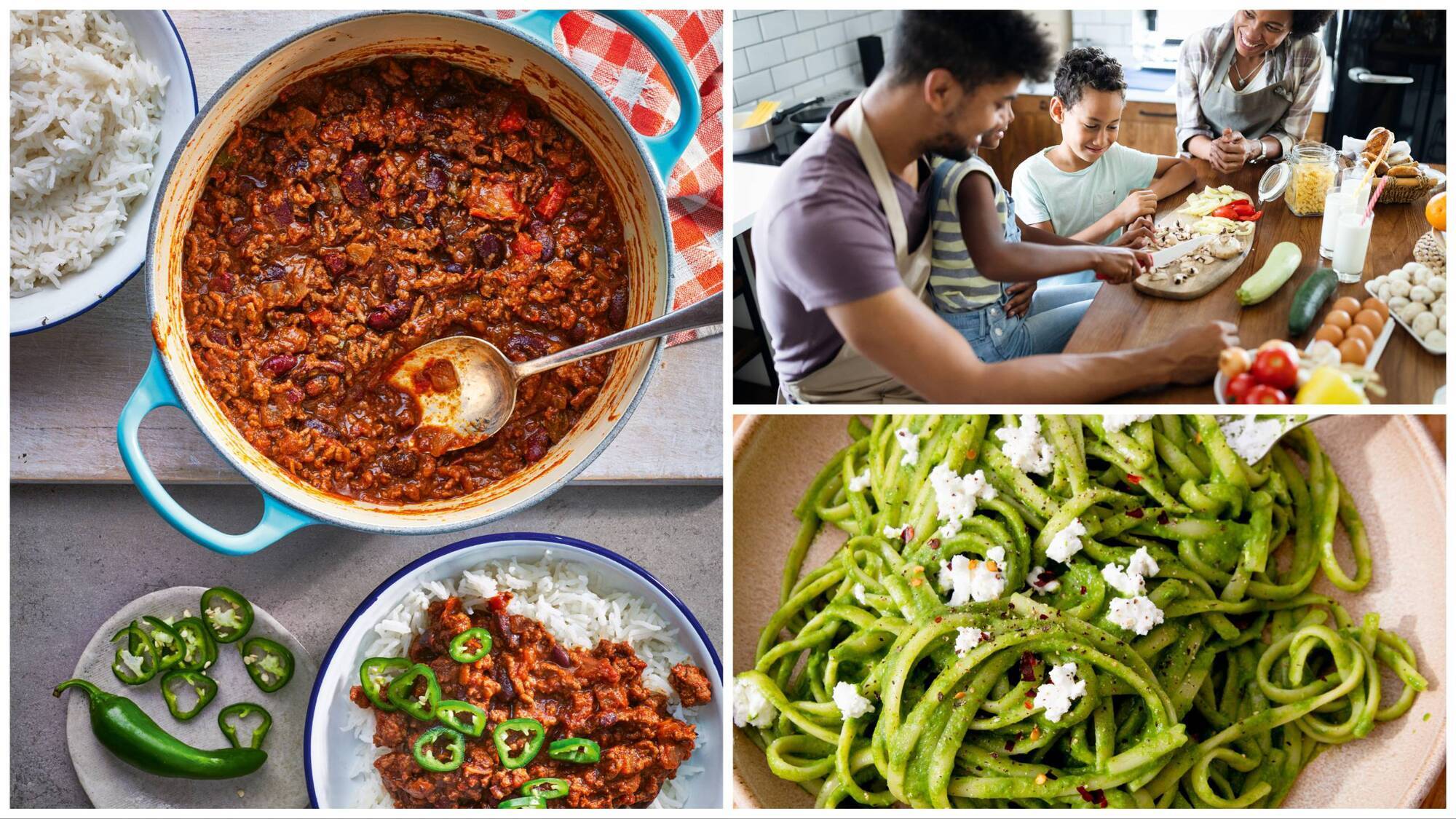
Chefs share their top money-saving tips.
As the cost-of-living crisis continues to bite, many of us are looking for ways to save money where we can.
Food shops are one of the main things that have become more expensive in recent years — so are there any easy ways to save a bit of cash in the kitchen?
Chefs are on hand to share their top money-saving tips…
Suzanne Mulholland, author of The Batch Lady: Cooking On A Budget (HQ) recommends letting go of loyalty to brand names.
For example, she says: “You’re not going to notice a difference in flour – yet it’s about a fifth of the price of a branded one.”
Mulholland continues: “If you love to eat haddock, then buy hake instead. If you like to eat cod, buy coley instead — monkfish? Buy seacat. These are all very similar fishes, but they’re just not the most popular ones everybody else buys.
“You wouldn’t actually notice the difference between eating a different type of fish, because hake is very much like haddock – yet because it’s not that popular, it’s half the price. It’s also locally sourced, because these are all British fish.”
Maunika Gowardhan, author of Tandoori Home Cooking (Hardie Grant), also advocates cost-effective swaps.
“If it’s a chicken recipe, I normally use chicken thighs over chicken breasts,” she says.
“It’s a cheaper cut of meat, and it’s a more flavourful cut of meat.”
If you’re a keen baker, The Great British Bake Off’s Kim-Joy (Bake Me A Cat, Quadrille) has a top tip for you.
As butter “has become so much more expensive”, she recommends “using more vegetable oil in baking”.

“Most people are cooking blindly,” says chef Max La Manna (You Can Cook This!, Ebury Publishing), “Pulling ingredients together and cooking — they do the same when they go to a supermarket, they buy ingredients — and a lot of waste happens when people don’t have a plan.”
La Manna’s top tip is firstly “cook the food you already have before you go out and buy more”. After that, it’s all about making a plan.
“Shop smarter,” says La Manna.
Throwing away produce that’s gone off is money down the drain — so La Manna is keen for us all to make ingredients last longer.
“You can extend the shelf life of ingredients – for instance, most people throw away bag salad or herbs,” he says. “What I do with my bag salad, once I bring it home I’ll wash it and also let it sit in cold water — because it firms up and it gets crisp and it stays fresh a little longer.”
Once he’s washed the salad, he divides the bag of leaves – putting half in a container in a tea towel (“to absorb some of the moisture”) and use within the next three or four days.
“The other half I cook in hot water — blanch it really quickly, squeeze out the water, then I have this kind of pre-cooked spinach. Roll that up tightly, place it in the freezer and then when I need something in a week’s time — a stew, a soup, a curry, a stir-fry — pop those in.”
You can also reduce waste by knowing how to store all your other produce properly. “That’s where a lot of waste is coming in, people put ingredients away, they turn their back and the food’s already gone bad,” says La Manna.
“Know how to store your produce and where to store it — potatoes should be kept in a cupboard somewhere dry, dark, cool but well-ventilated so they don’t begin to sprout. Same thing with onions. Bananas like to have their own space — bananas don’t like to be with other ingredients, because they release a chemical and will ripen quicker.”
Instead of throwing away bananas on the turn, La Manna says: “It’s great for the freezer, [or] use them in smoothies. Use them as a batter for cupcakes or cakes.”

“With Chinese food, there really is a ‘no waste’ policy,” says Kwoklyn Wan (One Wok, One Pot, Quadrille) — and he suggests this ethos could help you save money in the kitchen.
“Even when you peel your onions, use the onion skin in the stock” — along with anything else you might normally throw away, such as the top ends of carrots or fish heads.
“That’s so important — if people learn to use every part of that ingredient… You can have a fantastic dish with all the best bits, and at the end of it, you’ve got this fantastic soup base. All you’ve got to do is add really cheap noodles into it, and maybe a few veggies and tofu, some chicken — whatever.
“You’ve got this lovely broth — and that’s your next meal completely free, or near enough.”
Most of us are guilty of buying an exciting-sounding ingredient for our store cupboard and only using it once. If you really want to save money in the kitchen, it’s all about being smart with what you buy — and making sure you’re going to use it a lot.
Lydia Vernon, co-author of Caught Snackin’ (Hamlyn), says that on Caught Snackin’s wildly popular TikTok channel,” we like to keep with the same ingredients for each recipe.
“We stay around things like mixed herbs, garlic powder, plain flour — those kind of staples you have in your cupboard all the time, which are going to be cost-effective.”
Food writer Gurdeep Loyal (Mother Tongue, Fourth Estate) takes this one step further, saying: “My advice would be to equip your pantry with four or five very flavour-forward ingredients — things such as tamarind paste, things such as brown miso, things such as fennel seeds, for example, or something like tandoori masala powder.
“Because these four or five pantry staples can transform anything really simple and basic — just adding a spoonful of this is going to amplify your cooking into hundreds of different directions.
“It means you can use very basic supermarket staples, then turn them into something incredible” — without having to spend money on fancy new ingredients every week.
Money-saving goat’s cheese linguine
Using frozen spinach is a clever hack for reducing food waste and saving money.

Servings
5Preparation Time
5 minsCooking Time
11 minsTotal Time
16 minsCourse
MainIngredients
1tbsp olive oil
1 onion, diced
500g linguine
3 garlic cloves, finely grated
160g frozen spinach
125g goat’s cheese
30g fresh basil
Salt and pepper to taste
Chilli flakes (optional)
Method
Set a non-stick pan over a medium heat and add the olive oil. Add the onion, season with salt and pepper and gently fry for four minutes.
Meanwhile, set a large pan of salted water over a medium heat and bring to a boil. Add the linguine and cook for two minutes less than the packet cooking time.
While the pasta is cooking and once the onions have softened, add the garlic to fry for a minute before adding the frozen spinach to the pan, along with 400 millilitres of the starchy pasta water. Increase the heat and cook the spinach and onion mix until the pasta is ready.
Add the spinach and onion mix to a blender with half of the goat’s cheese and the basil and blitz until smooth.
Drain the linguine and transfer back to the pan. Pour over the blended sauce and continue to cook over a low\medium heat.
After about two minutes, the sauce should thicken and coat the linguine. Serve with a sprinkle of any remaining goat’s cheese and a pinch of salt and pepper. Optionally, top with chilli flakes if you love a little heat.
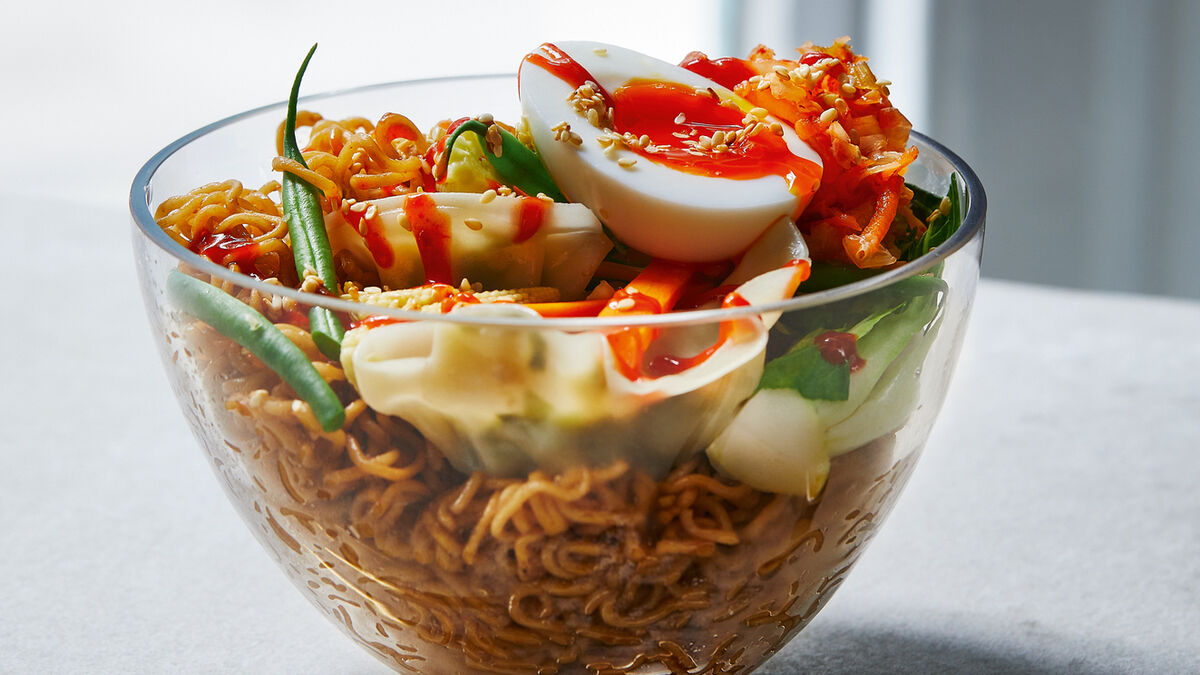
Money-saving pimped packet ramen recipe
You can easily customise this meal to your suit your preferences.
Servings
2Preparation Time
5 minsCooking Time
7 minsTotal Time
12 minsCourse
MainIngredients
For the base:
2tbsp toasted sesame oil
1 spring onion (white bulb discarded), snipped
1tsp garlic purée
2 mugs of boiling water
2 packets of ramen noodles (or any other instant noodles)
OR
300g ready cooked noodles and 1 chicken stock cube, crumbled
OR
300g ready cooked noodles and 2 sachets of miso soup mix
For the protein (choose from):
1 mug of frozen, fresh or cooked chicken strips
1 mug of frozen, fresh or cooked seafood
1 mug of frozen or fresh gyoza dumplings
½ block of firm tofu, broken into smaller pieces
For the veg:
250g packet of pak choi, leaves separated
½ mug of frozen vegetables
Toppers (choose as many as you like):
Soft-boiled egg halves
Drizzles of chilli oil
1tbsp sesame seeds
Fresh coriander sprigs
Fresh chillies
Kimchi
Drizzles of Sriracha
Method
Heat the oil in a small saucepan over a medium heat and cook the spring onion and garlic purée for a couple minutes, stirring often until aromatic.
Add the boiling water, along with the dried noodles and their flavour sachets, or the cooked noodles with the crumbled stock cube or the miso soup sachets. Stir together and cook for a minute or two until the liquid is mostly absorbed.
Add your chosen protein and the veg and cook until the protein is just cooked through, about five minutes or so. If you are using fresh chicken or seafood it will take less time. If using tofu, add in the last few minutes so it doesn’t disintegrate.
Serve into bowls and go crazy with the toppers.
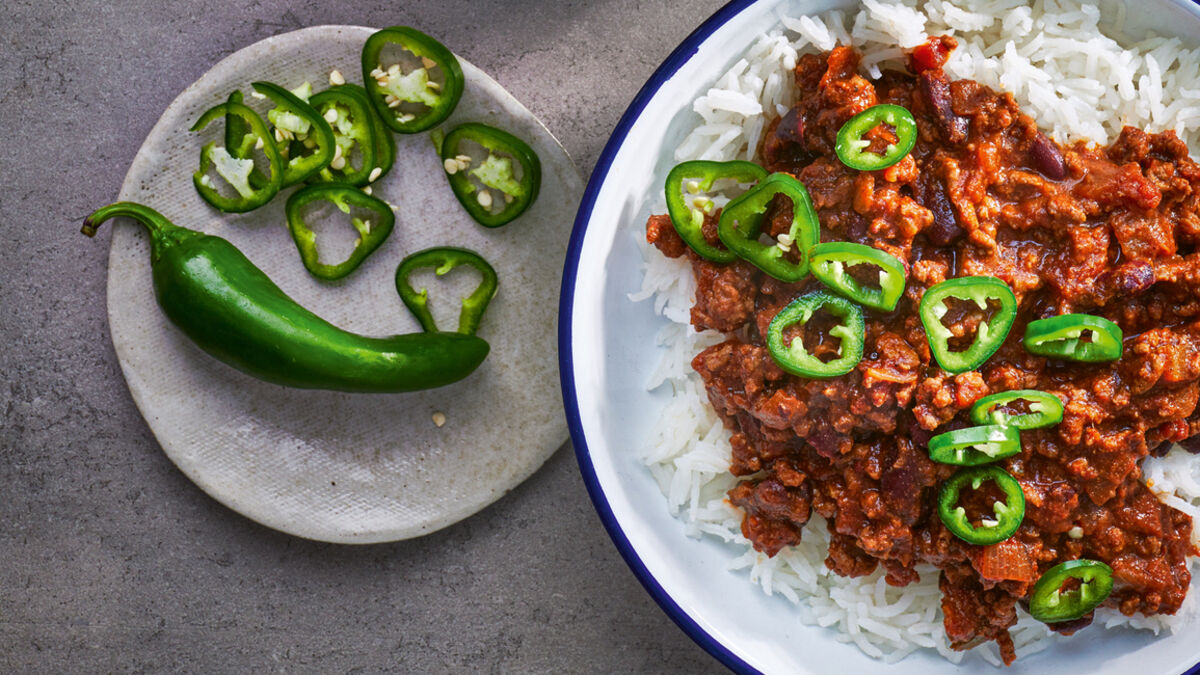
Money-saving chilli con carne
This speedy meal for four uses storecupboard ingredients.
Servings
4Preparation Time
5 minsCooking Time
50 minsTotal Time
55 minsCourse
MainIngredients
1tsp vegetable or olive oil
1 onion, finely chopped
4 garlic cloves, finely chopped
2 green chillies, finely chopped, plus 1 to serve
500g minced beef
41g packet of chilli con carne seasoning
400g tin chopped tomatoes
130g tin kidney beans, drained
300ml beef stock (made with a stock cube)
Salt and pepper
Method
Put a pan on a medium heat and add the oil and the onion and soften for three to four minutes. Add the garlic and chillies and continue to cook for a further two minutes. If you’re not keen on a lot of spice just use one chilli and remove the seeds.
Add the mince and break it up with the back of a spoon, ensuring that there’s no big lumps. Cook the meat until it’s nice and brown. Be generous with the salt and pepper and then add the chilli con carne seasoning. Mix well.
Add the tomatoes and kidney beans and stir. Then pour in the beef stock and simmer for 30 minutes. The simmering is very important (it’s like a fine wine that gets better with age).
Serve with sliced chilli.