Bring home the bacon: Top 8 sizzling supermarket rashers
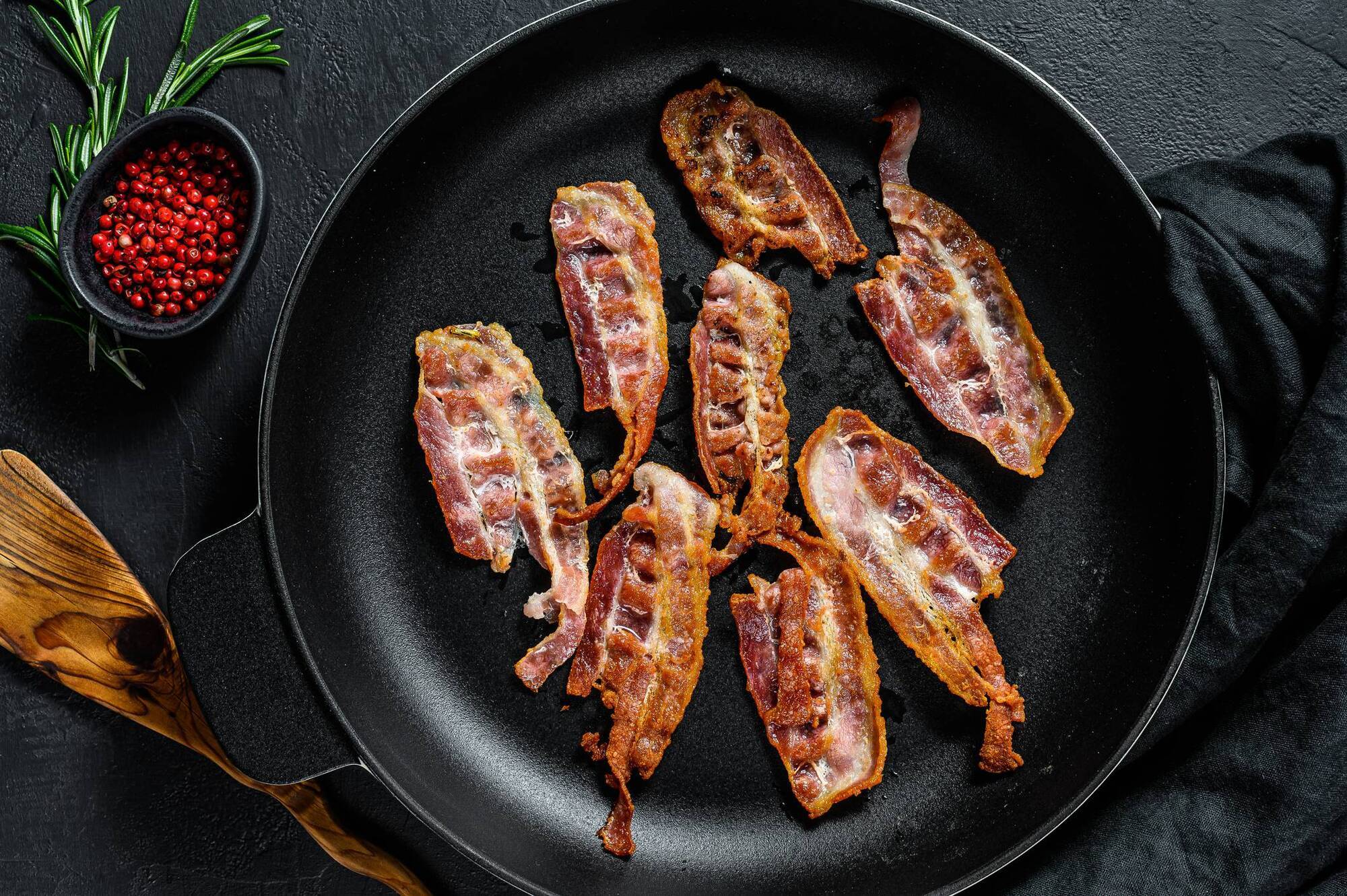
Picture: iStock
What’s the difference between dry cured and ‘traditional’ rashers? Is the extra price for dry cured worth it and how does it affect taste and texture?
Bacon is created by curing pork with salt, as it was years ago before refrigeration when the household pig was killed and needed to be preserved to feed the family. Dry curing was the traditional method of rubbing pig meat with salt for weeks. These days wet curing accelerates the process by soaking or pumping the bacon with water and curing salts, including potassium nitrite and sodium nitrite. It’s more profitable for producers and costs less to consumers. These are often labelled ‘traditional’ but are not dry-cured.
The catch is that when cooking, the water oozes out, along with white suds (proteins), creating a puddle in the pan, which results in the bacon boiling instead of crisping up.
Dry curing has nothing to lose, so there is no liquid in the pan. The texture is firm, the fat crisps up and the taste is far better and more natural. Dried cured rashers often have sugar added as well as potassium nitrite and sodium nitrites. The debate continues about the effects on our health of the latter preservatives.
We looked at back bacon from supermarkets which is leaner than streaky created from the lower belly of the pig. Try local butchers too.

With 98% local West Cork pigmeat and moderate salt at 1.8%, these pleased tasters who got exactly as they had hoped in a decent, traditional rasher. Tops with tasters.
9.5Â

From local pigs around Schull Co Cork, salt, cane sugar, black pepper, juniper, rosemary, thyme, and bay leaf combine with the pork beautifully with no oversalting. A decent rasher for breakfast.
9

With 97% Irish pork, 2% salt, and cane sugar, these are beautifully balanced and not at all salty. Good texture. Like the other samples, they kept their shape with no loss of weight.
8.75Â

Produced by Nathan Wall in Baltimore Co Cork from West Cork pigs with sea salt (no percentages given) and cane sugar, there was almost too little curing flavour here for one taster, who thought it more like pure pork than cured bacon. He was not familiar with this level of ‘natural’ curing. Everyone else loved its earthy naturalness.
8

Irish pork 98%, 2.2% salts and 0.5% sugar. Processed from Irish pork in Co Wexford, this was a decent rasher medium cut with plenty of flavour and not tasting over-salted.
8Â

Made from 98% Irish pork, there is a high enough 2.55% salt, but it didn’t taste over-salted. A satisfying, classic rasher.
8.25

With 97% Irish pork, salt 2.3% and 0.3g sugar, these five thick-cut rashers produced in Co Kilkenny have a good balance of saltiness. A decent rasher for a bacon sandwich.
8Â

With 98% Irish pork, the salt content is high at 2.72% but softened by 0.8% sugars from added sugar. Made in Birr Co Offaly, the texture is natural, but tasters found it too salty overall. Best to use for stir-fries with lots of vegetables.
6