Meet the Cork food producers who make your Christmas dinner extra special
Every Christmas in Cork is a culinary celebration of the year-round work of superb local producers and growers, most of them, small family-run operations.
Having cooked most of the Christmas dinners I’ve eaten over the last 30-plus years, I know for certain the quality of the meal depends mostly on the quality of the primary product used in the preparation.
Blessed as I am to live in the county of Cork which is arguably the food basket of Ireland and one of the finest food-producing regions anywhere in the world, every Christmas is a culinary celebration of the year-round work of superb local producers and growers, most of them, small family-run operations.
With each passing year, it becomes harder and harder for these small family businesses to compete with the economic might and muscle of the big boys, the large-scale intensive farmers, and the supermarket chains undercutting the price of so much produce, and these challenges to the small producers have been further compounded by the effects of Brexit and the pandemic.
So, by choosing to pay that little bit more for a premium Irish food product, you are not only ensuring a truly tasty and nutritious Christmas dinner but also ensuring the continuing survival of the very best of Irish food and the wellbeing of the local communities in which it is produced.
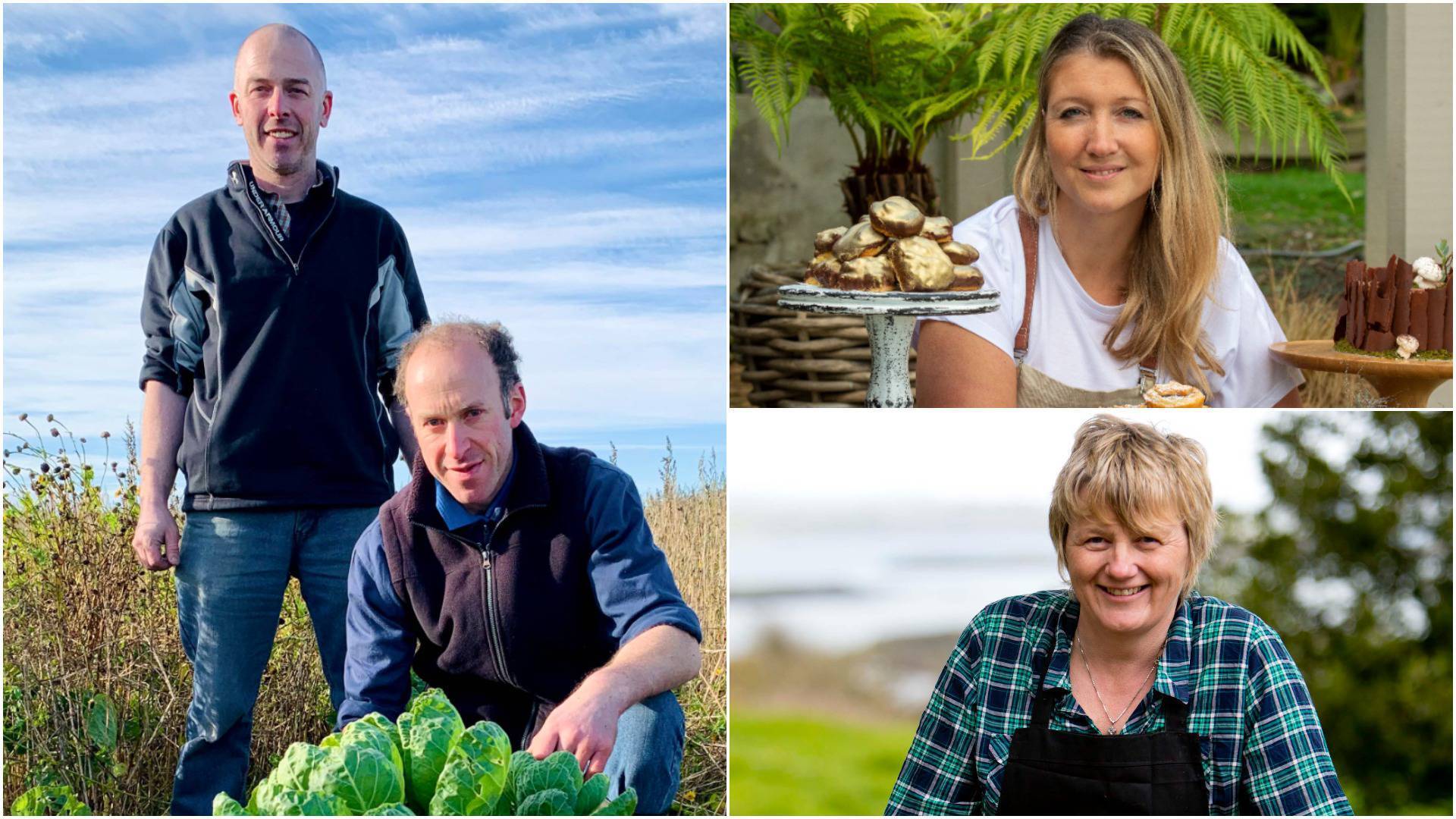
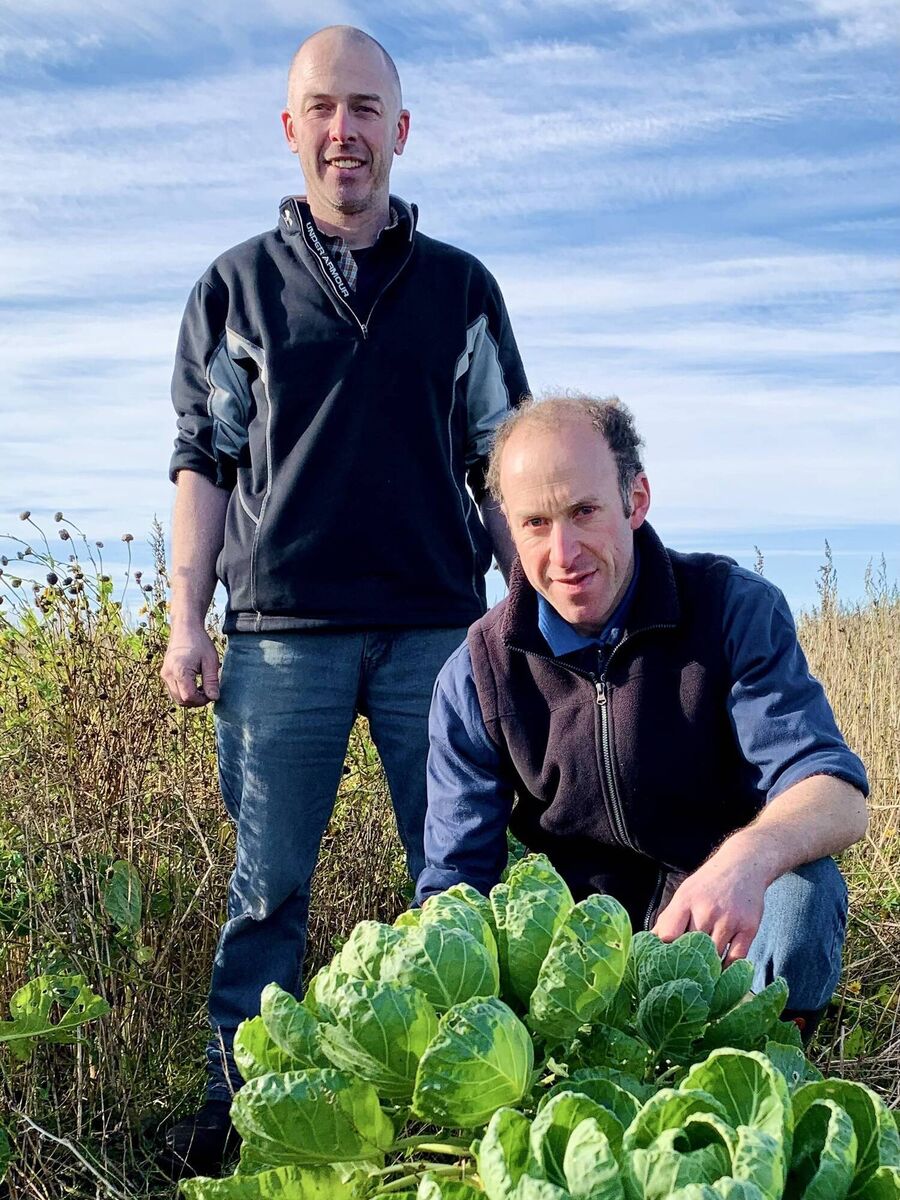
Nigel and Trevor Martin run Waterfall Farms, to the west of Cork city, having taken over from parents Declan and Rosemary who began growing vegetables and supplying local retail outlets in the 1970s. The Martins grow a superb range of produce in polytunnels and in open fields, and over the last decade have pretty much dispensed with the use of pesticides, herbicides and artificial fertilisers, resulting in ever more delicious produce, much of it cropping up on the plates of some of Cork’s finest restaurants and cafés.
A huge part of their business is prepping their veg for the foodservice and hospitality sector, washing, peeling and chopping and vacuum packing the produce without the use of any preservatives or chemicals.
Unable to compete with the intensive monoculture growers who gear up for Christmas by planting huge monocultural crops of Brussels sprouts, the Waterfall Farms planting of the iconic Christmas vegetable is comparatively limited and sold locally in just a few retail outlets, including their own farm shop. But with the sprouts left on the stalk (which stores perfectly in a bucket of water in a cool location), the Waterfall Farms fulsome, green globes are exquisitely fresh, crunchy and flavoursome with the bonus of a miniature ‘cabbage’ on top to be shredded and quickly stir-fried for a light dinner on Christmas Eve.
“We are literally harvesting today,” says Nigel, “and it’s on your breakfast, lunch or dinner plate the next day so we can’t risk putting chemicals onto our produce, it’s more work but it’s all hands on deck. We make our own compost, it is essentially organic but we are not certified.
“We have some very passionate chefs using our produce and they want to use local produce as much as possible and the appreciate the quality and the fact that it is chemical-free.
“They are primarily for our own shop and to a couple of specialist retailers who are trying to stay away from all the packaging and the generic stuff on the shelf, for example, Rohu’s in Innishannon and Urru, in Bandon.”
“Christmas starts for us almost in August or September,” says Trevor, “talking to chefs about what we have in the ground and in the tunnels. We’ll be working as normal on Christmas Eve, and then, the day after Stephen’s Day, we’ll be starting all over again with zero stock in the fridge, prepping the veg for the hospitality sector. The days are slightly longer but we have a well-established team and we work with the customer to streamline the process.
“We did have a high level of waste in 2020 because of the pandemic and we grew more conservatively in 2021 but we tried to up our retail sales, and we harvested everything, made soup mix, and used some as animal fodder. Effectively, we have always worked at almost zero waste.
“On Christmas Day, I’ll be woken by the kids at god knows what time, go downstairs, light the stove, open presents, Mum and Dad will come up, Nigel will pop in, turkey, ham, and, yes, our sprouts, and loads of chocolates.
There is no perfect job but I love it. If you can wake in the morning and see the sun rise and go to sleep after the sun sets feeling tired after a good day’s work, you can be happy with yourself.”
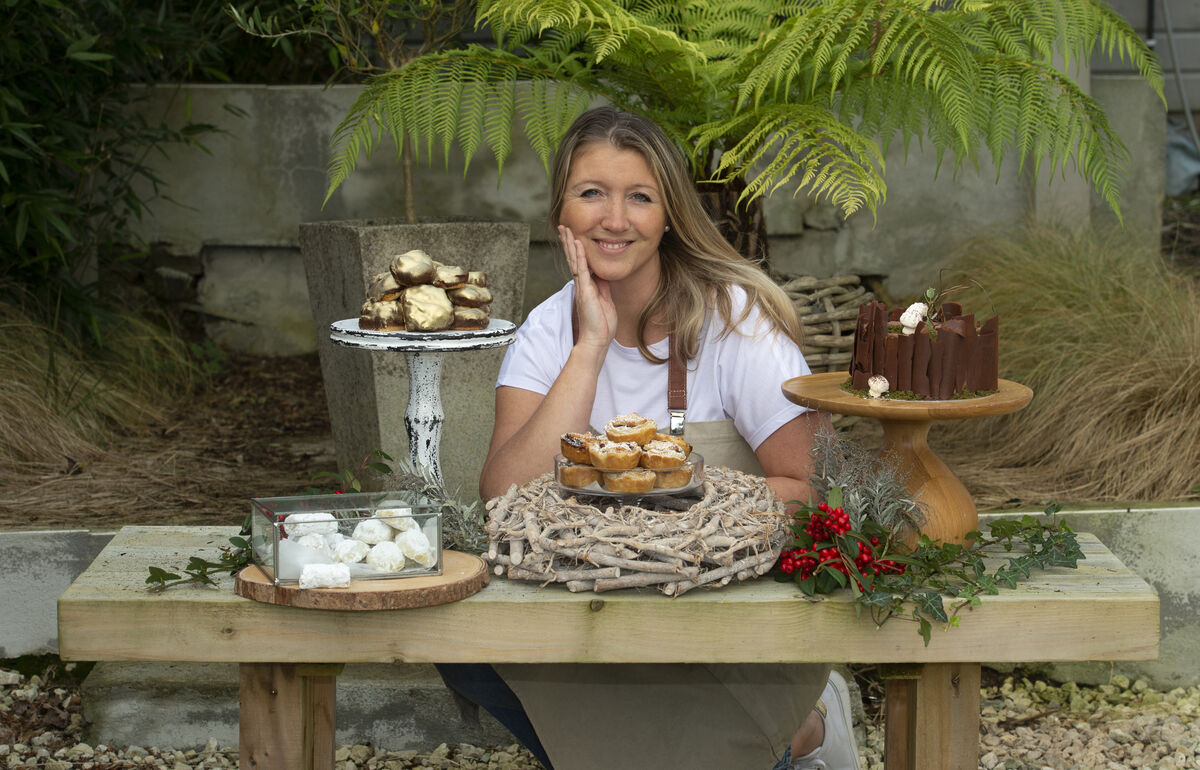
When Rebecca Mullan of The Flour House first popped up as a stallholder at Mahon Market, passing shoppers clocked her sinfully exquisite, cakes, bakes and desserts and paused to sample. One taste and they were purchasing with all the decorum of frenzied seagulls at the back of a port-bound trawler. The following week, word now out, saw most of her output sold long before market closing time and business has boomed ever since. This year, her Christmas offering includes gorgeous mince pies and, as an alternative to traditional Christmas cake, a Yule Log that must have used up half the chocolate in Belgium yet is so delicious it is unlikely to survive to Stephen’s Day.
Her yule log is a sinful twist on the traditional.
“It doesn’t have the chestnut purée, I use a fudgey chocolate cake. It’s basically, chocolate, chocolate, chocolate, a really decadent cream cheese frosting, and then we have the meringue ‘mushrooms’ and a spiced Belgian biscuit moss, the bark is pure Belgian chocolate.” Rebecca calls it a chocolate lover’s alternative to Christmas cake.
As with lots of her peers, the Flour House team will be working right up to Christmas. “Once all the deliveries and collections have gone we can finally start wrapping presents. We work longer days, I’ve got a team here and between us we’ll pull together. It’s my first year having people working with me and we’ll be flat out from November ’til Christmas Eve.”
The last nineteen months has seen price increases and difficulty sourcing packaging. “We’re having to order much earlier and through unusual routes and it’s not my preferred way but stuff is simply not there. Hopefully we won’t run out!”
Rebecca says that she loves all aspects of her work. “I love the chance to be creative in making the cakes. I love meeting the customers to hear feedback. I love supplying to local shops. It rewards me in so many ways and the repeat customers really give us the strength to keep going. We have such a lovely customer base and that keeps us loving what we do.”
On Christmas Day, she hands the reins over to husband Glenn, a chef. “He’s particularly fantastic when it comes to savoury food and his sourcing of produce is to die for. We’ll spend quality family time, catching up, enjoying the peace and quiet of the country, going to the beach walking to the dogs—and the pub if it’s open! And, yes, we’ll be eating lots of our cakes and treats, after all the business was developed from food that we loved eating ourselves!”
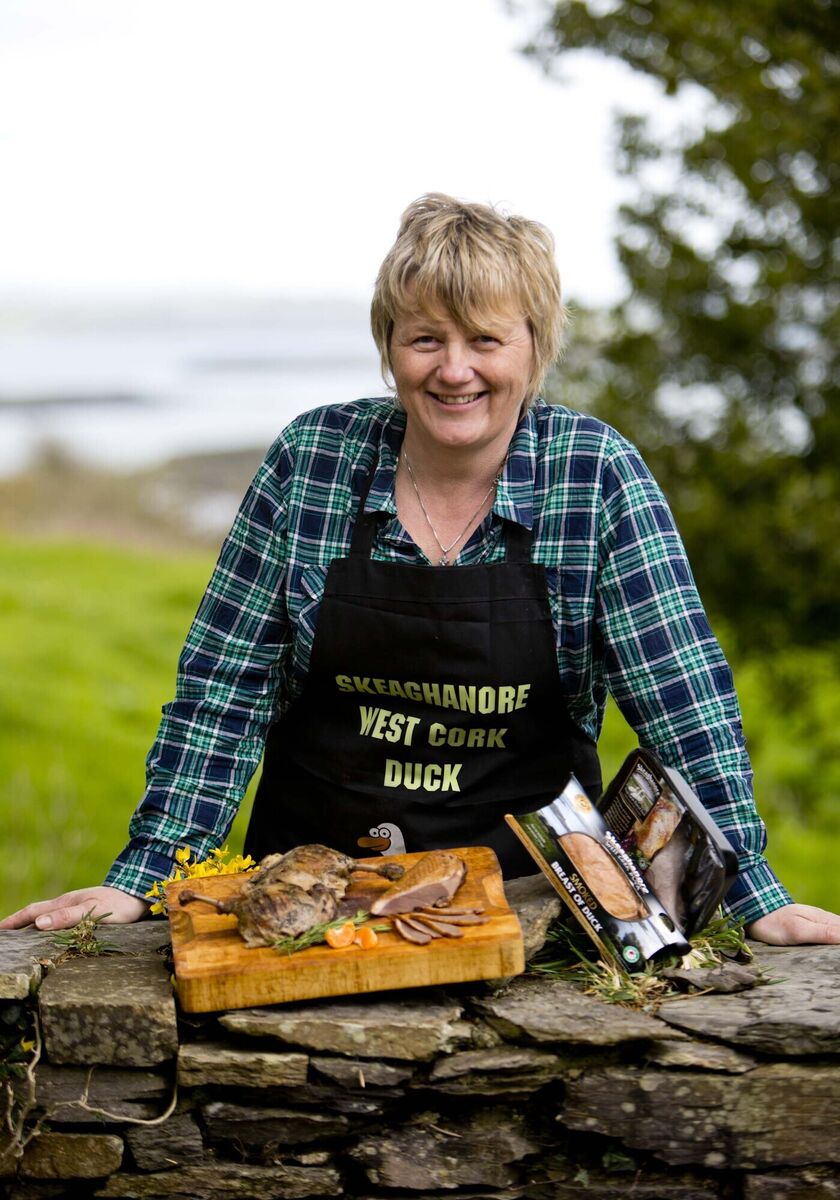
Helena and Eugene Hickey are poultry farmers in a beautiful part of coastal West Cork, between Skibbereen and Ballydehob and, amongst other things, have now become a byword for ‘duck’ in the same way ‘Hoover’ came to cover all vacuum cleaners, for their award-winning birds, either freshly killed or converted to added-value products (superlative confit duck and smoked chicken) are deservedly featured on menus of some of the very finest Michelin-starred restaurants in the country and many other hospitality stations in between.
“We’d normally have a lull in October before the Christmas rush,” says Helena, “but this year hasn’t stopped, due to all the support we’re getting from restaurants and hospitality, and the public, online and through Neighbourfood.
We started the geese in May, June and the ducks in August. It was tough this year because of Brexit, very hard to source packaging and we lost a lot of birds to Mr Foxy Loxy, that didn’t help either, a lot of damage, you try to make sure they’re well fenced in but they are very determined and crafty creatures.
Production goes on until the 22nd of December because the team also processes turkeys for other producers, they’re usually collected on the 23rd. “We do work very long hours coming up and while we wouldn’t be doing what we’re doing if we didn’t love it, you’d be glad to see Christmas I’ll tell you that!
“On Christmas Day, we always have the turkey and ham, duck fat potatoes and all the trimmings. Stuff a goose on St Stephen’s Day and maybe a duck. It’s lovely to ‘thaw out’ after all the work. The kids aren’t kids anymore but there are still traditions that we keep up, it gives them memories—we have our memories and you live for that.”