100 dishes everyone should know: The book Darina Allen always wanted to write
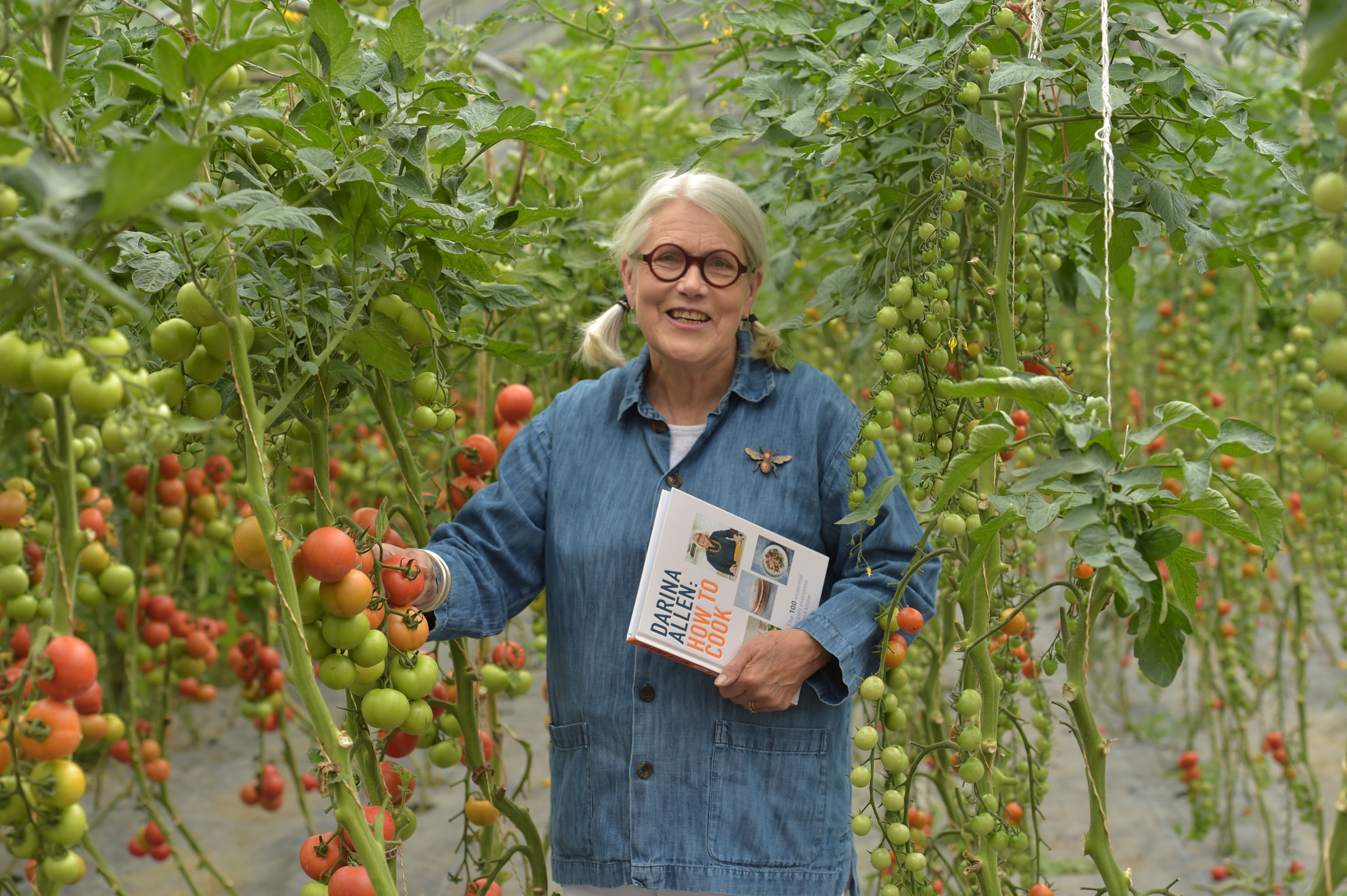
Darina Allen in the gardens of Ballymaloe Co Cork ‘How To Cook’. Picture: Dan Linehan
That Darina Allen had a busy and productive time during the pandemic lockdowns should come as no surprise to any who have witnessed the energy with which she throws herself into her daily routines, buzzing like a windup toy in perpetual motion. Even a pleasant conversational walk through the garden is punctuated by her regular genuflections to pluck an errant weed from the ground, each continuous little action all adding up to a substantial body of work at the end of each day, an object lesson for all procrastinators. Now 72 years old, she looks 10 years younger but her energy and work-rate would put a 20-year old to shame.
Once she weathered the initial shock of first lockdown that stunned her as much as everyone else, she and her team began devising a battle plan, that included keeping on all staff other than those who had to stay home for health and family reasons. With The Ballymaloe Cookery School closed, they expanded the farm shop and the teachers began producing a whole range of foodstuffs, including breads, cakes, pies, soups, stews and other dishes while the gardeners filled other shelves with fresh produce.
Darina, her brother Rory O’Connell and her daughter-in-law, Rachel Allen, took to online teaching with gusto and were rewarded with an expanded ‘classroom’ filled with delighted students from all over the world for whom a stint at the internationally renowned was only ever a pipe dream. And, during all that, she managed to turn out another cookbook, How to Cook: The 100 Essential Recipes Everyone Should Know (Kyle).
“This book is a book that I’ve always wanted to write,” says Darina, “along the lines of ‘recipes no one should leave school without’, at first it was supposed to be 15, 20 recipes but it expanded and is now 100 recipes. Just basic recipes that you could build on, that everybody, absolutely everybody, could and should be able to cook, so they can first feed themselves, and then grow and feed others, becoming confident enough to knock up a little spontaneous something for friends.
“And as you know, I’ve been beating the drum for years, along with quite a few other people, that kids should learn how to cook, be taught how to cook.
The book commences with a short kitchen kit list, knives, pots, pans and other essential items, and a stockpile of ingredients — some basics and a few special additions to add the grace notes — to always have on hand in your larder and fridge to turn your daily or weekly fresh produce shopping into meals.
It begins, as many classic introductory repertoires do, with a simple omelette, something a child can easily knock out from the age of seven and upwards — albeit with an adult eye on hand to monitor initial encounters with hot pans — teaching them how simple it can be to cook themselves a delicious dish.
But the book’s modus operandi becomes apparent when that recipe is further explored, a myriad of fillings turning it into multiple dishes, even a packed lunch when used as filling in a toasted baguette with mixed leaves and tomato salad.
“An omelette, for example, can be made in 30 seconds — 45 seconds if you’re putting a filling in it — and it should be made in that time, because otherwise it’ll be tough. Yet you can add so many things to it, from a bit of grated cheese to chilli and coriander, to give it Mexican flavours, Asian flavours, Middle Eastern flavours and so on, all from one little dish.”
Many of the dishes are designed as a jumping off point, a primary ‘ur-recipe’ from which endless interpretations are possible. ‘A Simple Soup’ is a perfect example.
“The soup comes from that formula that Myrtle came up with all those years ago: ‘one-one-three-five’; one cup of chopped onion, one cup of chopped potato, three cups of any vegetable of your choice, and five cups of stock. You can make endless soups using that formula, anything from carrot soup with potato, to pea, bean and courgette to radish leaf soup, to ‘forager’ soup, using wild forage ingredients like nettles or even just using up random vegetables you have left over.” And with soup, naturally, comes bread.
“So, you have cooked your soup and suddenly you are empowered, so you make a little loaf of soda bread to go with it — God, I sound like a headmistress but there should be nobody in Ireland that can’t make a loaf of soda bread. If you can make soup and soda bread, you never need to go hungry again.” ‘Tomato Fondue’, one of four easily rendered variations on a tomato sauce theme, is a quite delicious made from fresh or canned tomatoes that is worth producing in larger batches to be stored for up to three months in the freezer, immediately to hand as a side dish, pasta sauce, pizza topping or base sauce to liven up leftover fish, meat or vegetables, yielding a delicious meal in minutes.
The book runs the gamut: breakfast, lunch and dinner, from starters through to dessert, and though it is a grounding in the basics, there are plenty of novel dishes to liven up the table. These include Mexican-inspired Oaxacan black bean salad, Indian egg curry and Baja-style fish tacos but equally there are classic old comforters, roast chicken suppers, simple spaghetti and meatballs and old-fashioned rice pudding. What unites them all is they are rock solid recipes, easily achievable by beginner cooks.
“All you have to do is show people how to do two or three of these things and they go, ‘oh, my God, I can cook. I can cook! It’s easy! I can cook!’ And then they build on it. Now, what you need is a couple of basic recipes that actually bloody work. And give people the confidence to make them so they then have the confidence to try another of your recipes. And us, as cookbook writers, that’s really our responsibility, to make sure our recipes work because beginners cling on to a recipe, and if it doesn’t work, then they blame themselves. There are actually too many recipes in cookbooks that don’t work, they haven’t been properly thought out and tested, and then people blame themselves, particularly beginners.
It is obvious that Darina is underwhelmed by the title her publishers opted for, reasoning a book primarily targetting those of school-going age would focus on too narrow a market. As it turns out, they may have a point: it’s not just school children who need to learn to cook. As we talk in the dining room of the cookery school we are surrounded by students of all ages, from their 20s right up to retirement age and beyond, all doing one of the residential immersive cookery courses for beginners.
“When the lockdown first came, we heard from so many highflying people around the country, who suddenly found themselves at home full time, having to produce 21 meals a week and they had no idea how to do it. Before they would have eaten out a lot or bought in readymade food but all the degrees in the world and all their great successes were of no use to them when they had to cook themselves. And of all these people coming into the farm shop, we had a lot of widowers who had lost their wives and they couldn’t cook at all. Some of these older people can’t even make tea, they are totally helpless. So this is for them too. A lot of young people, first start cooking for themselves when they leave home and head off to college and university and this book is perfect for them: teaches them how to feed themselves properly but it also helps them socially. Everyone always loves a good cook, [chuckling] it’s ‘easy to win friends and influence people,’ well, at the very least, you know how to bring together a group of people in a social gathering through good food and there are very few things to beat that. Another good reason to learn to cook is the huge shortage of people in the hospitality industry, especially after the pandemic. If you introduce young children or even teenagers to cooking it can start them off on a route into a professional cooking or cheffing job. Working as a chef can take you literally anywhere in the world, it doesn’t even matter if you have the language, you can find a job, as there’s always a job somewhere for a chef. Our students come to us from all over the world but equally once our students graduate, their jobs take them all over the world, to countries other than their own and they all find work as chefs. You could open up a food truck, set up a stall at a farmer’s market, grow into a restaurant, a cafe, a catering business, and you are fully in charge of your own wellbeing. Everyone needs to know how to cook!”