It’s all in the milk: Differences between farmhouse cheddar and dairy version
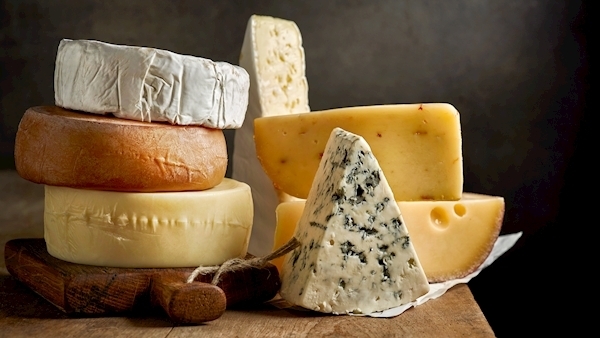
What distinguishes farmhouse cheddar from the more available dairy version?
It all starts with the raw ingredients. The best producers use milk from grass-fed cows (with decent levels of fat and protein) and stop using it for cheese once cows are brought indoors for wintering on silage. (The milk then goes for consumption as milk.)
Milk from grass-fed cows has a richness that at the same time tastes lively and interesting.
Large companies use all-year-round milk.
Cheesemakers use different cultures/bacteria to influence taste, and rennets (from a calf’s stomach or a genetically modified organism, or a thistle or nettle dilution for vegetarian) are added to further curdle milk and separate it from the watery whey.
Maturing in cloth or other breathable wrapping means the cheese can slowly develop interesting and rewarding flavours which sets them apart from many regular, dairy cheeses.
Dairy cheeses are usually vacuum packed in 40-60g blocks and often stored at a higher temperature to accelerate ripening before being cut up for shop or markets.
Vintage and extra mature are unregulated terms, so give no guarantee of flavour.
With an average of 0.1% lactose, cheddar may suit the lactose intolerant better than some soft cheeses.
There is far less lactose in cheese than in milk, and less lactose in mature cheeses. Red cheddar has colouring added.