Meeting local heroes for Cork Cheese Week
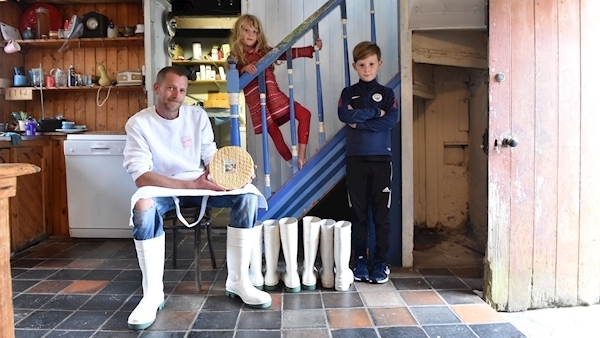
Ahead of the first Cork Cheese Week, Joe McNamee pays tribute to our local producers

Meeting local heroes for Cork Cheese Week

Ahead of the first Cork Cheese Week, Joe McNamee pays tribute to our local producers

Irish cheese is ‘coming home’ with the inaugural outing of Cork Cheese Week, a celebration of cheese, most especially Irish farmhouse cheese, in the county where it all began over 40 years ago, with Veronica Steele and the spare milk from a one-horned cow named Brisket.


A young UCC philosophy student, Veronica met her future husband, Norman Steele, down from Trinity College Dublin to deliver a guest lecture and it wasn’t long before both dispensed with academia and mainstream living entirely to drop out and live on a smallholding just outside Eyries, on the Beara Peninsula.

For the first couple of years of her experimentation, Veronica made cheddars and attempted unsuccessfully to replicate the great cheeses of Europe until, at Norman’s urgings, she began to work with soft cheeses. Then, on Friday, August 11, in 1978, in her cheesemaker’s diary, she wrote ‘1 Large Milleens’, alluding to her first soft washed-rind raw milk cheese and a name that is now internationally synonymous with the birth of modern Irish farmhouse cheese. It was the beginning also of the modern Irish small producer specialty food revolution, her work inspiring, first a trickle and eventually a torrent, of other small farmers and producers.

Mind you, it didn’t happen overnight, not least for Veronica, as a domestic market was almost non-existent for such a cheese, sporting a high, pungent aroma, extremely challenging for those only used to the bland, sweaty offerings entombed in plastic, courtesy of the rapidly industrialising national dairy sector. But amongst Veronica’s tiny band of customers was a little restaurant in Kenmare where, on one fateful evening, Declan Ryan, of Arbutus Lodge, the first Irish restaurant to hold a Michelin Star, was bowled over by his first exposure to Milleens. The following night Myrtle Allen of Ballymaloe was in to dine and ended up finishing off the last of the aforementioned cheese. She was equally smitten and both she and Ryan immediately wanted Milleens for their own respective restaurants. Such exposure soon led to interest from across the water and the international acclaim and awards that followed within a few short years at last alerted the native Irish consumer at large to its existence.

But Veronica’s contribution to modern Irish food went far beyond the creation of this world-class iconic cheese; she also began to disseminate and share her intellectual wealth. Before the end of 1978, Steele had taught her friend Jeffa Gill (Durrus Cheese) to make cheese; next in line was Giana Ferguson (Gubbeen Cheese). More followed and by the 90s, the dairy-rich county of Cork alone could field a world-class cheeseboard.

Furthermore, she established relationships with dairy scientists in Teagasc and the Dairy Science department in UCC, tapping into their knowledge, but, shrewdly, also ensuring valuable allies and intellectual capital for the future.

She was a founder-member of CĂĄis, the organisation of Irish Farmhouse Cheesemakers, and when presented with the Lifetime Achievement Award at their inaugural Irish Cheese Awards, in 2015, received an extraordinary and emotional ovation from her fellows. She endured with incredible stoicism and courage a deeply debilitating condition, multiple system atrophy, for some years, and when she eventually died, aged 69, in January 2017, those earlier accolades from her fellows in CĂĄis, were replicated at a national, even international level.

Cork Cheese Week reaches a climax with a weekend Cheese Fair featuring some of the very finest native cheesemakers, from old aristocrats such as Coolea, Cashel and, of course, Milleens, to more recent arrivals such as Ballinrostig and Velvet Cloud, who will not only be selling their cheeses but also offering workshops, talks and demos. Amongst those taking part is Veronica’s son, Quinlan, who now runs Milleens, from its original home in Beara, and he will be talking about the history of Irish farmhouse cheese — a history that predates even Veronica and by many hundreds of years.

Archaelogical evidence of cheese consumption in Ireland dates back to the Iron Age and references to cheese can be found in early Irish medieval writings.

“We’ve always had farmhouse cheeses,” says Quinlan Steele. “You wouldn’t call it farmhouse cheese but that’s the style of cheese that we were making. My mother would have always argued that Trappist monks from the west of Ireland brought cheesemaking around Europe and [renowned European cheese] Munster was named for Munster in Ireland—but that’s not an argument I’d win. War and industrialisation killed off much of the farmhouse or small cheesemaking traditions around Europe,” says Quinlan, “but what happened in Ireland is we fell in love with butter. Butter is a lot easier to make than cheese and we became the largest butter exporter in the world by the 18th century. To this day, we are the largest per capita exporters of diary produce, second only to New Zealand and that is down to the quality of our milk. What’s really wonderful about Irish milk is we have a really clean supply of water coming across the Atlantic and really interesting and diverse grazing, different terroirs all over the country, every one of them, quite unique. Wherever you go in Europe, the famous cheeses are all different and it’s all down to grazing. Being able to grassfeed our cattle most of the year gives us really great milk and that’s really the key ingredient for great cheese — you can’t make a silk purse out of a sow’s ear.”

Mind you, as teenager growing up, Beara was the last place Quinlan wanted to be: “I couldn’t get far away enough as is typical of most people living in rural Ireland,” he says, “they kind of feel they are made for bigger, better things. I saw my parents working so hard and being regularly visited by journalists and various wordsmiths who’d have some cheese and some wine and then write a few words about it, that seemed much more appealing, so I went off to England to study journalism but when I started working in Dublin, in web design and radio, I realised it wasn’t my natural environment. I’m a country boy. I wanted to be out standing in my field, quite literally, and there was so much noise around me all the time in the city. I’m just a lot more comfortable in the country than in the city —you can take the boy out Beara but you can’t Beara out of the boy.

“Growing up, our house was colonised by cheese as the business grew and we ended up with less and less space until we built our special facility. As a child, it was like having a parent and now as the ‘parent’ [having taken over the business], it’s like having a third ‘child’.

“Milleens is a really big part of our family, what we do and what we’re about, and it’s been there my whole life, all for good. It’s brought its own group of friends and its own personality, other cheesemakers and, more so, cheese customers and people who are passionate about food. What’s been incredible for me to watch as I’ve grown is this community growing and building—people were always visiting the home. Milleens is really is an integral part of me and an integral part of the family.”

Cork Cheese Week (24-30 September) www.corkcheeseweek.com

More in this section

ieFood

Newsletter

Feast on delicious recipes and eat your way across the island with the best reviews from our award-winning food writers.

Cookie Policy Privacy Policy Brand Safety FAQ Help Contact Us Terms and Conditions

© Examiner Echo Group Limited