Darina Allen: Exciting new books and weekend food

Exciting new books are piling up on my desk, some have kindly been sent by publishers, others by the authors themselves, and then there are several that have caught my eye in bookshops.
I love small, independent bookshops, I can’t seem to pass one without slipping in for a root and a meander along the shelves of tempting titles. I am also acutely aware of how badly they need support at a time when so many of us are tempted to order on-line.
I found a copy of a charming book entitled The Little Library Cook Book in Whyte’s Books on the Main Street in Schull. Its written by London-based Kate Young, a writer whose name was unfamiliar to me. She is originally from Australia and, according to the blurb on the inner flap, spent her childhood indoors, reading books in which she found “comfort, inspiration, and distraction”. It’s a beautifully produced book, with elegant, erudite prose. Many of the tempting recipes are inspired by food in literature, gorgeous home cooking that makes you want to don your apron and dash into the kitchen, beautiful photos on beautiful paper, comforting food and comforting reading…
The Happy Pear brothers, who The Sunday Times dubbed “the poster boys for a healthy way of life”, have brought out a sequel to their two number one best sellers, The Happy Pear and The World of the Happy Pear.
There are lots more vegetarian and plant-based recipes (the new buzz word) for economical and easy dinners that can be rustled up in as little as 15 minutes. How tempting does chickpea tikka masala sound? Or some gorgeous hearty dishes like Hungarian goulash and hearty Greek stew?
At the other end of the spectrum, a surprising new book entitled Goat piqued my curiosity. I love goat meat and really wish I could get it on a regular basis.
Those who travel to India, Sri Lanka, and other parts of Asia will have realised that the flavourful mutton curry they have enjoyed is in fact made from goat meat. On the cover of this eye catching book is an endearing photo of a billy-goat, who nowadays are considered of little commercial value so are normally euthanised at birth. This was the reason why James Whetlor was moved to write this book. James worked at River Cottage for years before founding his ethical company Cabrito, which supplies kid and goat meat to chefs and shops in the UK. Can some young entrepreneur over here please follow suit?
This publication highlights the fact goat meat has long been overlooked. It’s packed with delicious recipes for slow-cooked curries (pictured right), stews, braises, kebabs, and stir fries.
Kid Korma
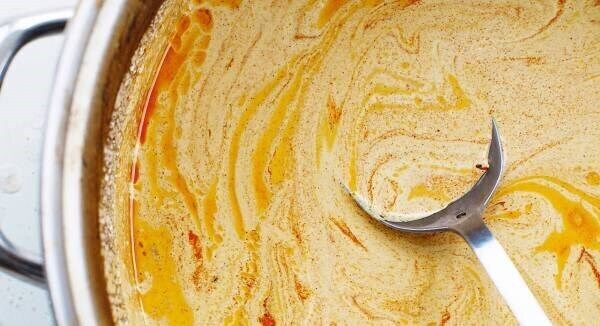
James writes: “I’m is a dairy addict, this and Rogan Josh are two of my favourite curries — the yoghurt (and the almonds in the korma) give such a lovely richness. Neither of these two curries is hot, but you can add a few chilli flakes to the Rogan Josh if you like.
“I batch-cook a lot at home and these are perfect for that. Double the recipe and freeze what you don’t eat, then you’ll have homemade ready meals for when you can’t be bothered to cook. Serve with rice, naan and chilli and garlic chutney.”
In a bowl, mix half the yoghurt and half the lemon juice with the cinnamon, cardamom, nutmeg and ½ teaspoon salt.
Add the meat and turn to coat. Set aside to marinate (the longer the better).
Heat the butter with the oil in a large frying pan, add the onion and fry for 10 minutes until soft.
Add the garlic and ginger and fry for a few seconds, then add the meat in its marinade, the saffron in its soaking water and half the garam masala, and fry for 5 minutes to thicken.
Add 250ml/1 cup water, the sugar, ground almonds and ½ teaspoon salt, cover and gently simmer for about 1 hour, until tender, giving it a stir every now and then.
If the sauce needs to be thicker, cook it uncovered for the last 15 minutes.
Stir in the rest of the yoghurt, a squeeze more lemon juice and the rest of the garam masala, then check the seasoning and serve straight away, topped with coriander if you like.
- Goat: Cooking And Eating by James Whetlor (Quadrille Publishing) Photography: Mike Lusmore
The Happy Pear, Chickpea Tikka Masala
Chicken tikka masala has been called the UK’s national dish, originating when a chef added tomato soup to a curry to make it less spicy! Our version, based on chickpeas and aubergines, is rich, creamy, and lovely and ‘meaty’.
In a dry frying pan, fry the cumin and coriander seeds for 3–5 minutes on a high heat until the cumin seeds start to pop, stirring regularly. Peel the garlic and ginger.
To make your paste, whizz together the garlic, ginger, chilli, the stalks from the fresh coriander (setting the leaves aside for later), the garam masala, smoked paprika, salt, pepper, tomato purée, chopped tomatoes and the toasted cumin and coriander seeds in a blender until smooth.
Chop the scallions into small slices and cut the mushrooms into small bite-size pieces. Put the oil into a large frying pan over a high heat, and once the pan and oil are hot, add the mushrooms and fry for 3–4 minutes. If the mushrooms start to stick, add a few tablespoons of the paste.
Drain the chickpeas, rinse thoroughly and add to the pan together with the chopped scallions, the rest of the paste and the coconut milk. Bring to the boil, then reduce the heat to a simmer and cook for a further two minutes.
Squeeze in the lime juice, taste, and season with more salt, pepper and maybe some chilli flakes if you think it needs it. Chop the reserved coriander leaves roughly and sprinkle over each serving as a garnish.
Lovely served with soya yoghurt and toasted almond flakes on top.
- From Recipes for Happiness by David and Stephen Flynn. Published by Penguin Ireland
Honey and Rosemary Cakes
Preheat the oven to 180ºC/350ºF/Gas 4 and grease the muffin tins with a little of the butter. Place the rest of the butter, along with the sugar, honey and 1tbsp water, into the saucepan. Heat gently, stirring only once, until the butter is melted and the sugar dissolved. It will look like it’s separated, but don’t stress, this is normal. Set aside to cool.
Sift the flour, baking powder and cinnamon together, and add the finely chopped rosemary.
When the honey mixture is cool, stir in the beaten eggs. Add to the dry ingredients and stir until the mixture is smooth.
Divide the mixture between the well-greased tins, making sure they are all around two-thirds full. Bake for around 25 minutes, until a skewer inserted in the centre comes out clean. Cool for 5 minutes in the tins, then turn out and transfer to a wire rack.
Whisk the cream cheese until light and airy. Sift the icing sugar and beat it into the cheese, to create a smooth and creamy icing that holds its shape.
When the cakes are completely cold, ice them using a palette knife to drop the icing onto the cake, then round it off at the edges.
To make the rosemary honey drizzle, put the honey in a saucepan with the rosemary leaves and bring to the boil. As soon as the honey starts bubbling, turn off the heat and allow the flavours to infuse for at least 20 minutes. Pour the mixture into a jar — it will keep for a good few weeks, and tastes wonderful on roasted carrots as well as cakes.
To serve, warm the rosemary honey in the saucepan and spoon over an iced cake. Eat immediately.
- From The Little Library Cookbook by Kate Young, photographs by Lean Timms. Published by Anima, an imprint of Head of Zeus
Brown Butter Madeleines
“She sent out for one of those short, plump little cakes called ‘petites madeleines,’ which look as though they had been moulded in the fluted scallop of a pilgrim’s shell.”
Melt the butter over a low heat. Once melted, tip half into a dish and set aside. Leave the other half over the heat until butter has turned brown and gives off a nutty aroma. Remove from the heat and add this browned butter to the dish of melted butter.
Beat the eggs with the caster sugar in a bowl until very thick, which should take at least 5 minutes using an electric mixer or whisk.
Sift the flour and baking powder into the egg and sugar mixture and fold in gently with a spatula. Fold in the butter, then cover and chill for at least 2 hours, or overnight if that’s easier.
Preheat the oven to 200ºC/400ºF/Gas 6 and generously brush the madeleine tin with melted butter. Dust with a little flour, then pop the tin in the freezer for 10 minutes. Fill the tray with the batter — around full is enough, as the sponge will spread as it rises.
Bake for 7 to 9 minutes, until brown and risen, then tip out of the tin and leave to cool on the rack. You’ll have enough batter to do a second, and possibly third, batch. Dust all the madeleines with icing sugar and serve, warm, with a cup.
- From “The Little Library Cookbook” by Kate Young, photographs by Lean Timms. Published by Anima, an imprint of Head of Zeus
Hot tips
- Have you got to the Crawford Art Gallery Café in Cork yet for Sunday brunch? The word on the street is that it’s certainly worth a detour, 11am to 3pm. www.crawfordgallerycafe.com
- Where do you find the best breakfast as you travel around Ireland? Grab a copy of Georgina Campbell’s Ireland — The Guide: The Best Places to Eat, Drink and Stay to get the insider information on the meal that used to be looked on as the ‘Cinderella’ of the Irish culinary scene.
- At the recent Georgina Campbell Irish Breakfast awards, lovely Longueville House in Mallow won the award for the Best Irish Country House Breakfast. Hanora’s Cottage guesthouse and restaurant in Ballymacarbry, Co Waterford, in the foothills of the Comeragh mountains, was the worthy winner in the guesthouse category. For a full list of the winners see www.ireland-guide.com.