Easter baking with Darina Allen
DOWN here on our farm in Shanagarry the hens are laying with gay abandon, a clutch of chicks just hatched out in time for Easter and the ducks on our little pond at the end of the garden seem to be producing a beautiful duck egg each and every day.
Duck eggs are unfamiliar to many but believe me they are beautiful things.
Chefs love them and all of our Grannies coveted them because they knew that they made the lightest and tenderest sponge cakes.
Duck eggs have a slightly higher protein count; they have about 70g on average while hen eggs are about 50g. The shell is tougher so they also keep fresh for longer.
Because duck eggs have a larger yolk and a higher fat content, they appear to make cakes that are richer, rise higher and have a fluffier texture. Even though they are larger I just substitute one duck egg for one hen’s egg.
The mineral content is very similar – both contain selenium, manganese, zinc, copper, potassium, sodium phosphorous, calcium and iron.
In short eggs are magic nutrient dense foods, super versatile in the kitchen so in this column I’ll concentrate on Easter baking.
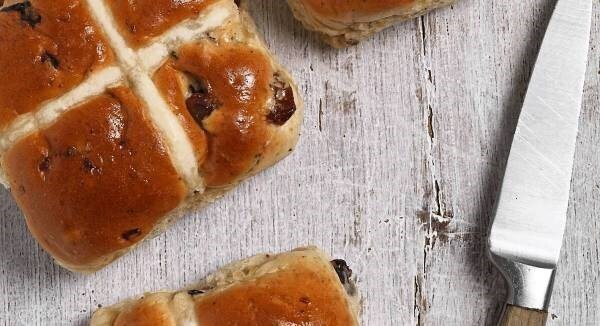
If you haven’t already made the quintessential Easter Simnel cake with a layer of marzipan in the centre and eleven marzipan balls on top to represent the apostles minus Judas, it’s too late now but homemade hot cross buds are definitely worth the effort.
They certainly take time but most of that is mixing and rising time so that requires no effort. Gather the kids around, they can help to put the traditional cross on top and make their mark on their own. Then invite some friends for an Easter tea party.
While the buns are rising make a duck egg sponge and some homemade lemon curd to sandwich it together. My grandchildren love to make Easter egg nests to hold those little chocolate eggs and fluffy chicks.
This Easter biscuit recipe provides an opportunity for those who love to have fun decorating and enjoy being creative with an icing bag.
For Easter Sunday lunch I could have my usual roast leg of Spring lamb with mint sauce, lots of roasties and gravy but this year I’ll pair it with haricot bean stew and a salad of organic Spring leaves and foraged greens.
Rhubarb is coming along slowly so perhaps we’ll have a blood orange tart to enjoy the last of the citrus that has livened up in the past few months.
Happy Easter to you all.
Hot Cross Buns

Hot cross buns were traditionally eaten in Ireland on Ash Wednesday and on Good Friday but nowadays one can buy them for months on end. Have fun making your own with this delicious recipe.
25g (1oz) fresh yeast
75-110g (3-4oz) castor sugar
450g (1lb) baker’s flour
75g (3oz) butter
¼ tsp cinnamon
¼ tsp nutmeg
2-3 tsp mixed spice, depending how fresh it is
1 level tsp of salt (important to add)
2 organic eggs
225-300ml (8-10 fl oz) tepid milk
75g (3oz) currants
50g (2oz) sultanas
25g (1oz) best quality candied peel, chopped
Egg wash made with milk, sugar, 1 organic egg yolk, whisked together
Shortcrust pastry
Liquid Cross
50g (2oz) white flour
1 tbsp melted butter
4-5 tbsp cold water
Dissolve the yeast with 1 tablespoon of the sugar in a little tepid milk.
Put the flour into a bowl, rub in the butter, add the cinnamon, nutmeg, mixed spice, a pinch of salt and the remainder of the sugar. Mix well. Whisk the eggs and add to the milk. Make a well in the centre of the flour, add the yeast and most of the liquid and mix to a soft dough, adding a little more milk if necessary.
Cover and leave to rest for 2 or 3 minutes then knead by hand or in a food processor until smooth.
Add the currants, sultanas and mixed peel and continue to knead until the dough is shiny. Cover the bowl and let the dough rise in a warm place until it doubles in size.
“Knock back”, by kneading for 3 or 4 minutes, rest for a few minutes. Divide the mixture into 14 balls, each weighing about 50g (2oz). Knead each slightly and shape into buns. Place on a lightly floured tray. Egg wash and leave to rise.
If using shortcrust, arrange a cross of pastry on each one. Leave to rise until double in size. Then egg wash a second time carefully.
We tend to decorate with what we call a “liquid cross”. To make this, mix the flour, melted butter and water together to form a thick liquid. Fill into a paper piping bag and pipe a liquid cross on top of each bun.
Preheat the oven to 220C/425F/gas mark 6.
Bake in the preheated oven for 5 minutes then reduce the heat to 200C/400F/gas mark 6 for a further 10 minutes or until golden. Leave to cool on a wire rack. Split in two and serve with butter.
Rhubarb and Custard Tart
225g (8oz) plain flour
175g (6oz) butter
Pinch of salt
1 dstsp icing sugar
A little beaten egg or egg yolk and water to bind
600g (1¼lb) or a little more rhubarb, cut into small pieces
1-2 tbsp castor sugar
300ml (10fl oz) cream
2 large or 3 small eggs
3 tbsp castor sugar
1 tsp pure vanilla extract
Equipment
1 x 12in (30.5cm) tart tin or
2 x 7in (18cm) tart tins
Make the shortcrust pastry in the usual way and leave to relax in a fridge for one hour.
Line a tart tin (or tins), with a removable base and chill for 10 minutes. Line with paper and fill with dried beans and bake blind in a moderate oven 180C/350F/Gas mark 4 for 15-20 minutes.
Remove the paper and beans, paint the tart with a little egg wash and return to the oven for 3 or 4 minutes.
Arrange the cut rhubarb evenly inside the tart shell. Sprinkle with 1-2 tablespoons of castor sugar.
Whisk the eggs well, with the 3 tablespoons of sugar and vanilla extract, add the cream.
Strain this mixture over the rhubarb and bake at 180C/350F/Gas mark 4, for 35 minutes until the custard is set and the apples are fully cooked. Serve warm with a bowl of whipped cream.
Duck Egg Sponge with Lemon Curd
Duck eggs are renowned for making a lighter, more yellow sponge cake than hen’s eggs and are much sought after.
This sponge is interesting because the whites, rather than the yolks, are beaten with the sugar, which is opposite to the way most whisked-up sponges are made.
75g (3oz) plain flour, sieved,
3 organic duck eggs
75g (3oz) caster sugar
Lemon curd
To decorate
Fluffy chicks
Speckled eggs
Equipment
2 x 18cm (7in) round cake tins, lined
Heat the oven to 180C/350F/ gas mark 4. Brush the base and sides of the tins with melted butter and dust with two teaspoons of white flour.
Separate the egg whites from the yolks. Put the whites and sugar into a bowl and whisk until stiff, preferably in an electric mixer.
Whisk in the yolks one by one and then fold in the sieved flour, making sure not to deflate the mixture. Divide the mixture between the prepared tins.
Bake for 20–25 minutes. Turn out carefully and leave to cool on a wire rack. Sandwich together with cream and lemon curd.
Sprinkle a little caster sugar or icing sugar over the top and decorate for Easter with fluffy chicks and specked eggs.
Frangipane Tart with Blood Oranges
Serves 6
Shortcrust Pastry
110g (4oz ) flour
50g (2oz) butter
1 dstsp castor sugar
Beaten egg to mix
Frangipane
50g (2oz ) butter
40g (1½oz) castor sugar
1 egg
25g (1oz) ground almonds
45g (1½oz) flour
½ teaspoon baking powder
6 blood oranges, skin and pith
removed, thinly sliced — ¼ inch
Split almonds
Apricot glaze
Preheat the oven to 180C/350F/Gas Mark 4.
Make the pastry in the usual way and leave to relax in the fridge for 10-15 minutes.
Next, make the frangipane.
Cream the butter, gradually beat in the sugar and continue beating until the mixture is light and soft. Gradually add the beaten egg, beating well after each addition. Stir in the ground almonds, flour and baking powder.
Line a 18cm (7 inch) flan ring with the pastry. Line with parchment paper, fill with baking beans and “bake blind” in the preheated oven for 25-30 minutes. Remove the paper and beans.
Spread a thin layer of apricot jam on the sides and bottom of the pastry. Put in the frangipane and spread it evenly. Arrange the blood orange slices. Fill the hollow in each with an almond.
Bake in the moderate oven 180C/350F/Gas Mark 4, for 35-40 minutes. Remove the flan ring, and brush the top with apricot glaze. Serve warm with a bowl of softly whipped cream.
Lemon Curd
Tangy delicious lemon curd can be made in a twinkling, smear it over a sponge or onto fresh bread, buttery scones or meringues. It is best eaten within a fortnight.
Makes 2 x 200ml (7fl oz) jars
50g (2oz) butter
100g (3½ oz) caster sugar
Grated zest and juice of 2 lemons
2 organic eggs and 1 organic egg yolk whisked (keep white aside for meringue)
Melt the butter on a very low heat.
Add the caster sugar, lemon zest and juice and then add the whisked eggs. Stir carefully over a gentle heat with a straight ended wooden spatula until the mixture coats the back it.
Remove from the heat and pour into a bowl or sterilised jar (it will thicken further as it cools).
Cover when cold and refrigerate.
Easter Bunny Biscuits
Easy peasy and fun to make — the kids can make them too.
170g (6oz) plain white flour
110g (4oz) butter
55g (2oz) castor sugar
110g (4ozs) icing sugar
Finely grated rind of ½ lemon
1-2 tbsp freshly squeezed lemon juice
Icing, raisins, tiny speckled eggs
Rabbit or chick shaped biscuit cutters
Preheat the oven to 180C/350F/regulo 4.
Mix the flour and castor sugar in a bowl, rub in the butter and continue
to work until the mixture comes together in a firm dough. Roll into a quarter inch (6mm) thick sheet on a floured board.
Stamp into bunny shapes with a cutter. Bake in the preheated moderate oven for 8 -15 minutes or until pale and golden in colour. Cool on a wire rack.
Meanwhile make the icing. Sieve the icing sugar into a bowl. Add the lemon rind and enough lemon juice to make a softish icing.
Decorate with chosen water icing, raisins or speckled tiny chocolate eggs where appropriate.
Watch these biscuits really carefully in the oven, because of the
high sugar content they burn easily. They should be a pale golden colour — darker will be more bitter.