Darina Allen on eating a little less meat
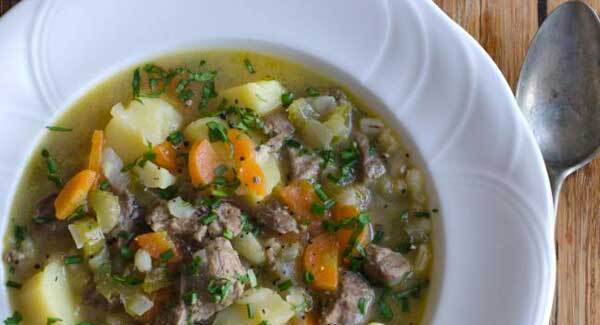
Her address to 1,300 current and future young world leaders from 196 nations at the One Young World Summit in Ottawa, Canada, caused quite a stir around the world but particularly in Ireland.
The remarks were condemned by farming organisations and rural TDs who assumed this statement was aimed at them. Irish beef farmers are understandably particularly sensitive having been directly affected by the fall in the value of sterling as a result of Brexit.
Because of the quantity of methane and slurry produced by animals, livestock rearing is seen as a major contribution to greenhouse gases.
However, our dairy and beef animals are primarily, though not completely, grass-fed so consequently they produce much less gas than grain-fed animals reared in intensive feed-lot systems.
A fact that needs to be repeated loud and clear. We are not comparing like with like, it’s simply not the same thing.
Ireland can grow grass like virtually nowhere else in the world so surely it makes sense for our farmers to produce good beef for export to areas that are not so favoured by nature.
However, back to Mary Robinson, we must be careful not to ‘shoot the messenger’. There’s no doubt many people eat far more meat than is good for them.
Much of that meat is produced in extremely intensive units which raise animal welfare and chemical-input concerns.
Although I eat mostly plants, copious amounts of vegetables, fresh herbs and wild foods, I’m certainly not a vegetarian.
I love good meat but increasingly find myself eating less meat but better-quality, totally free-range and organic. I am happy to pay more to those who are rearing animals and poultry in a more extensive way.
We urgently need a system where food producers can be identified and rewarded for producing a superior product.
We also need to create a new paradigm where the contribution of organic and chemical-free farmers to the environment is acknowledged in tax breaks.
Pork too needs careful sourcing to find organic or chemical-free. Close to us here in east Cork, we have Woodside Farm where Martin and Noreen Conroy and their family work hard to provide us with beautiful heritage breed Saddleback pork and bacon; the only problem is they simply can’t keep up with demand.
Catch up with them at Midleton and Douglas on Saturday, Mahon on Thursday and Wilton Farmers Markets on Tuesday. www.woodsidefarm.ie
In Curraghchase, Co Limerick, Caroline Rigney and her husband Joe also do the same. www.rigneysfarm.com
Mary Robinson is right in many ways. We have to change; we simply cannot go on with ‘business as usual’. For the sake of our children, great grandchildren and the planet, we all need to commit to the Paris Agreement.
Each and every one of us needs to think about our carbon footprint – we can each make a vital difference.
So here are some recipes, tasty, delicious and super nutritious that use just a little less meat.
Chicken Stock
This recipe is just a guideline. If you have just one carcass and can’t be bothered to make a small quantity of stock, why not freeze the carcass and save it up until you have six or seven carcasses and giblets, then you can make a really good-sized pot of stock and get best value for your fuel.
Stock will keep for several days in the refrigerator. If you want to keep it for longer, boil it up again for 5–6 minutes every couple of days; allow it to get cold and refrigerate again. Stock also freezes perfectly. For cheap containers, use large yogurt cartons or plastic milk bottles, then you can cut them away from the frozen stock without a conscience if you need to defrost it in a hurry!
I’ve recently come across some very good Silkie chickens reared by Sean Ring from Castlecomer in Co Kilkenny. We can get them with their feet and heads on which adds immeasurably to the flavour and nourishment of the broth. Not for everyone I know…
2–3 raw or cooked chicken carcasses or a mixture of both giblets from the chicken (neck, heart, gizzard – save the liver for a different dish)
1 onion, sliced
1 leek, split in two
2 outside celery stalks or 2 lovage leaves
1 carrot, cut into chunks
a few parsley stalks
sprig of thyme
6 peppercorns
Chop up the carcasses as much as possible. Put all the ingredients into a saucepan and cover with about 3.4 litres (7 pints) cold water. Bring to the boil. Skim the fat off the top with a tablespoon. Simmer for 3–4 hours. Strain and remove any remaining fat. Do not add salt.
Chicken Broth with Julienne of Vegetables
1.5 litres (2½ pints) of well-flavoured homemade chicken stock (see recipe)
flat parsley
4 spring onions, cut at an angle
50g (2oz) carrots
50g (2oz) celery
50g (2oz) white turnip
50g (2oz) leeks
First julienne the vegetables: Peel and cut the carrot, celery, turnip and leek into very thin julienne strips
Heat the broth, add the julienne, bring back to the boil and simmer gently until the vegetables are just cooked, 5-6 minutes.
Ladle into bowls and scatter with lots of flat leaf parsley and spring onion.
Scalloped Potatoes with Beef and Kidney

Tons of flavour, for just a little beef. Season well and serve with some good butter.
2½-3 lbs (1.1-1.35kg) potatoes
1 lb (450g) well hung stewing beef
1 beef kidney
¾ lb (350g) onions, chopped
2 – 2½ ozs (50-70g) butter
water or stock
salt and freshly ground pepper
Garnish
chopped parsley
Equipment
A presentable oval casserole
Remove the skin and white core from the kidney and discard, cut the flesh into ½ inch (1cm) cubes, put into a bowl, cover with cold water and sprinkle with a good pinch of salt.
Cut the beef into ½ inch (1cm) cubes also.
Peel the potatoes and cut into ¼ inch (5mm) thick slices, put a layer of potato slices on the base of the casserole.
Drain the kidney and mix with the beef, scatter some of the meat and chopped onion over the layer of potato. Season well with salt and freshly ground pepper, dot with butter, add another layer of potato, more meat, onions and seasoning and continue right up to the top of the casserole, finish with an overlapping layer of potato.
Fill with stock it will take approx 13 fl ozs (375ml). Bring to the boil, cover and cook in a preheated slow oven 150C/300F/regulo 2, for 2 - 2½ hours or until the meat is cooked.
Sprinkle with chopped parsley and serve from the casserole with lots of butter.
Lamb Stew with Bacon, Onions and Garden Herbs
The word stew is often associated in these islands with not very exciting mid week dinners. People tend to say almost apologetically, oh its only stew, no matter how delicious it is.
Well, let me tell you they smack their lips in France at the mere mention of a great big bubbling stew and now these gutsy, comforting pots are appearing on many of the smartest restaurant menus.
3 lb (1.3kg) gigot or rack chops from the shoulder of lamb not less than 2.5cm (1 inch thick)
12 oz (350g) green streaky bacon (blanch if salty)
seasoned white flour, preferably unbleached
a little butter or oil for sauteeing
1 lb (450g) onions, (baby ones are nicest)
1 lb (350g) carrot, peeled and thickly sliced
1¾ pints (750ml) approx. lamb or chicken stock
12 ‘old’ potatoes (optional)
sprig of thyme
roux — optional
Mushroom a la Crème (optional)
Garnish
Lots of freshly chopped parsley
Cut the rind off bacon and cut into approx ½ inch (1cm) cubes, blanch if salty and dry in kitchen paper. Divide the lamb into 12 pieces and roll in seasoned flour. Heat a little oil in a frying pan and sauté the bacon until crisp, remove and put in a casserole.
Add the lamb to the pan and sauté until golden then add to the bacon in the casserole. Heat control is crucial here, the pan mustn’t burn yet it must be hot enough to sauté the lamb. If it is cool the lamb will stew rather than sauté and as a result the meat may be tough. Then quickly sauté the onions and carrots, adding a little butter if necessary, and put them into the casserole. Degrease the sauté pan and deglaze with the stock, bring to the boil, pour over the lamb.
Cover the top of the stew with peeled potatoes (if using) and season well. Add a sprig of thyme and bring to simmering point on top of the stove, cover the pot and then put into the oven for 45-60 minutes, 180C/350F/regulo 4. Cooking time depends on how long the lamb was sautéed for.
When the casserole is just cooked, strain off the cooking liquid, degrease and return degreased liquid to the casserole and bring to the boil. Thicken with a little roux if necessary. Add back in the meat, carrots, onions and potatoes, bring back to the boil.
The casserole is very good served at this point, but it’s even more delicious if some Mushroom a la Crème is stirred in as enrichment. Serve bubbling hot, sprinkled with lots of chopped parsley.
Baby Beef Scallopini with Lemon
We do not serve intensively reared veal either at Ballymaloe House or at the Cookery School but once or twice a year we have naturally reared, milk-fed calf from our own Jersey or Kerry bull calves. The meat is not so pale as conventional veal but is wonderfully sweet and delicious.
675g (1½ lb) Lean Baby Beef from the top round
Salt and freshly ground pepper
Flour, well-seasoned with salt and freshly ground pepper
Beaten egg
Fresh white breadcrumbs
Clarified butter
Lemon segments
With a very sharp knife cut the top round into quarter-inch slices across the grain. Trim off any fat or sinews. Put between two sheets of clingfilm and flatten a little more with a meat pounder or rolling pin.
Dip each piece in well seasoned flour, beaten egg and soft white breadcrumbs. Pat off the excess.
Melt three or four tablespoons of clarified butter in a wide frying pan. Fry the scallopini, a few at a time until crisp and golden on one side then flip over onto the other. Drain briefly on kitchen paper. Serve hot with segments of lemon.
Hot tips
A Sustainable Food Trust Conference with a focus on Sustainable Food and Health takes place at Bristol University, November 23. Speaker Joel Salatin will speak about The Role of Livestock in Future Farming Systems. Contact: ellie@sustainablefoodtrust.org for further information.
Scared to tackle sushi yourself? On November 30, we will take the mystery out of making sushi. We will start by explaining the ingredients, basic equipment and techniques required. We will use fresh fish straight from the boats in Ballycotton Bay to create sublime sushi and sashimi. www.cookingisfun.ie
Enjoy Tutored Chocolate Tastings at the Ballymaloe Cookery School with Nancy Gilchrist on Thursday November 24 at 7pm.
Tickets €6/€8. Proceeds raised for the East Cork Slow Food Educational Project, 021 4646785 or slowfoodeastcork@gmail.com