Eunice Power: This four ingredient supper packs a perfect mid-week punch
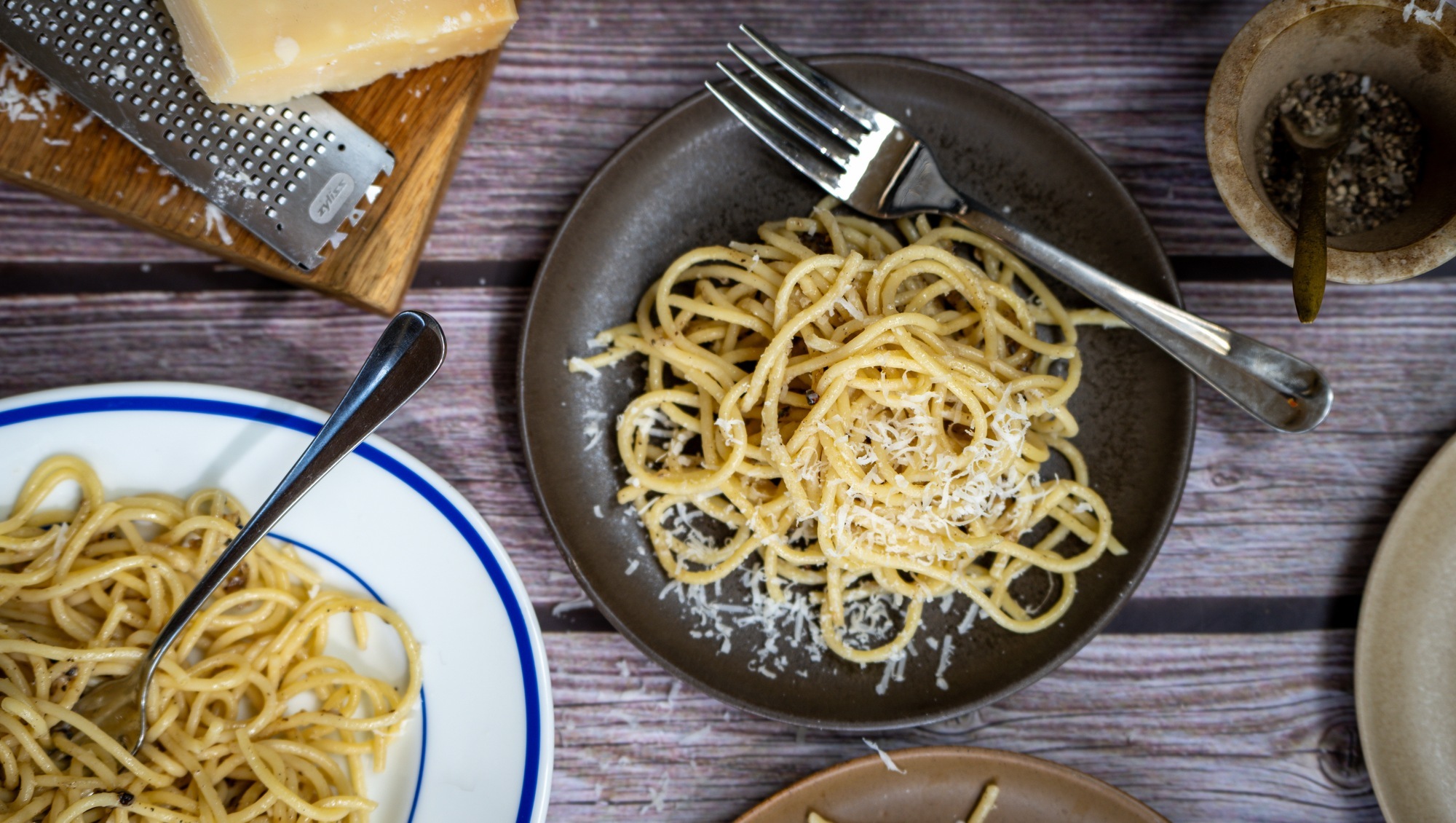
Eunice Power's Cacio e pepe. Picture: Chani Anderson
Guess who’s just back from a trip to Rome and eaten her body weight in cacio e pepe... and the plan is to continue eating it at home!
Guess who’s just back from a trip to Rome and eaten her body weight in Cacio e pepe!
And the plan is to continue eating it at home!
Cacio e pepe is made using the simplest of ingredients. It’s the ultimate store cupboard empty mid-week supper that packs a peppery punch, the glory of this dish lies is in the technique.
I’m sharing my cacio e pepe recipe with you this week, along with another Italian dish melanzane alla parmigiana – aubergines baked in luscious tomato sauce with creamy mozzarella – both of which I ate more than once during the trip. I go to Rome with a friend who spent her summers there in her twenties and knows the city inside out, and whenever we’re together, we make a point of going to Vespers at Quattro Coronati, a small, enclosed convent of Augustinian nuns near the Colosseum. Religious or not, it’s a beautifully mindful experience.
Rome really has it all culture at every corner, delicious food, and, of course, great fashion. If you’re looking for a trip away this autumn put Rome at the top of your list.
Cacio e Pepe
Cacio e Pepe is made with just four ingredients, yet get the technique right and you end up with something silky, peppery and utterly moreish.
Servings
4Course
MainIngredients
400g spaghetti
160g pecorino romano, finely
grated at room temperature
(you can substitute with
Parmesan)
4 tsp whole black peppercorns
Salt
Method
Put four serving bowls into a low oven to warm through. Don’t skip this step. Cold bowls will seize the sauce the moment it hits them, and you’ll end up with a claggy mess instead of something glossy.
Toast the peppercorns whole in a dry, hot pan for a minute or two, until they smell fragrant. Tip them into a mortar and crush roughly with a pestle. Whole peppercorns toasted this way give far more punch than pepper straight from a grinder.
Bring a wide, shallow pan of lightly salted water to the boil. A wide pan lets the spaghetti lie flat and cook evenly, and just as importantly, it means you’re not diluting your starch ingallons of water.
You want the pasta just covered, not swimming.
Add the spaghetti and cook, stirring occasionally, for about 8 minutes, or until just short of al dente.
Before draining, scoop out 350ml of the starchy cooking water and set aside.
Put the grated pecorino and most of the crushed pepper into a large, heavy bowl.
Beat in a splash of thereserved pasta water to loosen the cheese into a paste, then keep adding a little at a time until you have something with a light saucy consistency.
Drain the pasta and let it sit for a minute to cool slightly, then add it to the bowl.
Toss vigorously, tongs are your best friend here, loosening with more pasta water as needed until every strand is coated in a glossy sauce.
Divide between your warmed bowls straight away, scatter over the remaining pepper, and eat immediately, before the sauce has any chance to cool and tighten up.
Make this next dish now while the aubergines are at their best, and you will find it just as happy served warm from the oven as it is at room temperature the next day.
Cacio e Pepe
Cacio e Pepe is made with just four ingredients, yet get the technique right and you end up with something silky, peppery and utterly moreish.
Servings
4Course
MainIngredients
400g spaghetti
160g pecorino romano, finely
grated at room temperature
(you can substitute with
Parmesan)
4 tsp whole black peppercorns
Salt
Method
Put four serving bowls into a low oven to warm through. Don’t skip this step. Cold bowls will seize the sauce the moment it hits them, and you’ll end up with a claggy mess instead of something glossy.
Toast the peppercorns whole in a dry, hot pan for a minute or two, until they smell fragrant. Tip them into a mortar and crush roughly with a pestle. Whole peppercorns toasted this way give far more punch than pepper straight from a grinder.
Bring a wide, shallow pan of lightly salted water to the boil. A wide pan lets the spaghetti lie flat and cook evenly, and just as importantly, it means you’re not diluting your starch ingallons of water.
You want the pasta just covered, not swimming.
Add the spaghetti and cook, stirring occasionally, for about 8 minutes, or until just short of al dente.
Before draining, scoop out 350ml of the starchy cooking water and set aside.
Put the grated pecorino and most of the crushed pepper into a large, heavy bowl.
Beat in a splash of thereserved pasta water to loosen the cheese into a paste, then keep adding a little at a time until you have something with a light saucy consistency.
Drain the pasta and let it sit for a minute to cool slightly, then add it to the bowl.
Toss vigorously, tongs are your best friend here, loosening with more pasta water as needed until every strand is coated in a glossy sauce.
Divide between your warmed bowls straight away, scatter over the remaining pepper, and eat immediately, before the sauce has any chance to cool and tighten up.