Michelle Darmody: How to make homemade bagels
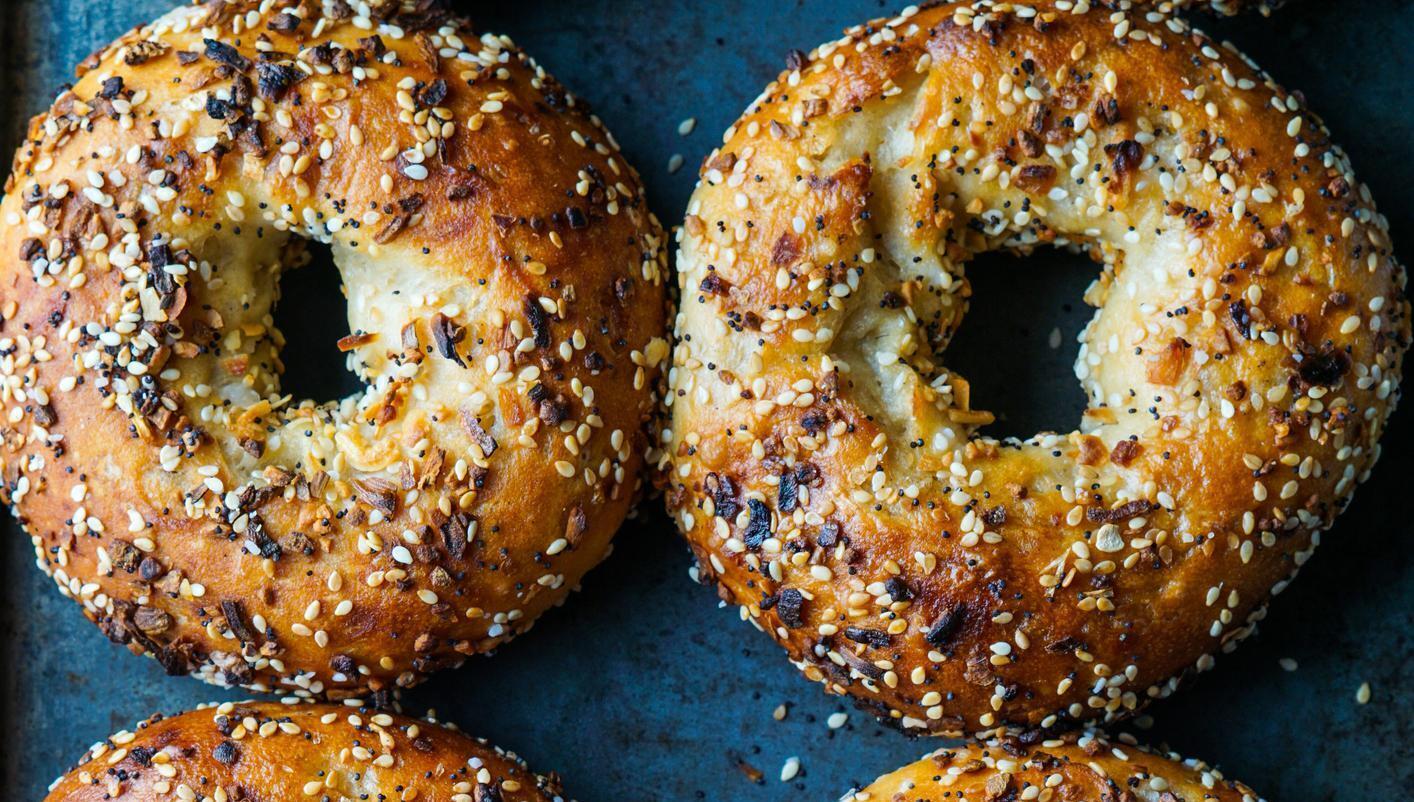
Michelle Darmody: "The classic everything bagel so prevalent in the U.S. is coated in a mixture of poppy seeds, sesame seeds, dried garlic, dried onion, and coarse salt."

Bagels are made in an unusual way; they are both boiled and baked. The first step of boiling in salty, alkaline water helps the bagels hold their distinctive shape in the oven and it also gives that shiny smooth finish that they are well known for.
The addition of bread soda and salt to a pot of water helps you create the right conditions.
Poland is the original home of the bagel but they are now synonymous with the United States, particularly New York City. Nothing starts a day in New York like a cream cheese topped ‘everything’ bagel ordered over the counter from a noisy, bustling bakery.
You can get really great Irish cream cheese in the past year or so with dairies like Killowen in Wexford making it from milk from their own herd.
This bagel recipe is one for a lazy afternoon when you have time to knead your dough and let it rise for an hour or so in a warm corner of the house. There is something very satisfying about making your own bagels.
The kneading is quite energetic and it takes about ten minutes to bring the dough to the required smoothness. It can be done with a mixer and a dough hook if you prefer.
Homemade bagels
This bagel recipe is one for a lazy afternoon when you have time to knead your dough and let it rise for an hour or so in a warm corner of the house. There is something very satisfying about making your own bagels.
Servings
8Preparation Time
40 minsCooking Time
20 minsTotal Time
60 minsCourse
MainIngredients
500g strong flour
1 tbs golden caster sugar
2 tsp fine sea salt – and 1 tsp for the boiling water
7g of fast-action yeast
300ml warm water
1 tbs rapeseed or light olive oil
1 tsp bread soda
2 tsp black sesame seeds
2 tsp white sesame seeds
1 tsp sea salt flakes
1 egg, lightly beaten
Method
Stir the flour, and salt together in a large bowl and make a well in the centre.
Lightly mix the yeast, sugar and the warm water until the yeast has dissolved.
Pour the yeast mixture into the well in the flour and bring the flour and the mixture together.
Sprinkle a clean work surface with flour and tip the dough onto it.
Knead the dough for about ten minutes until it becomes smooth.
Lightly oil a bowl and place the ball of dough into it.
Wet a clean tea towel and ring the excess water out. Place this over the bowl so the dough is kept in a damp environment.
Put the bowl in a warm place for an hour which will allow the dough to expand.
After this stage, knock the dough back to remove the largest air bubbles. This involves kneading it once before breaking it into eight balls.
Allow these balls to rise again on a lightly floured baking tray.
Roll each ball until smooth.
With your thumb and first finger, make a hole in the centre of the ball, push the dough out and twirl the bagel dough slightly to widen the hole to about 2cm in diameter.
Line two baking trays with parchment and preheat your oven 180ºC/gas mark 4.
Stir the bread soda and remaining fine sea salt into a pot of boiling water.
Use a slotted spoon to gently lower each bagel into the water. Turn them after 30 seconds then lift them out after a minute.
Allow the slotted spoon to drain and then place back the bagel onto the baking tray.
Mix the seeds and flakes of sea salt together.
Whisk the egg and brush the top of each bagel, then sprinkle with the seed mix.
When this step is completed, bake for 15 to 18 minutes until golden.
Once cool enough to handle, place the bagels onto a wire rack to cool.
The warm water being mixed with the yeast should be very comfortable to touch with your finger, not too hot and not cold to touch.
Ceramic or metal bowls work best for proving the dough – they are cooler than plastic and the dough tends not to stick as much. Whatever type of bowl you use, it is always good to ensure the bowl is completely coated in oil.
I find using a damp tea towel is better than cling film for covering the dough, as the cling film tends to stick to the rising dough and there is a bit of breathability with a towel.
If you want your bagels to be exactly the same size, you can weigh the balls of dough, cutting eight exact pieces.
A layer of egg wash brushed over the seeds before baking will help to secure them more tightly if you find they fall off too easily.
The bread soda makes the water alkaline and this helps to give the bagels their shine. This step also helps the bagels to keep their shape when baking and gives them a golden crust, so adding the bread soda and salt to the water is an important step. You do not need too much water in the pot just enough to comfortably cover each bagel.
It is best to use a slotted spoon or a mesh strainer to place and remove the bagels from the water and not a cooking-tongs which can squash and dent them.
The bagels freeze well. I often cut them with a serrated knife before freezing so I can pop them straight into a toaster or defrost to make sandwiches. They do not tend to keep that long at room temperature, whether defrosted or fresh. I find any bagels get chewy after a day or so.
Add a teaspoon of ground cinnamon to the flour mixture and reduce the sea salt added at this stage by half. Soak 80g of raisins and squeeze out the liquid before adding these to the dough in the last few minutes as you knead the dough.
The classic everything bagel so prevalent in the U.S. is coated in a mixture of poppy seeds, sesame seeds, dried garlic, dried onion, and coarse salt. Mix two teaspoons of poppy seeds and sesame seeds, a teaspoon of flaky sea salt and half a teaspoon of dried garlic and dried onion.
Read More