Aishling Moore: These simple garnishes complement oysters perfectly
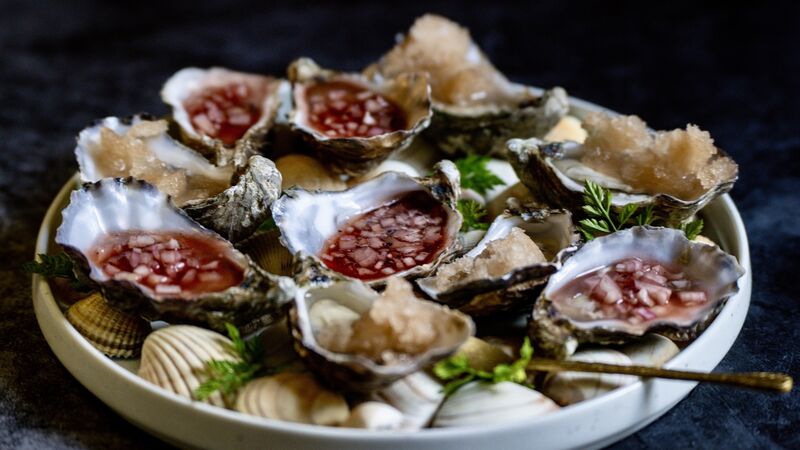
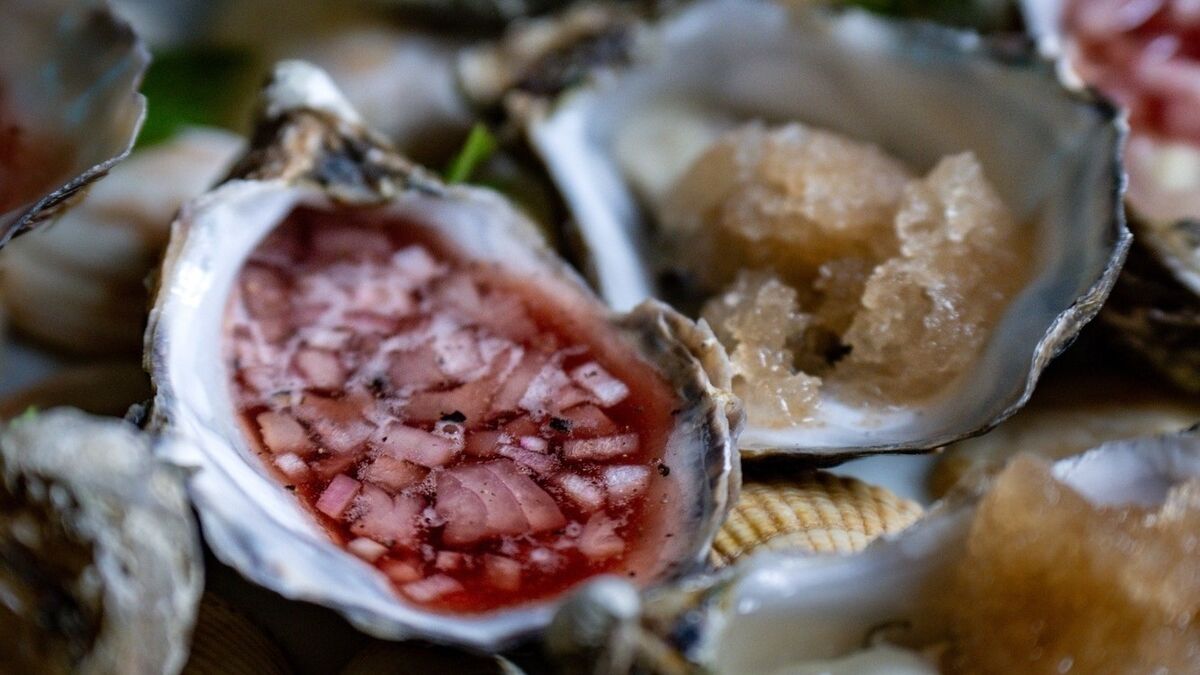
Oysters with mignonette and granita by Aishling Moore. Picture: Chani Anderson.

This weekend I’m sharing two very simple garnishes for the most divisive mollusc in the sea.
I love oysters, shucking, serving and eating them. The notion that oysters are not to be chewed when consumed is one to put anyone off, and is not the way one should enjoy this species of shellfish, or any food for that matter.
We have oyster farms aplenty around the coast of Ireland, all using slightly different techniques that reflect their locations and challenges.
You’ll notice subtle distinctions between each oyster produced from each farm, both in appearance and taste. Cup shapes and sizes vary depending on the length of time the mollusc has had in the ocean and the farming methods used. They've various taste profiles too, each oyster reflecting the terroir of the area in which it was grown.
Before garnishing any oyster, I recommend to first try it undressed or ‘au naturel’ to gauge the level of salinity, sweetness and to better understand the texture.
A finely diced shallot and red wine vinegar, ‘mignonette’ is the most common accompaniment you’ll find served with an oyster. Very quick to throw together, it’s not something I like to make too far in advance; if you do you’ll find the harshness of the shallot mellows after mingling with the vinegar, something I prefer to avoid.
A frozen vinegar-based granita is my favourite way to serve oysters, with scraped ice shavings on top and inside the shell rather than underneath!
Here, I’ve just used a good unpasteurised apple cider vinegar, which complements oysters wonderfully and has been our primary way of serving oysters in Goldie since we opened in 2019. In the summer months, we infuse the base apple cider vinegar for a week or so with a couple of heads of elderflower or a few fistfuls of lemon verbena.
Oysters two-ways
A frozen vinegar-based granita is my favourite way to serve oysters, with scraped ice shavings on top and inside the shell rather than underneath! Here, I’ve just used a good unpasteurised apple cider vinegar, which complements oysters wonderfully and has
Servings
12Preparation Time
2 hours 10 minsTotal Time
2 hours 10 minsCourse
MainIngredients
For the mignonette:
1 shallot, finely diced
100ml red wine vinegar
Black pepper
For the granita:
50g caster sugar
100ml water
100ml apple cider vinegar
Method
To make the mignonette, place the finely diced shallot and vinegar in a small bowl and mix.
Add freshly cracked black pepper to taste.
Mignonette dressing is often served in a bowl with a small spoon, alongside the oysters, so people can dress one themselves with a small spoonful, before eating. You can also dress them all together before serving.
For the granita, add the water and sugar to a small pot. Warm on a medium heat to dissolve the sugar. Remove from the heat once dissolved and add the vinegar. Stir well and allow to cool.
Once at room temperature, place in a shallow container in a freezer for 2 hours or until completely frozen.
To serve, scratch the surface of the granita with a spoon to produce little ice crystals. Add 1 heaped tsp to each undressed oyster just before serving.
To shuck the oysters, have your serving dish, plate, or bowl of choice ready before beginning.
Use some ice or fresh seaweed to provide a stable base to serve the oysters, keeping the oyster liquid and your garnish of choosing inside the oyster.
Fold a clean tea towel in half twice lengthways. Place the oyster in the centre of the folded towel, cup-side down, with the hinge of the oyster facing in the direction of your more dominant hand.
Place the tip of the oyster knife at the hinge of the shell applying pressure. Twist and wiggle the knife to pop the hinge. The hinge is at the pointed end of the oyster.
Angle the knife towards the cup side of the shell and run your knife towards the top side of the shell. Turn the knife at a 90-degree angle to separate the flat side of the shell from the cup.
Run the knife under the muscle adductor of the oyster to detach the oyster from the shell. Remove any shell fragments that might be present.
Run the knife under the oyster meat at anangle to remove the muscle adductor from the meat. Do this carefully to avoid damaging the oyster with the knife and loss of liquid.
Avoid excess force when shucking the oysters, this will shatter and chip the outside of the shell as well as potentially damage the meat inside and yourself.
Make sure you are shucking oysters on a flat surface. The tea towel will help protect your less dominant hand as well as keeping the oyster in a stable position when the oyster is opened, limiting the loss of the glorious liquid inside the shell.
Use a small paintbrush to remove any shelf that may be present inside the oyster after shucking.
Discard any oysters that are open or have cracked compromised shells. They should smell fresh and of the seaside.
Oysters can be shucked ahead of time; keep in a refrigerator until serving.