Darina Allen: The importance of getting the basics of food right
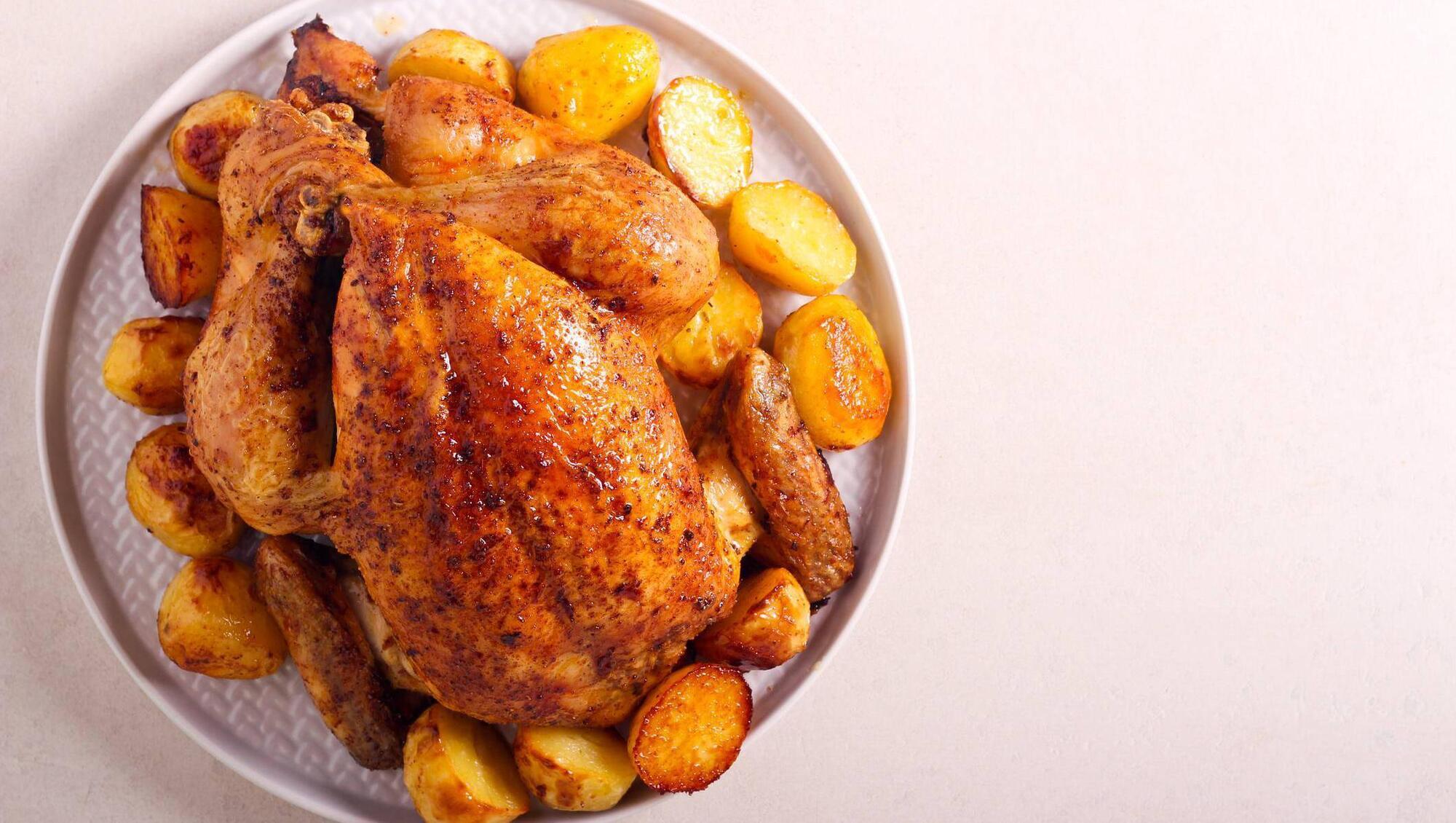
A traditional roast stuffed chicken with lots of gravy, a roast dinner is always a family favourite…. a forgotten flavour for many people

Recently, I was invited to speak at an event called ‘Mother Earth: A Food Symposium’.
The panel included chair Ali Dunworth, Cass McCarthy of Lúnasa Farm, Laurann O'Reilly (nutritionist) and Maggie Roche of the Little Acorn Cafe, and was entitled ‘Fab Food and Nourishing Nutrition’.
The main focus was on how to encourage children to eat and enjoy nourishing wholesome food.
The session was held at the Kildare Innovation Campus to celebrate St Brigid’s Day was well attended. It was followed by a session on caring for your pets, which ironically had a much larger audience.
Several speakers on my panel highlighted the challenges faced by young parents who have to try to juggle all the balls in the air.
Both parents working full-time to pay for childcare and the mortgage. The reality of darting into the supermarket on the way home from work to grab some ingredients or a ready-meal.
Then dashing home to cook something for the family more often than not with few cooking skills, doing their very best but endlessly feeling guilty.
We talked about the importance of sitting down around the kitchen table and the family eating together and the thorny issue of phones or no phones.
Cass emphasised and others agreed that sourcing real food, not ultra-processed food must be a priority.
But the reality is that for many, sourcing cheap food is the main priority, and cooking chemical-free food is a long way down the list of priorities.
Coincidentally, the following session about feeding dogs nutritious food had almost twice the audience. I rest my case!
Here in Ireland, we spend less of our income than ever before on healthy wholesome food.
Many people argue they can’t afford to spend more on fresh food every week, yet we have no qualms about spending lavishly on our nails, mobile phones, magazines...
According to EU research, the reality is, that here in Ireland, we spend the highest percentage of our weekly food budget (46.9% as opposed to 10% in Portugal) on ultra-processed food.
This is worrying to say the very least — a growing body of research confirms that UPFs cause obesity and are connected to an increasing number of health conditions. So, it is undeniably a question of priorities.
Several of the panel emphasised that parents need to start as they mean to continue... no cereals, snacks or sliced pan in the house, and no phones or other devices during meals at the table.
Family meals at the kitchen table are not just about eating: we learn social skills, table manners, how to lay a table, share, how to chat to each other. Even if we are arguing, it keeps the lines of communication open.
Mothers are worried about picky children and what to do but I remembered my father-in-law saying ‘children will not starve as long as there’s food in the house, but we need to make sure that it’s nourishing, wholesome real food — not addictive edible food-like substances’.
There is undoubtedly a crisis. Parents are doing their best, but the odds are stacked against them as long as ultra-processed foods are cheaper and addictive and the constant advertising to children continues.
I don’t know the answer, but we have an epidemic of obesity and health issues amongst children. Japan is making children’s health a priority… Ireland please follow.
The best place for the stuffing is inside the bird where it absorbs lots of delicious juices as it cooks. Do not overfill the bird — otherwise the heat may not penetrate fully. This is particularly important if you are using an intensively reared bird whi Course Ingredients 1.5 - 2.3kg free-range chicken, preferably organic Giblet Stock (optional): giblets (keep the liver for a chicken liver pâté), and wishbone 1 thickly-sliced carrot 1 thickly-sliced onion 1 stick celery, sliced a few parsley stalks and a sprig of thyme Stuffing: 45g butter 75g chopped onion 75-100g soft white breadcrumbs 2 tbsp finely-chopped fresh herbs e.g., parsley, thyme, chives and annual marjoram salt and freshly-ground pepper a little soft butter Gravy: 600-900ml of stock from giblets or chicken stock Garnish sprigs of flat parsley Julia's Roasties: 8 potatoes, unwashed Golden Wonders or Kerr’s Pinks Method First, sprinkle the chicken lightly all over with pure dairy salt (2 rounded teaspoons) for 20 minutes approx. This seasons the meat, enhances the flavour and firms the texture of the flesh. Next, prepare the chicken: Remove the wishbone from the neck end of the chicken: this is easily done by lifting back the loose neck skin and cutting around the wishbone with a small knife — tug to remove, this isn't at all essential, but it does make carving much easier later on. Tuck the wing tips underneath the chicken to make a neat shape. Put the wishbone, giblets, carrot, onions, celery, and herbs into a saucepan. Cover with cold water, bring to the boil, skim, and simmer gently while the chicken is roasting. This is the basis of the gravy. Alternatively, use homemade chicken stock. To make the stuffing: Sweat the onions gently in the butter in a covered saucepan until soft, 10 minutes approx. then stir in the white breadcrumbs, the freshly-chopped herbs, a little salt and pepper to taste. Allow it to get quite cold unless you are going to cook the chicken immediately. Fill the cavity with stuffing but not too tightly. Dry the chicken with kitchen paper. Smear the breast and legs with a little soft butter. Preheat the oven to 180°C/Gas Mark 4. Weigh the chicken and allow about 20 minutes to 450g (1lb) and 20 minutes over — put on middle shelf in oven. Baste a couple of times during the cooking with the buttery juices. The chicken is done when the juices are running clear. To test, prick the thickest part at the base of the thigh, hold a spoon underneath to collect the liquid, examine the juices — they should be clear. Remove the chicken to a carving dish, keep it warm and allow to rest while you make the gravy. To make the gravy: Tilt the roasting tin to one corner and spoon off the surplus fat from the juices and return the roasting pan to the stove. Alternatively, use a maigre to degrease**. Deglaze the pan juices with the fat free stock from the giblets and bones (you will need 600 – 900ml) depending on the size of the chicken). Using a whisk, stir and scrape well to dissolve the caramelised meat juices in the roasting pan. Boil it up well, season and thicken with a little roux if you like (the gravy should not be thick). Taste and correct seasoning, serve in a hot gravy boat. If possible, serve the chicken on a nice carving dish surrounded by crispy roast potatoes and some sprigs of flat parsley then arm yourself with a sharp knife and bring it to the table. Carve as best you can and ignore rude remarks if you are still practicing but do try to organise it so that each person gets some brown and some white meat. To make Julia's roasties: Choose medium to large potatoes of even size. Scrub and peel. Put into a saucepan, cover with cold salted water and bring to the boil. Drain thoroughly. Lightly scratch the surface with a fork and season with salt. Put the potatoes into smoking hot fat or olive oil. Baste occasionally. Cook until soft in a hot oven 230°C/Gas Mark 8 for 30-45 minutes depending on the size. Drain well on kitchen paper. Serve immediately. Alternatively, put the potatoes into smoking hot fat in the same tin as the meat, 40-45 minutes before the meat is fully cooked and baste well. Cook until soft. (Baste the potatoes when you baste the meat and turn them over after 25 minutes). Drain on kitchen paper and serve immediately. Serve with gravy and Julia’s roasties. * Use the cooked carcass for stock.Roast Chicken Dinner with Gravy and Roasties
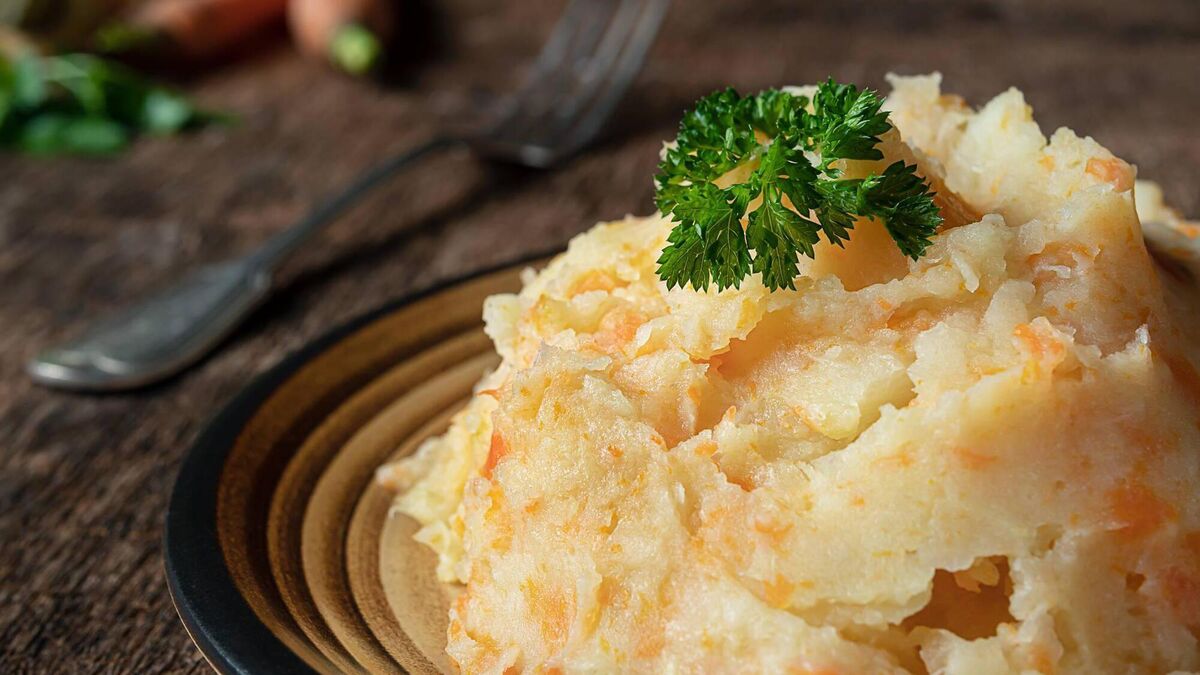
'Sunshine' or 'Green, white and gold' are some of the evocative names given to this popular vegetable combination, still widely made in Ireland. Servings Course Ingredients 225g carrots 350g parsnips 50g butter salt, freshly-ground pepper and sugar Garnish: chopped parsley Method Wash and peel the carrots and parsnips. Slice the carrot into 5mm slices. Cook in a little boiled salted water with a pinch of sugar until soft. Cook the parsnips separately in boiling salted water. Strain both, mash or purée together and add butter, salt and freshly-ground pepper.Carrot and parsnip mash
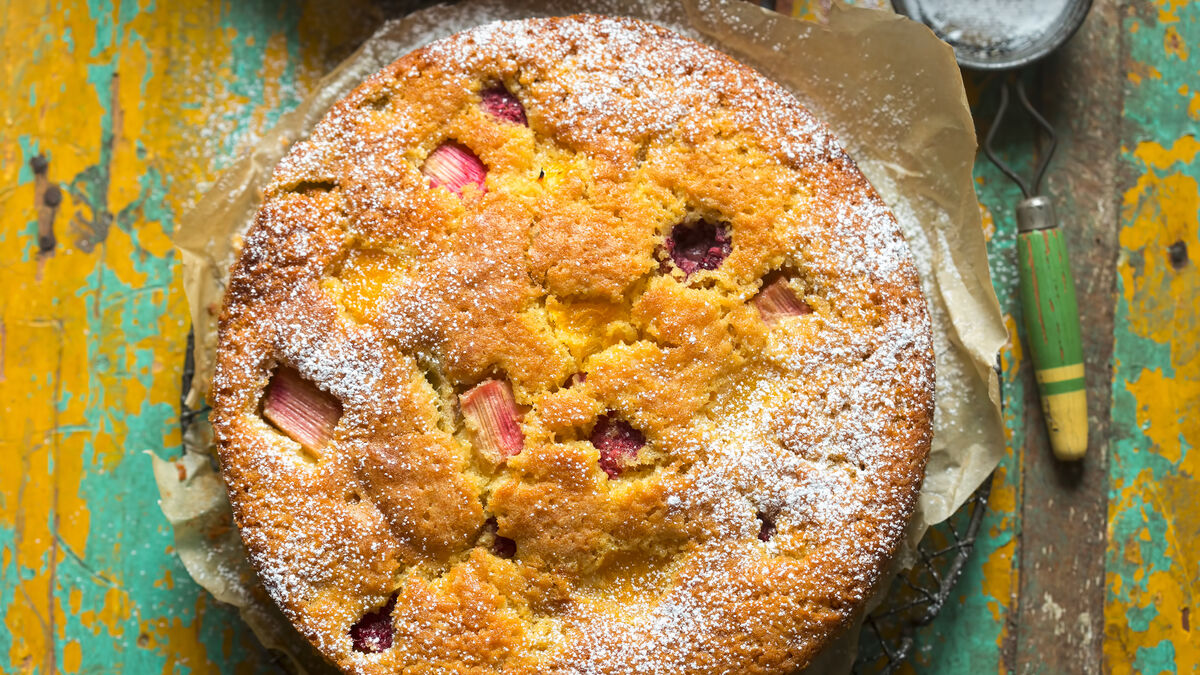
This delicious juicy rhubarb cake, based on enriched bread dough, was made all over Ireland
with filling that varied with the seasons – gooseberries, bramley apples, plums, blackberry and apple Servings Preparation Time Cooking Time Total Time Course Cuisine Ingredients 350g flour a pinch of salt ½ tsp bread soda 50g caster sugar 75g butter 1 egg 165ml milk, buttermilk or sour milk 700g rhubarb, finely chopped egg wash 175-225g granulated sugar caster sugar, for sprinkling softly whipped cream brown sugar Equipment: 1 x 25.5cm enamel or Pyrex plate Method Preheat the oven to 180°C. Sieve the flour, salt, bread soda and caster sugar into a bowl, rub in the butter. Whisk the egg and mix with the buttermilk. Make a well in the centre of the dry ingredients. Pour in most of the liquid and mix to a soft dough, add the remainder of the liquid if necessary. Sprinkle a little flour on the work surface, turn out the dough and pat gently into a round. Divide into two pieces — one should be slightly larger than the other. Keep the larger one for the lid. Meanwhile, dip your fingers in flour. Spread the smaller piece onto the plate. Scatter the finely chopped rhubarb all over the base, egg-wash the edges and sprinkle the rhubarb with the granulated sugar. Roll out the other piece of dough until it is exactly the size to cover the plate, lift it on and press gently to seal the edges. Make a hole in the centre for the steam to escape, egg-wash and sprinkle with a very small amount of sugar. Bake in a moderate oven at 180°C, for 45 minutes to 1 hour, or until the rhubarb is soft and the crust is golden. Leave it to sit for 15-20 minutes so that the juice can soak into the crust. Sprinkle with caster sugar. Serve still warm with a bowl of softly whipped cream and some brown sugar.Country rhubarb cake
Clonakilty is leading the way with the ‘Kids' Food Revolution’ — mothers, grannies, schoolteachers, sports clubs, retailers and community groups are united in their intention to think about how they can work together to improve the food environment of local kids.
Others please copy.
- For further information, contact Gillian Hegarty (chef) and Melissa Byrne (dietician); @kidsfoodrevolution on Instagram
I’m just slathering some homemade marmalade over a piece of toast... such a feel-good factor.
The jars look like ‘good deeds’ up on the shelf in the pantry.
This year, we also made some kumquat marmalade and a batch of Pam’s Bergamot marmalade.
- Just a few weeks left to buy the citrus, email me at info@cookingisfun.ie if you’d like the recipe.