One woman, 90 cows: Running the Breffni Charolais herd
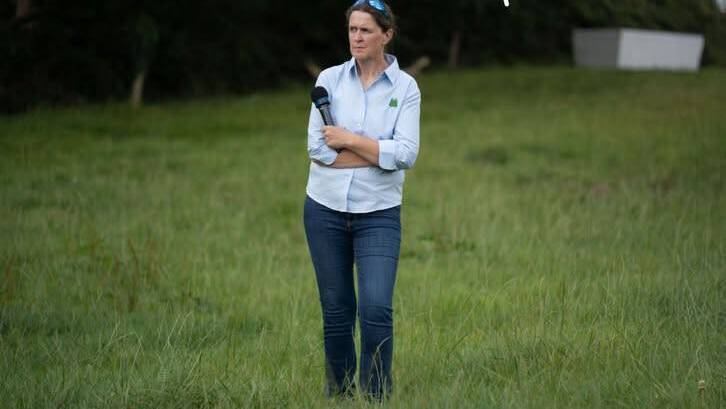
Sebana Moynagh 'always wanted a herd of pedigree Charolais cows'. Picture: Irish Grassland Association
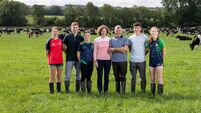
Sebana Moynagh manages the 90-cow Breffni Charolais pedigree suckler herd by herself, with occasional help from family.
She took over the farm aged 23.
“My father started off with one cow, and we bred up over the years, but I always wanted a herd of pedigree Charolais cows. Now, I probably never thought I'd have 90,” she said in a recent Teagasc Beef Edge podcast.
“It's only one labour unit here. I work most of the stuff myself.
"My brother gives a hand the odd time with bits of machinery work or whatever, but wintertime is all up to myself.
"We have good facilities, we have good sheds, good calving pens, good shed cubicles. And we have a diet feeder for feeding, which saves a lot of labour. We have a straw bedder for bedding the calves,” Sebana said.
“The diet feeder saves a lot of hours every day. When the feed is mixed for them there, it's very simple to throw it out. And the bedding thing works very well as well, very simply.”
“We run a mostly autumn-calving system. We calve 70% autumn, 30% spring.
“We calve August, September mostly. We do that because when we're finished cutting silage after cows calve, we have aftergrass, so we've got good grass for cows.
"Then when the calves come in, they are stronger. They're two-and-a-half, three months old, so they're over scours and pneumonias and stuff like that. They're stronger coming into the shed.
“It suits better than trying to calve all my cows in the spring. I just wouldn't have the facilities or the grassland for them,” she explained.
“We've good sheds, and we make lots of good-quality silage with the grass we grow.
“If you calve them in the autumn, you have good bulls for sale, 16-17 months of age when you're selling them the following autumn, into the next spring.” Sebana uses 100% AI breeding.
“We don't compromise on easy calving. Easy calving has to be number one, because any farmer we sell to, they're normally part-time farmers; they're working off-farm or whatever, so we need easy calving.
“Carcass conformation: when we're looking up the bull, we try and go for five-star, terminal and replacement.
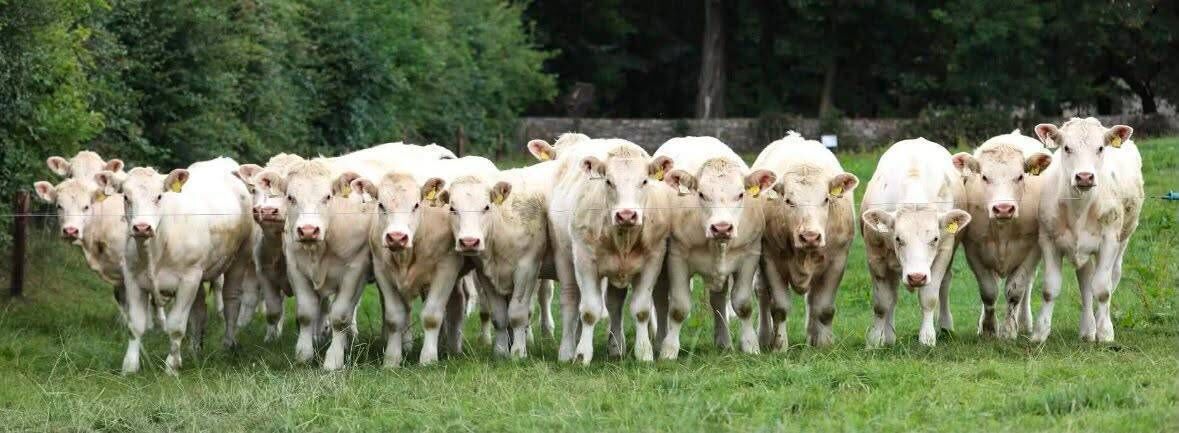
“We try to get a carcass weight of 38 to 40-plus kilos, a carcass conformation of 1.9 to two, over two if we can at all, because that leaves you with a good weanling sale for the man or woman that's buying your bull.
“When I'm picking bulls to keep myself, I try and keep bulls at a five-star as well. Anything else, I'd cull them heavily, as in I'd sell them off to the market just as regular weanlings, if they're not easy-calving, five-star, and have a bit of milk behind them as well,” she said.
“Over the years, more people have access to the Stock Bull Finder and they have a better selection. You can look up all your data on the Stock Bull Finder to see what average daily gain they have, what stars they have, what calving difficulty they have,” Sebana said.
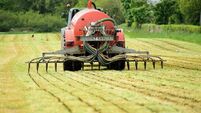
“Our ground would have been low in Ps and Ks. We use a lot of slurry, during the growing season more so than at the beginning and end of the year.
“Most of the farm would probably get cut for silage once a year. We'd go out with slurry after that and that brings up the Ps and Ks.
“We soil sample every two years and use fertiliser accordingly, just buying what we need. We're not allowed to use phosphorus at the minute because we're high in Ps. Some of the land is not so high in Ks, but we use a good bit of cattle slurry, so that kind of brings it back up,” Sebana explained.
“Over the last 10 years, I suppose we've reseeded nearly the whole lot. We're nearly ready to start again,” she said.
“When I took over first, we decided we'd make paddocks around the farm just for ease of access to manage and to move cattle easier and grow more grass.
“We have good roadways up through the farm as well. We found gravel on the farm, so we're lucky enough we didn't have to spend too much money on infrastructure,” she said.
“We work the Teagasc way, graze for three days and grow for three weeks. But this year now, it's tested us a small bit. It's just harder to keep grass in front of them.
"That's basically what we do. As long as you have enough drinkers placed around the farm as well, you can operate fences, white reels anywhere around the place,” she said.