Paula Hynes: The lazy cow that eventually gave birth to Lucky
Dairy farmers see so many cows calving that they learn to figure out a cow calving fairly quickly — too much or too little intervention can very quickly be a matter of life and death, writes Aherla dairy farmer Paula Hynes.
Paula Hynes: The lazy cow that eventually gave birth to Lucky

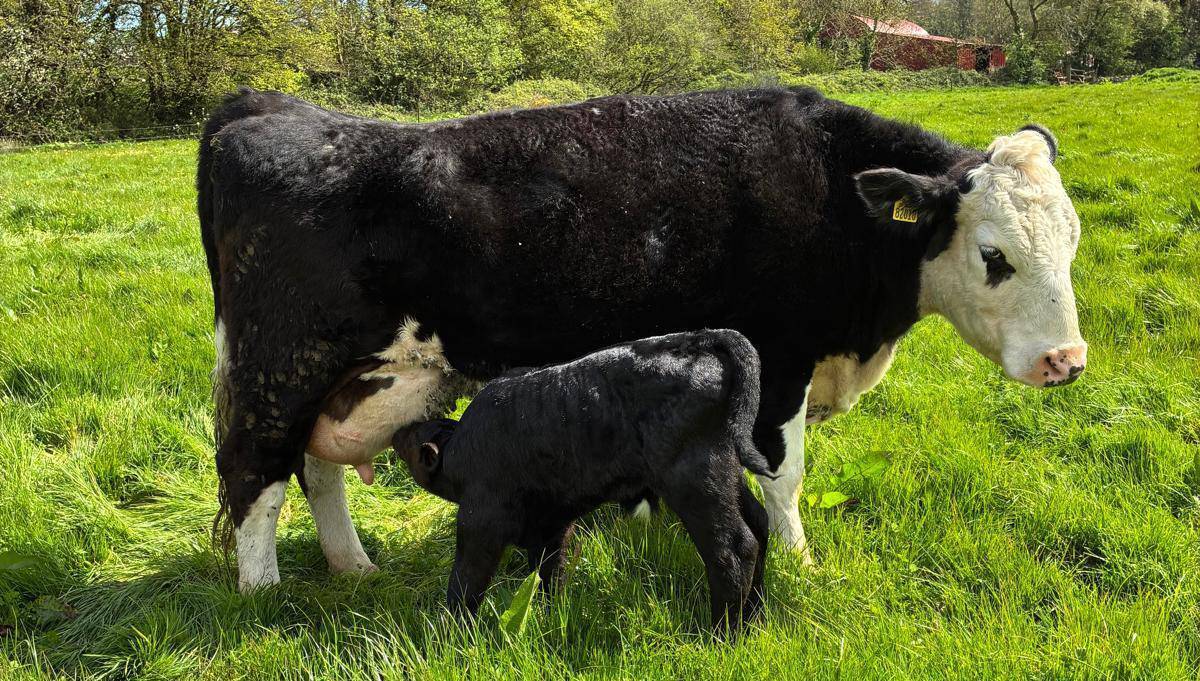
The lazy cow with her newborn Angus calf.

Those of you who watched our episode of Raised By The Village might remember Peadar, the traditional stone mason. Well, he is a good neighbour of ours and keeps a few suckler cows as well, including some pedigree Kerry cows.

We always try to help each other out as best as possible. Last year, Peadar had a Hereford cow calving, and she needed a little assistance calving, so Pete went over with the calving jack, and between the two lads, they calved her safely. 

Read More

The Hereford cow would be what you’d call “too posh to push”; she would easily calve herself, but is simply happy to lie in bed and let the gynaecology department do the work for her. 

She is a fertile cow and went straight back in calf to Angus AI. We were chatting with Peadar as her due date loomed and as we were finished calving, we told him to take our calving jack and ropes over to his yard and prime the maternity ward just in case. 

Sure enough, her calving date passed and at eight days overdue, she was being checked every few hours at nighttime — the banter was only mighty as she would be standing there in the middle of the night chewing the cud and in many ways saying to Peadar, 'tis late for you to be out working.

Last Saturday morning, the phone rang and Pete called over to have a look at the cow. There she was in a straw pen, tail cocked and still chewing the cud. She was definitely calving.

Knowing she was on the lazy side, they decided to put her out in the paddock by the house in the hope that extra walking would aid the delivery of the calf. 

Lunchtime arrived and she had the calving blister out but more time was needed. As Pete ate his lunch, I asked him what the plan was for the cow, he said he would calve her at 3pm. 

I asked him if he thought he would have to calve her, and he replied: 

I reckon so, she would be nearly too lazy to push a fart, never mind a calf.

Dairy farmers see so many cows calving that they learn to figure out a cow calving fairly quickly. Before we knew it, 3pm arrived and the two lads stalled her up so Pete could examine her. Not a contraction in sight, she was still chewing the cud, and as he handled her, the toes were there with the calf's head following, yet even handling didn’t spark a contraction in her.

Calving jack primed, ropes on the calf's legs and finally with the toes out and the nose appearing, the cow decided to do the odd contraction, it is a slow process jacking a calf when the cow is doing little to assist, jack too fast and the cow or calf will get hurt, jack too slow towards the end and there will be too much pressure on the calf's ribs and lungs.

The calf kept coming and coming; he was as long as the calving jack, a fine Angus bull. As the calf's hips and back legs came out, Pete noticed the calf was fairly lifeless, so they grabbed him quickly onto a cleaner patch of straw.

The heart was beating, eyes closed and no sign of a breath so between them they performed CPR on the calf for 10 minutes — checking his heart, blowing air into his lungs and light compressions on his chest. Finally when his nostrils started to flair, his lungs pulled in air and his eye started to blink, the lads sat monitoring him as signs of life grew stronger and stronger. 

The cow was encouraged to get up and lick the calf. The instinct of Mother Nature can work wonders for a calf that is struggling to survive. The cow herself might be a bit lazy to calve, but she has always been great to mind a calf. 

Finally, the Angus calf sat up as his mother licked him continuously. He still needed TLC, so Peadar bottle-fed him colostrum and then bottle-fed him twice a day for a couple of days. 

Good neighbours

Less than a week after being born, the calf is content out in the paddock with his mother and has figured out where the Hereford feeding station is as he sucks the cow any time he wants a feed now. 

Peadar says he finds the calf by the boundary ditch every morning, looking into our farm in a way that he is glad he has got good neighbours. 

The reality is that is what neighbouring farmers is all about, farming is never straightforward, we all need a little help at times and as Pete gave a little help calving the cow, sure enough, Peadar was straight over to give a hand with our evening jobs so we all got finished at the usual time.

Farming is a tough job, and there are plenty of days that farmers feel like the job is giving them a kick in the ass, but what keeps us all going are the good days, the days when we have a little success.

The calf has been named Lucky, and you can be sure that in years to come, as the lads chat, Lucky will pop up in conversation.

Do you remember the day Lucky was born, the black lad we had to do CPR on, weren’t we lucky with that fella, he could have been dead as quick.

x

More in this section

Farming

Newsletter

Stay ahead of the season. Sign up for insights, expert advice and stories shaping Irish agriculture.

Cookie Policy Privacy Policy Brand Safety FAQ Help Contact Us Terms and Conditions

© Examiner Echo Group Limited