Making better silage in a difficult year: Key steps for 2026
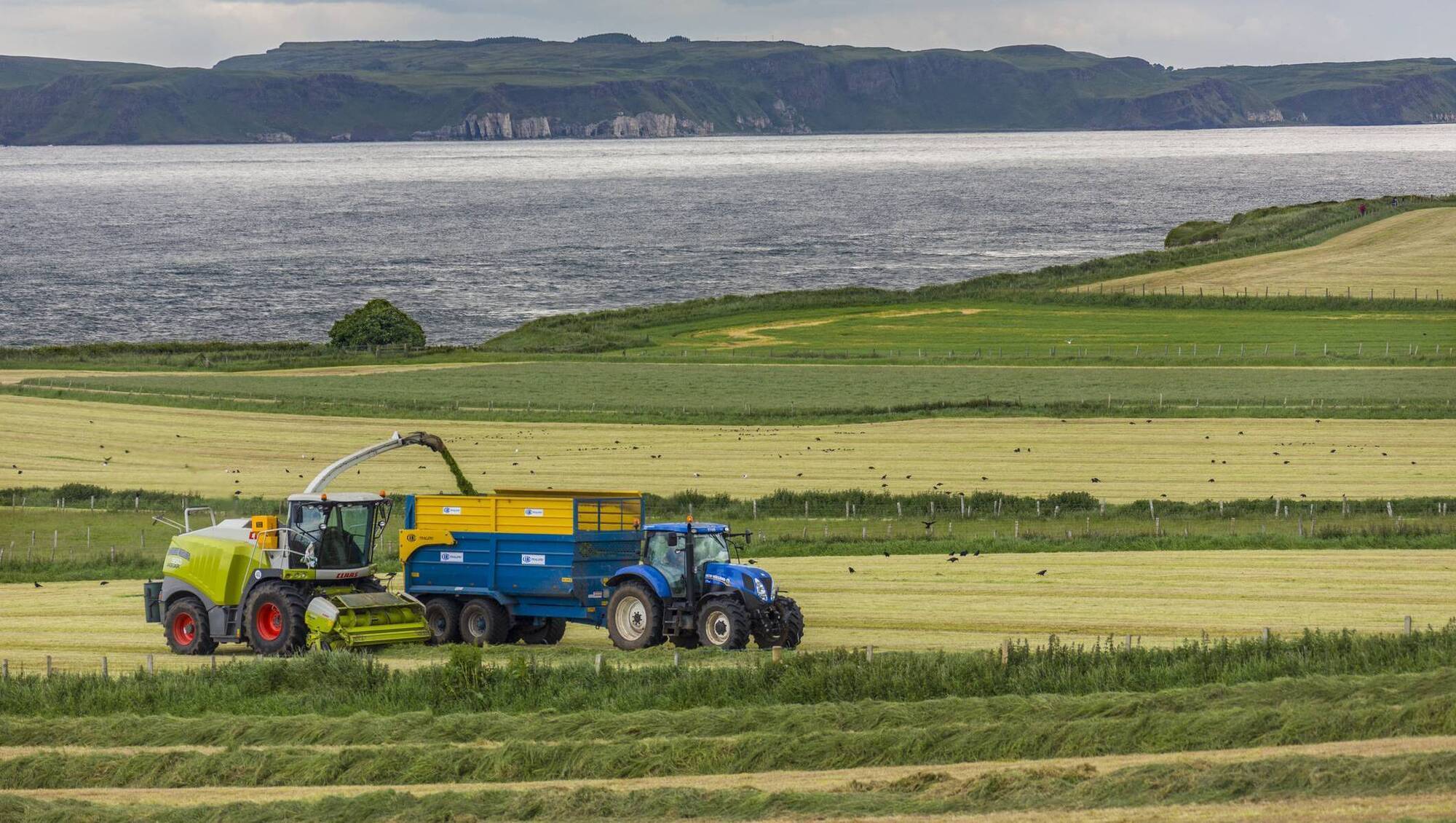
Typically, a crop of first-cut grass silage yielding 10t/ac will require 100kg N/ha or 80 units/ac, 20kg phosphorous (P)/ha or 16 units/ac, 125kg/ha or 100 units/ac of potassium (K), and 20kg of sulphur (S)/ha or 16 units/ac. File picture
January and February 2026 have been two of the wettest months on record, leading to hugely challenging conditions of early spring grass growth. Low soil temperatures, saturated soils, slurry tanks overfilling are some of the factors leading to a less-than-perfect start to the year.
Then, just as we turned a corner with weather in early March, we were faced with another challenge — the Iranian crisis led to agricultural diesel price surges of up to 48% more than where it was pre-conflict.
This also caused fertiliser prices to skyrocket and general availability of nitrogenous fertilisers, particularly urea, to decline as nearly 50% of global urea exports originate from countries west of the Strait of Hormuz.
Taking all the challenges above, we must really focus our efforts on making good quality silage this year, as it is the second-cheapest source of feedstock on farms after grazed grass, and is grown in our own fields, so less volatile to global supply chain issues or price fluctuations than bought-in feeds.
With that in mind, here are some practical tips to get the most out of your first-cut silage.
With drier ground conditions and warmer temperatures, getting fertiliser and slurry out on silage ground will now be in full swing.
When it comes to nitrogen (N), grass silage utilises 2.5kg/ha/day of N (two units/day), which means N should be applied at least 50 days before cutting to ensure it is fully used up.
Typically, a crop of first-cut grass silage yielding 10t/ac will require 100kg N/ha or 80 units/ac, 20kg phosphorous (P)/ha or 16 units/ac, 125kg/ha or 100 units/ac of potassium (K), and 20kg of sulphur (S)/ha or 16 units/ac.
Soil testing will help determine the soil indexes and fertiliser requirements, and with current fertiliser prices, this is ever more important to ensure we are giving the crop what it needs and not over-fertilising.
Knowing the value of your slurry is key with skyrocketing chemical fertiliser prices, an average application of 3,000 gallons/ac of good quality cattle slurry of 6% dry matter (DM) will supply sufficient P and K levels and about 30kg of the N requirements to grow a crop of grass silage.

Slurry testing with a hydrometer can be used to see if the slurry is of a good DM. Ideally, your P and K levels should be made up through slurry, which will leave you to make up the remaining 70kg of N/ha through spreading 1.5 bags/acres of protected urea + S.
If farmers are interested in understanding more about the value of their slurry, companies including Alltech can do on-farm tests for DM, which will indicate P/K levels and rapid N tests for plant available N.
Reseeding will yield higher quality silage, up to 3t DM/ha compared to old, low-perennial ryegrass swards. Reseeding with modern varieties can increase Dry Matter Digestibility (DMD) by two units, with high-quality, leafy swards being critical for animal performance.
Newly reseeded swards are up to 25% more responsive to applied nitrogen, which is key in times of high fertiliser prices.
A rule of thumb is that silage ground should be reseeded every eight to 10 years with a payback period of less than three years.
Instead of giving a hard and fast cutting date to mow silage, it is better to talk about the stage of growth of the sward.
Cutting grass young increases digestibility and protein content, however, yield quantity will be lower, you will have a higher feed value silage, and it will facilitate quicker regrowth for grazing for second-cut silage.
Once the emergence of seed heads has occurred, the silage is at a 69-70% DMD, which is ok for dry cows but suboptimal for lactating cows. It is important to know what you want your silage for, if you foresee the need for silage to be fed to cows in lactation, you want to target that 74% and above DMD.
An important fact to remember is that every two days post-seed heading, the silage quality will drop by 1% DMD.
The ideal dry matter (DM) we are looking for in silage to optimise consolidation and fermentation is 28-32%, which can be hard to obtain in Irish weather.
When possible, a rapid wilt of no more than 24 hours will remove unwanted water content in mowed grass. Silage in the range of 30% DM will pack better in the clamp, will have less effluent run-off and aid in nutrient and dry matter retention.
Be careful not to over-wilt as dry silages can be a haven for yeasts, moulds and mycotoxins.
Good preservation occurs when lactic acid bacteria present on the grass crop ferment available sugars to lactic acid. In Irish conditions, an inoculant will drastically aid the fermentation characteristics of grass silage.
We recommend Alltech Egalis Ferment, which contains one million lactic acid-producing bacteria per gram of forage applied, but others are available.
This is because Irish grasses are naturally lower in lactic acid, as restricted sunlight and high moisture content dilute the natural sugar content in grass.
Silage treated has been proven to achieve a better feed-out, higher palatability with increased dry matter intakes, added energy content and increased digestibility, resulting in improved animal performance.
It is important to remember that a silage inoculant aids with rapid fermentation and nutrient retention, but will not turn bad silage into good silage.
Adopting a plan now for 2026 silage management, from in-field practices to adequate packing and sealing of the pit, is key to ensuring you have the best form of winter feedstock available to fulfil your herd's requirements, whether for dry cows or cows in milk.
- Declan O Neil is Alltech Ireland's farm resource efficiency manager.