Citrus greening: Florida's orange crisis and the global threat
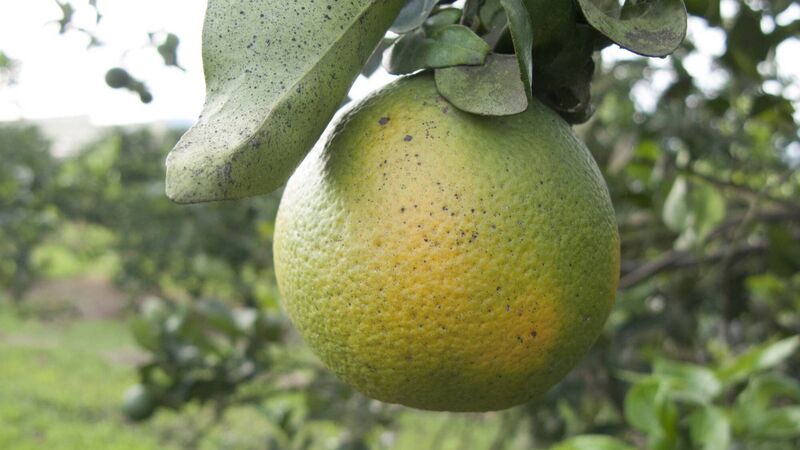
Orange citrus infected with HLB also known as yellow dragon or citrus greening is one of the most devastating diseases of citrus caused by bacteria Candidatus Liberibacter
Florida's orange production has reduced by 92.5% since 2006, mainly due to a disease called citrus greening.
Known by scientists as HLB, an abbreviation of a Chinese word that literally means “yellow dragon disease”, citrus greening has led to the destruction of more than 100 million infected citrus trees in China, and more than 56 million have been taken out in Brazil.
Citrus cultivation is also badly affected by HLB in Ethiopia. So far, HLB has not been found in Europe, but citrus growers are very worried, especially in Spain, which produces almost six million tons of citrus fruits a year, and in Italy, which produces nearly three million tons.
HLB also threatens the cultivation of mandarins and lemons worldwide. Citrus fruit prices are likely to rise worldwide until scientists develop effective ways to combat HLB.
Currently, citrus growers depend mainly on using insecticides more and more to kill the psyllid insects, also known as jumping plant lice, which spread the bacterium that causes HLB, Candidatus Liberibacter, from tree to tree.
Wageningen Plant Research in the Netherlands is one of the centres working on ways to fight HLB, but scientists there admit it could be years before they have a good understanding of Liberibacter.
Leaf yellowing and brown colouring are typical symptoms of HLB.
“The moment you see that disease in an orchard, you can assume a 70% to 80% reduction in yields," says bacteriologist Jan van der Wolf of Wageningen Plant Research.
"However, it can take months or even years for the symptoms to become visible," says Van der Wolf. And some of the symptoms could point to other diseases, or a lack of minerals.
The fruits of an infected plant can be hard and deformed, and the juice is too bitter. The fruits remain green at the top rather than turning orange, which is how the disease gets its common name of citrus greening.
“Once a plant is infected, it can’t be saved,” says Van der Wolf. "So growers try to prevent infection in the first place. They spray the crops with insecticide to combat the psyllids.
"They also look out for early signs such as yellowing leaves, stunted growth or deformed branches, then remove the infected plants as soon as possible to stop the disease from spreading further."
Lina Russ now leads the HLB research at Wageningen since Van der Wolf’s retirement last year. A main research aim is to unravel the bacterium's DNA.
But this is difficult, because Liberibacter can’t survive without its host, so it can’t be cultured for research. However, new DNA techniques have yielded some progress.
“The latest sequencing techniques let us analyse all the DNA of the plant material or insect in one go, for instance,” said Van der Wolf.
The Wageningen team use plant samples from Ethiopia and extract DNA to try to reconstruct the bacterium’s genome, work which has been compared to a jigsaw puzzle.
The solution in the longer term will have to come from plant breeding, thinks Van der Wolf: "Plant breeders have been working on developing resistant plants for a while, but it takes time before you see the results. Citrus trees grow relatively slowly and it can be 10 years before you get the first fruits".