Ireland's growing marine tourism sector
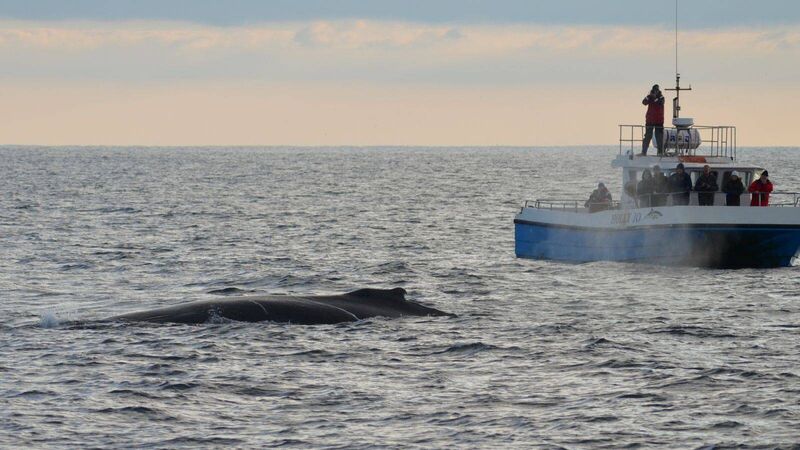
Cork Whale Watch. Picture: Padraig Whooley/ Cork Whale Watch
WHALE watching off the Cork and Kerry coast has emerged as part of a potential new rural enterprise.
Minister of State for Nature, Heritage and Biodiversity Christopher O’Sullivan said it can be world-class.
“Encounters with ocean giants like fin whales and humpback whales aren’t unusual, and there’s also a chance to see other species like basking sharks and grey seals.
But with the growth in eco-tourism and wildlife tourism, it’s important to emphasise how this can be done responsibly,” he said.
Minister O’Sulivan was launching a new voluntary code of conduct in Dingle, Co. Kerry, for responsible marine wildlife.
The code is a conservation project of Páirc Náisiúnta na Mara, Ciarraí, Ireland’s first Marine National Park.
It was developed by the National Parks and Wildlife Service with input from the Irish Whale and Dolphin Group and marine tour operators in Cork and Kerry.
The code aims to help avoid harmful disturbance to sensitive wildlife and to encourage sustainable and responsible tourism operations off the Cork and Kerry coast.
Minister O’Sullivan met with the tour operators who will be involved in the pilot project over the coming months.
He said the code of conduct strikes a balance between being delivering world-class wildlife experiences on the water while also ensuring that the species themselves are protected.
“Marine tourism is essential to the local economy in these rural areas, particularly during the summer months.
“As a former volunteer whale-watching guide, I fully believe that it is possible to have amazing encounters with these species at a safe distance.
“We must ensure that our amazing marine wildlife will continue to breed and feed around our coasts.
“This code of conduct is a great example of how we can protect nature and support the marine tourism sector at the same time,” he said.
The result of an extensive consultation process with tour operators in the southwest region, it is based on the latest scientific research.
It sets out best practice in relation to species found off the Cork and Kerry coastlines, including whales, dolphins, seals, seabirds, basking shark and turtles.
Examples of activities which may cause disturbance to them include noise, presence of vessels and personal watercraft, the irresponsible use of drones and visitor pressure.
The code includes guidance to minimise and eliminate disturbance during wildlife watching activities.
It lists recommended speeds, distance and time limits when observing species from boat tours.
The code describes the behaviours of these species when they are experiencing disturbance.
It also highlights the times when they may be especially vulnerable, especially during breeding season.
Simple actions can have a huge impact on the safety and future of these species – such as keeping distance and being vigilant for signs of disturbance.
“While the code has been developed with tour operators, it can be put into practice by all of us who love to watch wildlife – whether in Baltimore or around the Blaskets,” he said.
Philip Buckley, Divisional Manager, National Parks and Wildlife Service, said the code of conduct originated within Páirc Náisiúnta na Mara, Ciarraí as an initiative to protect the unique marine biodiversity within it.
While it is based on science and research, it also draws on the wealth of local knowledge and experience of operators in the region.
“This is key to a code which protects our marine biodiversity, and which is also practical to implement,” he said NPWS director general Niall Ó Donnchú said partnerships across all of society are key to tackling the biodiversity crisis.
“We’re delighted with the positive engagement from the marine tourism sector in the development of this code.
“We encourage tour operators to sign up to the code and play their part in protecting our unique wildlife,” he said.
NPWS will engage with the tour operators involved in this pilot phase later in the year to finalise the code and to explore how it can be shared more widely beyond the pilot phase.