Department announces updated values in BVD support programme
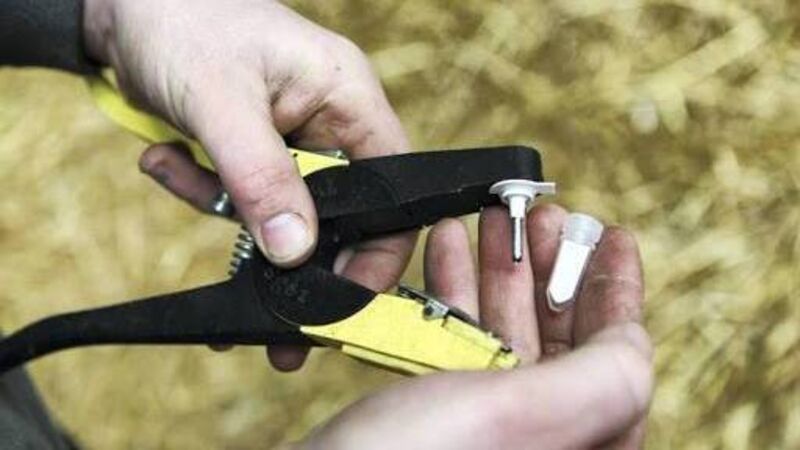
Financial support for BVD-positive dairy breed and beef breed calves has risen to €200 and €320, respectively.
It was announced that there will be changes made to the Bovine Viral Diarrhoea (BVD) Financial Support Programme for animals disclosed as positive in 2025.
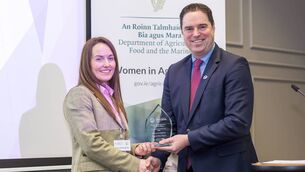
Minister for agriculture, Martin Heydon, made the announcement, saying the objective of the BVD Financial Support Programme is to minimise the incidence of BVD in the national herd through the testing of newborn calves and whole herd testing in herds that disclose one or more BVD test-positive or inconclusive animals.
Minister Heydon stated: “The efforts of farmers in recent years in driving down the level of disease are acknowledged and appreciated. This has allowed me to amend the financial support I can provide farmers within the existing budgetary allocation for the BVD programme.”
Support for a dairy breed animal under the programme is increased from €160 to €200, and for a beef breed animal from €220 to €320. This is to be paid to farmers who disclosed BVD virus-positive or inconclusive animals during 2025. Payments for 2025-born calves will be made in 2026.
The minister added: “The BVD programme should be seen as a huge success, and it has received great support from all stakeholders. However, it is essential that we reward all our efforts by achieving BVD-free status.”
The Irish Creamery Milk Suppliers Association (ICMSA) chairperson of the dairy committee, Noel Murphy, has welcomed the contribution from the department but has stated that the funding, even incorporating the increase, will not even cover the value of the 2025 calf crop, much less the potential persistently infected (PIs) in 2026.
“The updated values are not in line with the value for 2025 born calves, and then we have to remember that we have seen calves double in price this year. This year, we have seen Friesian bull calves exceeding €400 while continental breed calves have frequently exceeded €800.
"Much and all as it is appreciated, the updated figure is only a deposit on where it should be and will have to be revisited. The funding allocation for Animal Health in 2026 included BVD, and that was specified as €3m. If we are to become BVD-free in this country, then we need better use and allocation of funding made available,” said Mr Murphy.
Mr Murphy believes that the valuation process for BVD PI calves needs to be index-linked to the actual trade in marts and not just a figure "pulled out of the clouds". He said there were numerous real-time tools and methods of tracking and monitoring the value of calves, and those need to be utilised if we are to reflect the actual up-to-date value of calves when paying for a PI.
Mr Murphy added that the payment procedure to receive compensation was cumbersome and long-winded.
“The fact that the animal has tested positive should be enough without having to fill in a payment form for each eligible animal removed. DAFM can see from the AIMS system that the animal has been removed, and payment should be generated immediately from this,” he said.
“The requirement to wait till the following year to make payment is ridiculous. A scheme which began in 2012 as a voluntary scheme is now mandatory for all breeding herds since 2013, and the costs on farmers since its inception are getting on for €120m.
"The scheme has been a money-making machine for laboratories, and it is time the minister moved past this dismal status quo and provided a fully funded BVD scheme going forward,” concluded the ICMSA dairy chairperson.
The Irish Cattle and Sheep Association (ICSA) similarly welcomed the increase in compensation but said it is “years overdue” and falls short of the true financial losses faced by farmers.
ICSA Animal Health and Welfare chair John Barron said: “Five or six years ago, when ICSA began looking for an increase in BVD compensation, a change of this scale might have made a meaningful difference. At today’s market values, however, the revised payment barely touches the sides of what is needed.”
He said compensation levels would need to be at least double the updated rates to come anywhere close to reflecting the true market value of affected animals.
“For suckler farmers in particular, the impact goes well beyond the loss of a calf. When a calf tests positive for BVD, the farmer effectively loses the production of that cow for the entire year. That is a major financial hit in a system where margins are already extremely tight,” he said.
“The eradication programme has required huge commitment from farmers and that commitment should be recognised through compensation that realistically reflects the cost of the losses involved. This underlines the need for the Department to keep support schemes under regular review, so they remain aligned with the real economic impact on farmers.”
Concluding, Mr Barron said ICSA will continue to engage with the Department to ensure that supports are fair and proportionate for suckler and beef farmers affected by BVD.