Tourism potential of the Gearagh to be explored
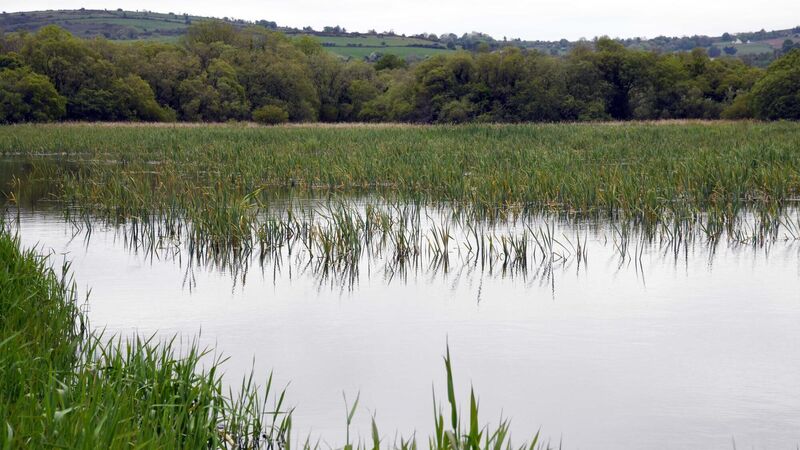
Today, only the stumps of the trees survive in floodland, giving the area a ghostly and almost lunar appearance. Picture: Denis Minihane
The Gearagh, one of Ireland's most unique and precious landscapes, near Macroom, Co Cork, has the potential to be developed as a national tourism asset, the Senate was told.
It was previously densely populated with ancient oak trees and was the last surviving full oak forest in western Europe.

In 1954, it was flooded to facilitate the building of two hydro-electric dams in Carrigadrohid and Inniscarra, which provide electricity for Cork city.
Many people were relocated and hundreds of trees, many of them centuries old, were felled.
Today, only the stumps of the trees survive in flood land, giving the area a ghostly and almost lunar appearance.
The Gearagh comprises wide but shallow water enclosing a series of small islands separated by mostly flat river streams. It has a diverse ecological system and a wide variety of plants, birds and fish.
Designated a wetland of international importance, it also enjoys protection as an EU Special Area of Conservation. Part of it is a nature reserve under the Irish Wildlife Act.
Thought to have been wooded since the end of the last Ice Age, around 8,000 BC, the Gearagh is Ireland's last primaeval river forest.
Cork North West Senator Eileen Lynch (FG) sought an update in the Upper House in relation to any current or planned tourism strategy for the landscape.
She asked whether considerations had been given to its development as a recognised national tourism asset, including the potential for a sensitive greenway development.
Ms Lynch said The Geragh, shaped by the River Lee, is a place of outstanding natural beauty.
But it is also an essential part of the cultural and historical fabric of the Macroom and Muskerry region.
Before the flooding associated with the Lee hydroelectric scheme, The Gearagh served as a home to many people and its loss was a significant chapter in local history.
“The Gearagh currently provides a walking area for many in the locality and is an amenity that could be transformed into an outdoor tourism hub. It also has massive scope for a greenway,” she said.
Ms Lynch said there were examples across the country of well-planned, low-impact greenways.
“I believe that a carefully designed Gearagh greenway, mindful of conservation objectives, could extend visitor stays, attract off-season tourism and strengthen Macroom's role as a hub for inland west Cork.
“This is about managed access, education and appreciation, allowing people to experience The Gearagh responsibly while safeguarding its integrity for future generations.
“Local communities have shown strong interest in seeing The Gearagh recognised at national level, not only as a protected site but as a place of learning and recreation. I believe now is the time for action on this,” she said.
Minister of State Niall Collins said Fáilte Ireland has established localised five-year destination experience development plans.
The West Cork and Kenmare plan, which encompasses Múscraí and includes The Gearagh, was launched in 2023.
Three thematic subgroups — artisan food, outdoor activities and marketing — were established based on the prevalence of emerging actions.
Key priorities in 2026 for West Cork and Kenmare include undertaking a mid-term review of the plan.
It will provide an opportunity to reassess objectives and actions against emerging trends, updated national and regional policies and new projects that came on stream before the plan was first adopted.
Mr Collins said the review will ensure that priorities for the remainder of the plan lifecycle remain relevant, achievable and responsive to the needs of local communities and industry.
It is due to be completed by September 2026. There will also be the roll-out of a cluster development programme to 2028 for tourism businesses in the destination, based on a workshop and learning needs analysis.
A draft consultation report on Ireland’s eighth and largest national park, Páirc Náisiúnta na Mara in Kerry, is at an advanced stage.
Minister of State Christopher O’Sullivan, replying to a Dáil question from Wicklow TD Jennifer Whitmore (Soc Dems), said the report will be discussed with stakeholders soon and will be published online once it is finalised.
Work by the National Parks and Wildlife Service (NPWS) on the Co Kerry park is continuing and includes improvements to the Valentia tetrapod trackway and planned sand dune restoration at Inch.
The park, which has more than 70,000 acres of lands and seas in public ownership, was announced in April 2024.
It brought together new acquisitions by the NPWS, such as the Conor Pass, the Owenmore River catchment, lands at Mount Brandon and the sand dune system at Inch Peninsula.
Mr O’Sullivan said sites already under State ownership, such as the limestone reefs of Kerry Head Shoals and the waters around the Blasket Islands were also included.