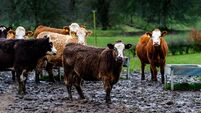
Paula Hynes: You win some, and lose some
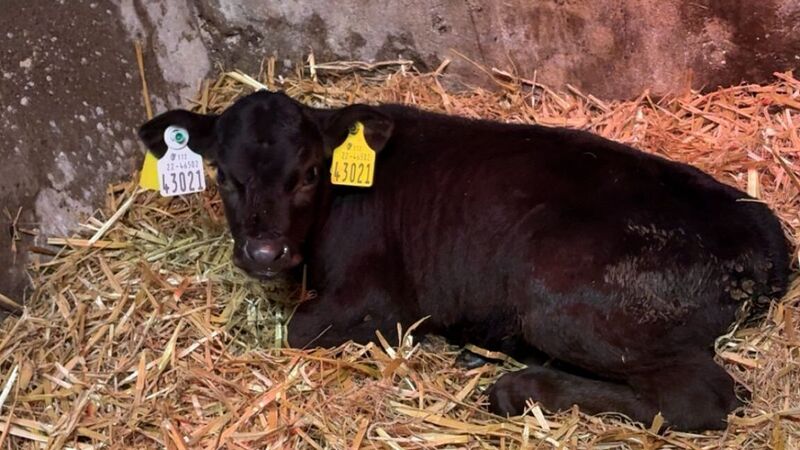
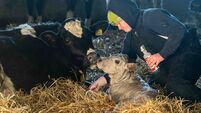
Little Pat, the premature Angus calf born on the Hynes farm

We had our annual herd TB test recently. It is two hectic days on the farm when we are already maxed out with the workload. We are lucky that we have very patient vets who always take their time so that the cows are not rushed and don’t get stressed.
Thankfully, we have a clear TB test again, which now means we are 12 years clear of TB on the farm, which is a huge positive for the team. There are many conflicting views on how TB should be controlled in Ireland. The reality is that TB cannot be controlled in livestock without also controlling it in wildlife.
It is crucial to know the areas of a farm where badgers may be active and fence off those areas. Likewise, the DAFM wildlife control team makes a huge effort, which has proven a huge success, as before 2014, our farm usually had TB reactors every three to four years.
Genetics also plays a huge part in eradicating TB in livestock. Farmers need to select sires who are more resistant to the disease, and likewise know where they are sourcing replacement breeding stock from.
Now that our annual TB test is complete, we can fully plan for the show season ahead, although there are a few international shows before our show season begins here in Ireland.
In farming, one minute you are up, and the next minute you are down. A few days after the good news of another clear TB test, Little Pat started to go downhill.
For those of you who don’t know who Little Pat is, he is the little premature Angus calf that was born prematurely in Jan and had lived in our kitchen in a straw box for a little while.
Starting off from drinking 128ml of colostrum in his first feed to drinking five litres a day in February, he had made so much progress and become a strong, healthy calf, which we thought would defy the odds as he wasn’t even due to be born until early March.
Last Monday, he wouldn’t get up to drink his milk in the morning, which was the first time in five weeks, so we called the vet. Patricia called and, after examining him, she explained that his lungs were under severe pressure, so he received two drips and steroids.
Patricia is an outstanding vet, always very thorough, and her diagnosis is always spot on. Little Pat was back up standing by lunchtime and drank his milk that evening while remaining on a course of injections for a few days.
He never seemed to bounce back fully, and on Thursday, he took a downward turn again, so Vet Eoin popped in to see him. His lungs had deteriorated further and were putting his heart under pressure. Underdeveloped lungs are always an issue with premature calves.
Unfortunately, that is not realistic on a farm for a calf and, while we did our best for him to get him this far, he rapidly deteriorated on Thursday evening and died that night.
Like every dairy farm, we are no strangers to seeing dead calves. It happens and is part of the job, no matter how hard we try, but it is a little harder losing a calf when you have tried so hard and felt the battle had been won.
Every little step forward, from his ears being big enough to tag, graduating through bigger bottles and then moving to a bucket with a teat, he even passed his first official TB test.
Little Pat was like a mascot around the yard. All the vets knew him and he would always have a good morning wag of the tail every morning.
Unfortunately, the workload doesn’t stop on the farm when there is a bad day. We had to put Little Pat behind us as there are so many more calves and animals relying on us.
With the continuous rain, it seems impossible to get ahead on the workload, so there were plenty of late nights this week to get ahead on jobs.
All the cows’ tails were clipped to keep them cleaner in the milking parlour.
The big straw calving pen was cleaned out to the floor and freshly bedded in preparation for the last of the calvings, as we should be finished by St Patricks day.
We were lucky enough to have the cows grazing by day five days out of the last seven.
It is challenging getting them out with the bad weather, but we are trying to graze lower grass covers and bigger areas so that they do less damage to ground, which seems to be working so far.
The calf sheds are full at the moment and keeping straw beds clean takes a huge amount of work. We have a number of customers who have been buying calves from us for the last few years.
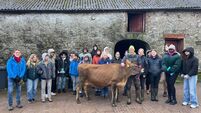
It is always wonderful to see them return as it reminds us that they were happy with what they purchased the previous year. We had a large group of Charolais calves leave for a beef farm during the weekend and there will be another group leaving for that farm in two weeks’ time.
We also had a visit from a farmer who purchased Holstein heifer calves from us two years ago. He was happy with how those heifers had turned out for him and wanted to buy a few 2026-born heifer calves.
We don’t have many surplus Holstein heifer calves, but we always try to accommodate a returning customer, so a deal was done, and hopefully, he will be as happy with this group of heifers.
The week was finished off with the oldest cow on the farm calving and she gave birth to her fourteenth calf, which was a Charolais bull calf. She is a cow with tremendous longevity and always goes in calf.
She knew her job well as she calved with no drama, mothered her calf and got straight back to feeding herself, as if she was trying to say to us she might have a bash at having calf number 15 next year.