Signpost: Grazing redstart on Kay's organic farm
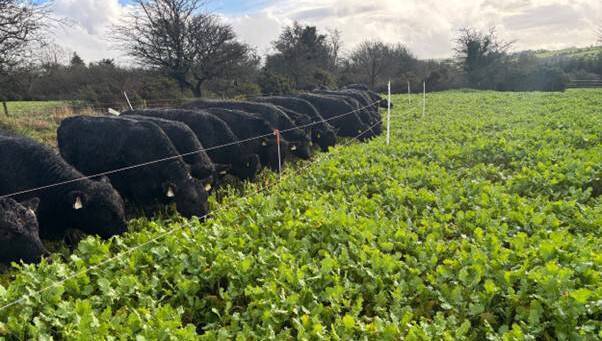
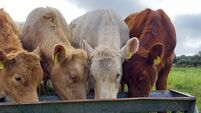
Weanlings grazing on Redstart on Kay O'Sullivan's farm in Mourneabbey, Cork.
The year has started as it finished, with a lot of rain falling so far. I have been recording rainfall for the past several years, and January has been very wet, with 208mm recorded during the month. December saw 220mm.
It is probably better to get the rain now than later in the spring during calving and lambing season. I am waiting for the weather to dry up so I can complete the last of my EIP (European Innovation Partnership) actions for improving water quality on the farm.
The annual herd test took place in mid-January, and thankfully, the herd tested clear for another 12 months. The weanlings were weighed before being moved onto the Redstart crop — a cross between kale and rape.
The weanlings were given a bolus high in iodine, copper, selenium, and cobalt, as the redstart is low in trace elements. The cattle are gradually introduced to the Redstart to avoid digestive upset and have access to clean, fresh water and a dry grass lie-back of 40% of the redstart grazing area.
The weanlings also have access to red clover silage, tested at 75% DMD and a crude protein of 17%, and multi-species silage, tested at 76% DMD and a crude protein of 18%. No ration is fed to the animals on the farm at any stage.
The cattle will be weighed when coming off the redstart in March, and their performance will be assessed through regular weighings throughout the year.
The redstart is not fed during frosty weather, as it can cause nitrogen poisoning, nor in mid-March when it flowers, as it is poisonous. Over the last several years, I have my redstart grazed out by then.
I have been growing redstart for four years, and the cattle have gained on average 1.15kg per day while on it. Last year’s cattle finished at 18 months with no meal fed.
Redstart seed cannot be sourced organically, so I had to obtain a derogation from my certification body, The Organic Trust, to use conventional seed. Once approved, I purchase the seed, which is sown in early July. There is a very good crop of redstart this year, and hopefully we will see the results on the weighing scales in March.
The cows are due to calve from the end of February. They are currently on low DMD silage of 69%, with a crude protein of 10%, and have access to a pre-calving mineral.
It is always nice to see the cows calving, as it is a reminder of the longer spring days ahead and gives us a chance to evaluate the new genetics used on the farm. I did the opening grass walk on January 13, recorded on PastureBase.
The farm has an opening cover of 822kg DM per ha, which will sustain the animals until the start of the second round in early April, when growth rates normally rise to meet demand.
- Kay O'Sullivan is an organic farmer based in Mourneabbey near Mallow. She has been farming organically for the past 16 years, with the main enterprises on the farm being suckler beef, sheep and occasionally tillage. Kay is also a participant in the Teagasc Future Beef Programme.