Increased pre-movement tests form part of TB plan
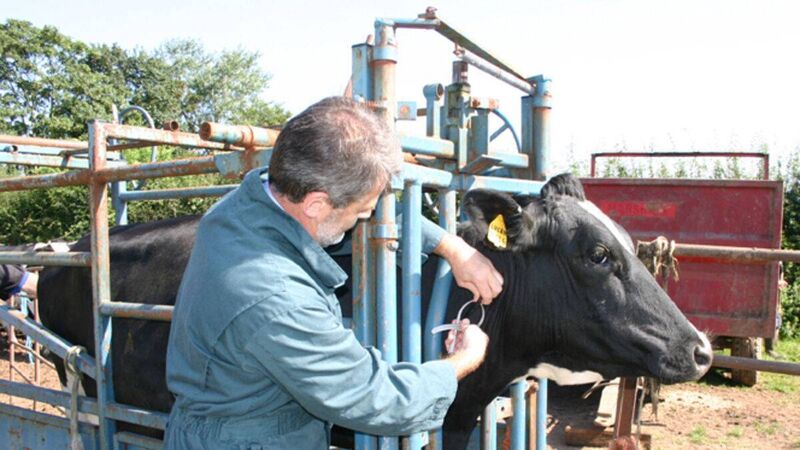
Dairy cows and contract-reared heifers will require a clean test within 30 days before being moved between herds.
Increased pre-movement testing will be part of the new TB plan from April 1 next.
Dairy cows and contract-reared heifers will require a clean test within 30 days before being moved between herds.
“This pre-movement test will be for all dairy cows before moving into a new herd, and contract-reared heifers before moving home," said Dr Damien Barrett, the vet who heads up the ruminant animal health division of the Department of Agriculture, Food and the Marine.
"If a contract rearer is sourcing animals from several herds, there will be a requirement for a pre-movement test into those contract rearing herds,” he explained, during a recent Teagasc webinar on bovine TB.
Also part of the plan to help herds remain free of TB are simple, low-cost biosecurity measures.
“We'll be providing a financial support package to farmers to improve on-farm biosecurity,” he said.
“It boils down to simple things like raising water troughs, raising feed troughs, fencing off sets to keep cattle back from grazing grass that's been contaminated by badger faeces and urine,” Barrett said.
Using bulls with high resistance to TB will be encouraged.
The DAFM will be especially vigilant in ensuring full compliance with the biosecurity requirements of higher-risk production systems, such as Controlled Finishing Units and dealer herds.
There will be changes to reduce the impact of wildlife such as badgers.
“In areas that are subject to vaccination, we are moving from blanket vaccination to test, vaccinate, remove, which means that we will be culling any badgers that are found to be infected with TB and vaccinating those that are found to be free,” Mr Barrett said.
In 2025, 15 local deer management units were established, and work will continue in this area.
However, the biggest changes will be experienced in the 5.7% of herds (in January 2026) with reactors, and in all restricted herds ( 5,700 in the past year).
For the detection and elimination of infection as soon as possible, and avoiding future breakdowns, the big change is that Gamma Interferon blood testing for larger herds will be mandatory.
"Breeding herds with 80 cows or more will require Gamma testing, if 5% of the exposed cohort, that's animals in the same management group, or 10 animals, whichever is the lesser, test positive at the skin test," Dr Madden said.
"In the larger herds where we needed to increase the sensitivity more, we weren't seeing as much Gamma Interferon blood testing being carried out as we needed.
"The skin test has got an 80% sensitivity. What that means is that it detects eight out of every 10 infected animals. It has the potential to leave behind two infected animals out of every 10. "But the upside of this test is that it has a specificity of 99.5%, which means that it produces only about one in 5,000 false positives.
"When you’re testing seven million cattle per annum, you need to ensure that you minimise the number of false positives".
The sensitivity of the blood test is 90%.
"The blood test then is an ancillary test, a supportive test that we deploy in herds where we are quite certain there's cattle-to-cattle transmission,” Barrett explained.
"We will be providing herd test results, the skin readings, to farmers with the view to identifying high-risk animals.
"The DAFM will highlight animals with bottom lumps to farmers, so that they can put them on cull lists, to voluntarily remove them from the herds,” Barrett explained.
Animals with a bottom lump (a bovine lump) are known to be four times more likely to fail a future test.
“An inconclusive animal is 12 times more likely to fail a future test than an animal that's passed the test. That’s why we're keen that these animals be removed promptly,” Barrett added.
High-risk herds that suffer relapse will face six-monthly TB testing for up to three years. "Where there are three or more standard reactors in a subsequent breakdown in the same epidemiological group, if we say that it was in the cow herd, and animals that were comrades of those cows in a subsequent test go down, we will be putting in a testing regime for three years at six-monthly intervals in those herds. That regime is currently 18 months,” Barrett said.
In herds of 80 cows or more with major breakdowns, the exposed cows (in the same management group as the reactors) will be restricted from moving to other herds for two years after the removal of the last reactors.
“These animals can go directly to slaughter, or they can go to Controlled Finishing Units, but they may not go on to the open market.
“Female breeding cattle of 18 months at the time of the removal of the last reactors will be flagged at the point of sale, allowing farmers to make informed choices when buying replacements,” Barrett said.
“We have a policy in place where people have an existing arrangement for someone buying calves, that the purchaser can continue to purchase those calves, but they need to have two clear tests. They will be paying for one of those tests, which will count as their annual herd test, and the other test, the Department of Agriculture will be paying,” he said.
The purchaser can only buy from a maximum of one restricted herd.