Mercosur: A 1.5% oversupply that could cost Irish beef hundreds of millions
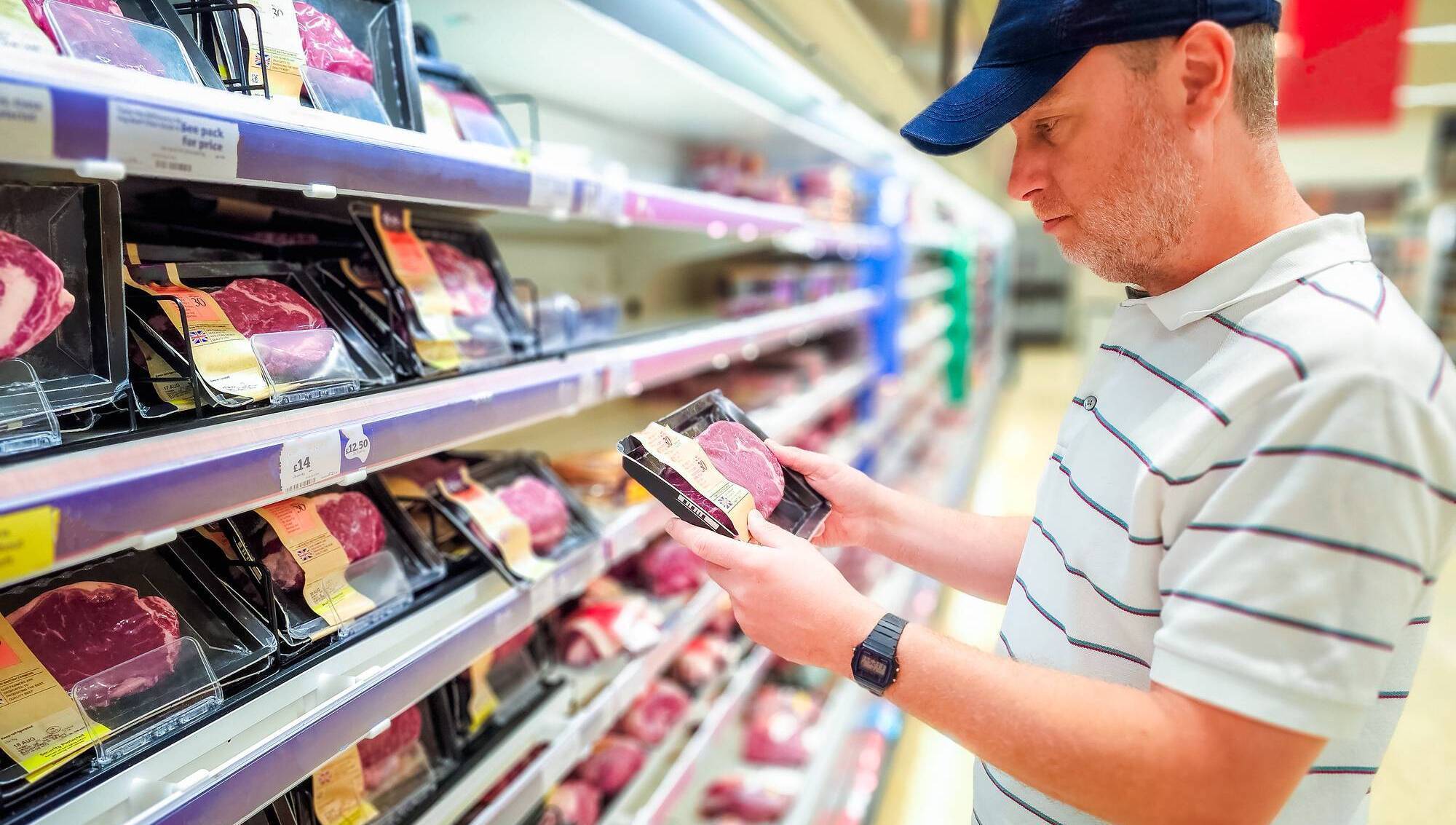
A certain cohort will pay more for organic, free-range or grass-fed products, but the reality is most consumers vote with their feet and price is the deciding factor. File picture
The Mercosur deal has been approved by the majority of EU countries as of Friday last, although the deal is still subject to European Parliament approval. The deal will allow Brazil to export up to 99,000 tonnes of beef and 180,000 tonnes of chicken annually to European markets.
You’ll forgive me if I focus on the impacts for the beef industry as, to my mind, the deal is likely to have a greater impact on the Irish beef industry than the poultry industry, but by no means do I wish to ignore the implications for that sector. Irish farmers and their EU counterparts are, of course, concerned about the implications of cheaper imports into the EU.
In the grand scheme of things, the quantity of beef produced in Europe is very significantly higher than the amount to be let in from Brazil, which is cited at 600,000 tonnes per year.
Meanwhile, the UK’s Agriculture and Horticulture Development Board puts EU production for the first eight months of 2025 down by more than 4% at 4.2m tonnes, which would suggest supply for the whole of 2025 will likely be sub-6,500,000 tonnes, about 4–5% below what was produced in 2024.
Of course, EU processors already import beef from Mercosur countries, including Brazil, Paraguay, Uruguay and Argentina, with 281,000 tonnes imported in 2024, increasing to 325,000 tonnes for the first nine months of 2025. The EU also exports beef, with 993,000 tonnes exported in 2024, with about 344,000 tonnes going to the UK and the balance to other non-EU countries.
When a processor is already shipping product from an island nation onto mainland Europe or the UK, there may not be sufficient discernibility between the cost of getting a container load of beef from South America versus a lorry load from Ireland. Reduced beef prices, thanks to favourable tariffs, may result in a shift away from Irish beef in particular, and EU beef more generally, towards South American beef.
Presently, the price for steers in Brazil is €3.25/kg, compared to Irish prices of €7.32/kg for R3 steers as of early December. The differential is significant and insurmountable in terms of competitiveness. Ireland’s beef industry could not function at Brazilian prices.
Ireland’s beef market is substantially a manufacturing beef market. Politicians and other bodies might like to plámás us into thinking that we are somehow insulated as premium producers, but any Tom, Dick or Harry farming will tell you that the differential in prices between a P2+ cow and an R3+ bullock is small enough to blatantly expose how weak premiumisation really is.
The same rings true for dairy farmers, where a drop in the global price of milk translates almost instantly to farmgate prices in Ireland.
Irish processors are estimated to have exported about €3.4bn worth of beef in 2025, up from €2.8bn in 2024, with a volume of just under 490,000 tonnes, according to the Department of Agriculture for 2024.
Clearly, the 99,000 tonnes from South America will not eclipse Ireland’s exports, but it will create drag and disruption. For a country uniquely placed as a major exporter of beef in Europe, one has to ask whether this drag will undermine prices across all exports and not just the portion displaced by imports.
Of course, that imported beef will displace production from other EU countries as well, and not just Ireland, meaning the impact may be less concentrated.
However, this calculation does not account for the price differential between continents. The stark reality is that cheaper imports will displace EU production, because beef simply cannot be produced in the EU at those prices.
Beef production is not something that can be turned on or off. Cows and their unborn calves are already committed to a minimum three-year production cycle on most farms. Meanwhile, cheaper South American beef is ready to go and can be diverted to Europe at the drop of a hat once markets open.
It is this oversupply and disruption that risks doing the most damage. Try landing into your preferred meat factory having just lost a contract for 10,000 tonnes of beef due to additional imports, and you can guess what their quote price will be for your bunch of cows or bullocks — or whether they will be taking any animals at all.
This changes the finely balanced dynamics between supply and demand, and even a small oversupply can lead to a major and disproportionate drop in farm prices. Look at what a fractional 2% increase in global milk supply has done to milk prices, which have fallen by 30% in the past six months.
The importation of 99,000 tonnes of beef amounts to just 1.5% of total EU production. Would such an oversupply of cheap beef cause a similar collapse in beef prices? If it resulted in a 10% reduction in the overall beef market value, the losses to Ireland alone would be circa €340m.
Yes, a certain cohort will pay more for organic, free-range or grass-fed products, but the reality is most consumers vote with their feet and price is the deciding factor.
Meanwhile, farmers are boxed into producing food under some of the highest regulations in the world — including standards that are theoretically optional but, in practice, unavoidable, such as Bord Bia and IGAS.
- Kieran Coughlan is a rural accountant and tax adviser specialising in farm tax issues