Ireland outvoted as EU gives green light to Mercosur free trade agreement
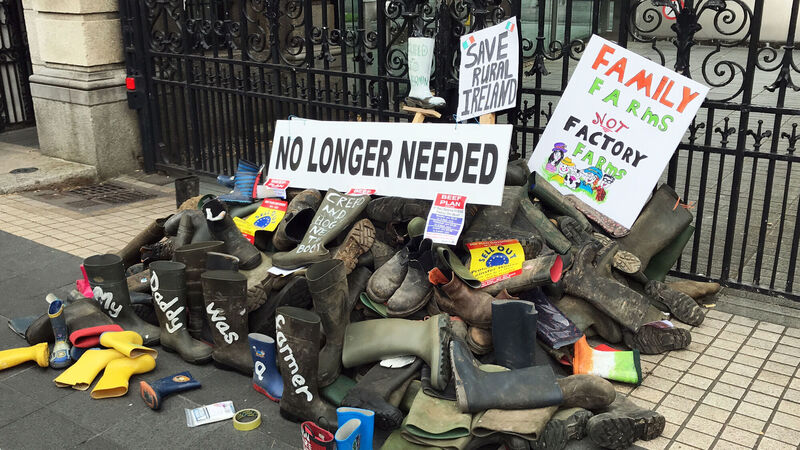
Farmers’ wellies in a pile at the gates of Leinster House during a demonstration against the Mercosur deal. File picture: Michelle Devane/PA Wire
EU ambassadors have given provisional approval on Friday to the signing of the bloc's largest ever free trade accord with South American group Mercosur, over 25 years since negotiations began and after months of wrangling to secure key member states' backing, according to three EU diplomats and sources.
The European Commission, which concluded negotiations a year ago, and countries such as Germany and Spain argue it is a vital part of an EU push to unlock new markets to offset business lost from US tariffs and to reduce reliance on China by securing access to critical minerals.
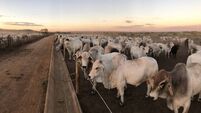
Opponents led by France, the European Union's largest agricultural producer, and Ireland, say the agreement will jack up imports of cheap food products, including beef, poultry and sugar, undercutting domestic farmers.Â
There are significant worries surrounding imported meat due to the use of hormones or past cases of contamination in beef finding its way into the market.
The Taoiseach and Tánaiste confirmed on Thursday that Ireland would be voting against the Mercosur agreement.
Farmers have launched protests across the EU, blocking French and Belgian highways and marching in Poland on Friday. A protest against the deal is planned to take place in Athlone on Saturday.Â
Ambassadors from the EU's 27 member states indicated their governments' positions on Friday, with at least 15 countries representing 65% of the bloc's total population voting in favour, as required for approval, the EU sources and diplomats said.Â
EU capitals have been given until 4pm Irish time to provide written confirmation of their votes. According to reports, Ireland, France, Poland, Austria, and Hungary opposed the deal, while Belgium abstained. The other EU countries, including Italy, which held a decisive vote, approved the trade deal.Â
Written confirmation will clear the way for Commission President Ursula von der Leyen to sign the agreement with Mercosur partners — Argentina, Brazil, Paraguay and Uruguay — possibly as early as next week.Â
The European Parliament will also need to approve the accord before it can enter force.
The deal has been opposed by the Irish Farmers’ Association (IFA) and has also seen internal disagreement within Government here, including with independents who supported the formation of the coalition.
Government confirmation on Thursday that it would not vote for the deal in its current form, which was welcomed by the IFA, the Labour Party and Independent Ireland.
Sinn Féin MEP Kathleen Funchion condemned the decision to approve the deal, warning that it is "bad for Irish farmers, the environment, and public health".
Ms Funchion also criticised the manner in which the European Commission forced the deal through, saying it "threatens the rights of national parliaments".
Green Party leader Roderic O’Gorman said the agreement is not fair to Irish farmers and consumers.Â
"It’s not fair to Irish farmers, who have to compete with food raised to much lower welfare standards. It’s not fair to Irish consumers, who will be exposed to beef reared using excessive hormones and pesticides.Â
"And it’s not fair to the environment across South America, as it will encourage further deforestation."