What does the latest Nitrates Action Programme mean for farmers?
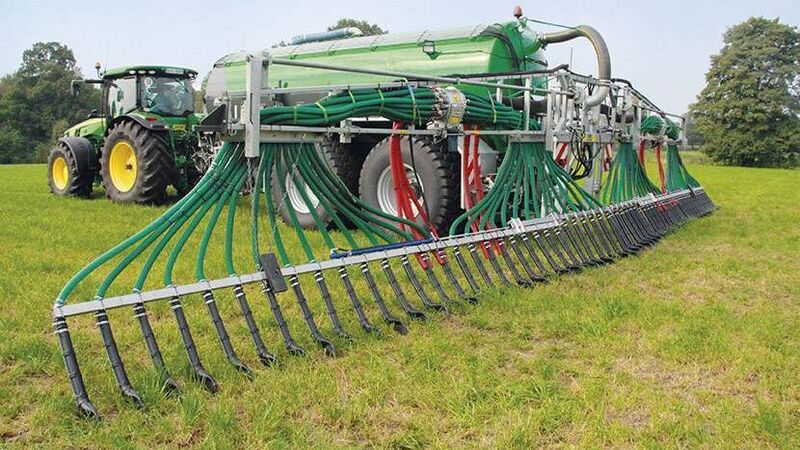
Derogation farmers will need to increase their slurry and soil water storage by 2028 under the new derogation extension.Â
The 6th NAP was signed into law by the minister for housing, local government and heritage on December 8.
It sets the minimum regulatory requirements that will apply over the next three years for all farmers, including those in derogation.
At the time of a Basic Income Support for Sustainability (BISS) application for 2026, dairy farmers have to declare their milk platforms. All dairy cows will be considered to be situated on this platform.Â
If the number of animals pushes a stocking rate above a certain level, the farmer will need to move slurry to an off-site holding or accept a lower chemical nitrogen allowance on the milking platform. Increased slurry and soil water storage capacity requirements on dairy farms must be implemented by October 1, 2028.
Soiled water storage will need to increase to 0.3m³ per cow per week, and slurry will increase to 0.4m³ per cow per week. The deadline is set to give farmers time to plan and prepare, and to aid certainty regarding the derogation assessment process.
Important to note is that the soiled water volumes required will not include cows that are dried off, which is usually from November to February in a spring calving herd. This will mitigate the change in soiled water storage requirement for many farmers, but will also provide justification where the requirement is going up.
By 2026, adjusted chemical nitrogen (N) and phosphorus (P) silage production allowance for farms operating at or below 85kg organic N/ha producing forage for sale. There will also be an expansion of the department's organic nutrient movement database and increased focus on compliance and enforcement through the Environmental Protection Agency’s National Agricultural Inspection Programme.
By January 1, 2028, the application of sewage sludge to arable land in autumn in the Barrow, Slaney and Wexford Harbour catchments will be prohibited, except for land sown to brassica species or grass.
By December 31, 2027, there will be a farm-gate nutrient balance calculated using the department-supported AgNav tool. Engagement with AgNav will be encouraged for non-derogation farms also.
Derogation farmers within the Slaney, Barrow, Nore and (Munster) Blackwater river catchment areas will be subjected to two additional requirements. This is due to the highlighted catchment areas exhibiting the highest distance to the target required to support healthy aquatic ecosystems.
The first requirement will be that from January 1, 2028, the annual maximum grassland fertilisation rate from chemical fertilisers on farms will be reduced by 5% lower than the rates published in the Irish Action Programme. If a revision of the fertilisation norms sets lower values, those lower values shall apply.
The second requirement is that from January 1, 2028, chemical fertilisers will not be allowed to be applied to grassland within four metres of any surface waters, unless the Irish Action Programme sets out stricter requirements, in which case those stricter requirements will apply.
Also part of the second requirement is that organic fertilisers, including manure and soiled water, shall not be applied to land within eight metres of any surface water and within 20 metres of any surface waters where the land has an average incline greater than 20% towards the water, unless the Irish Action Programme sets out stricter requirements, in which case those stricter requirements will apply.