EU-US trade agreement: The dust has settled, but not everyone is happy

The EU have agreed to a 15% tariff with the US, but finer details are yet to be clarified.
Key parameters regarding trade deals were agreed on this week between European Commission President Ursula von der Leyen and US President Donald Trump.
A 15% tariff on EU imports into the US has left some camps divided. The agreed-upon tariff comes as a reduction from the originally proposed 30% made by the Trump administration earlier this year.
The deal is still in its infancy, and a more itemised agreement must be drafted and agreed upon for EU and US trade.
In 2024, Ireland exported nearly €2bn worth of food and drink products to the US. The American market is an important destination for Irish products and accounts for approximately 11% of Ireland’s total food and drink exports.
Within the €2bn figure, €830m is attributed to dairy, and €900m for drinks such as whiskey, which accounts for 91% of what Ireland exports to the US. It is currently unclear whether spirits will be subjected to the new 15% tariff rate agreed upon.
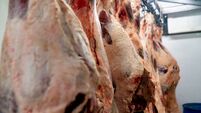
Ireland also exports pig meat (€23m), beef (€8.8m) and seafood (€3.8m). The Irish agricultural industry may not benefit as much as other sectors, which are currently taking a sigh of relief at the current negotiations.
Mentions of a ‘zero-for-zero’ tariff rate to be applied on certain products were announced; however, what those products would be exactly is unknown.
Speaking on the announced trade deal, minister for agriculture, Martin Heydon, said: “The United States is the second most important market for Irish agri-food, with exports valued at €2 billion last year. Ireland’s strong trading relationship with the US has mutual benefits for businesses on both sides of the Atlantic.
"Since April, our food and drink businesses have faced major uncertainty around future US trade policy. This agreement means an end to that uncertainty and avoids the very significant threats associated with a No-Deal scenario.”
The minister also mentioned that the now confirmed tariffs would particularly benefit Irish butter exports, which have been subjected to an additional tariff rate of 10% stacked on the pre-existing tariff of 16% since April this year.
Minister of state with responsibility for food promotion and new markets, Noel Grealish, added: “I welcome this outcome, which will give certainty to Irish food and drink businesses exporting to the US market. Together with Minister Heydon, my department and Bord Bia, I will continue to support new market development and market access efforts for our quality, sustainable food and drink products.”
These positive sentiments are not experienced across the board, with MEP Ciaran Mullooly criticising the news of the deal.
In a press release on Monday, the MEP said: “By any stretch of the imagination, this is not a good deal for Ireland… I’m not sure how the Irish Government could call this a good deal: it’s certainly not for Irish companies.”
With the dairy industry operating on an all-island basis, there is uncertainty about how the tariffs will fare between the different jurisdictions of the UK and the EU. The North is set to operate on the UK tariff level of 10% tariffs for imports into the US, whereas the Republic will now be operating under the agreed 15% tariffs of the EU.
Speaking on the news, Director of Dairy Industry Ireland, Conor Mulvihill, said: “While the simplification of the new tariff structure, as set out in the deal, will make it easier for the sector to manage, we remain concerned about the broader implications of any tariff border on the island of Ireland.
"The dairy industry operates on an all-island basis, with integrated supply chains and cross-border trade in raw milk, ingredients, and finished products. Any divergence in tariff treatment between Northern Ireland and the Republic of Ireland could introduce complexity, cost, and uncertainty for processors and farmers alike.”
Mr Mulvihill highlighted the need for clarity on the potential ‘zero-for-zero’ tariffs for products, saying: “We also note the reference to a potential zero-for-zero tariff category for certain agricultural products. Dairy Industry Ireland encourages the Government and EU institutions to seek clarity on whether Irish dairy products could be included in this list, which would offer further opportunities for growth in the US market.”
The IFA have pushed back against the current agreement, saying that it will only present further challenges for Irish farming families.
“While the proposed tariff rate of 15% is lower than the threatened 30% rate, it still represents a significant challenge for the Irish agri-sector on a number of fronts. We are still awaiting the finer details of the agreement, but given Ireland’s reliance on the US market, both in agriculture and beyond, its impact will be significant on Irish farm families, both directly and indirectly,” said IFA President Francie Gorman.
Re-emphasising the disparity and unfairness to Irish farmers when compared to their UK counterparts, Mr Gorman said: “The UK, which struck a 10% tariff deal, now benefits from a lower tariff than Ireland, making them more competitive in the US market compared to Irish goods. It also means a differential tariff between exports north and south of the border.
“From an Irish and European farmer perspective, the cost of any additional tariffs will ultimately be borne by the primary producer. It’s against the backdrop of a potentially devastating Mercusor trade deal, along with plans to massively cut the EU CAP budget.
"Yet again, we are left with the potential for farmers to be the fall guys on the back of EU trade and policy developments,” concluded Mr Gorman.