Slaney water project marks a year of progress
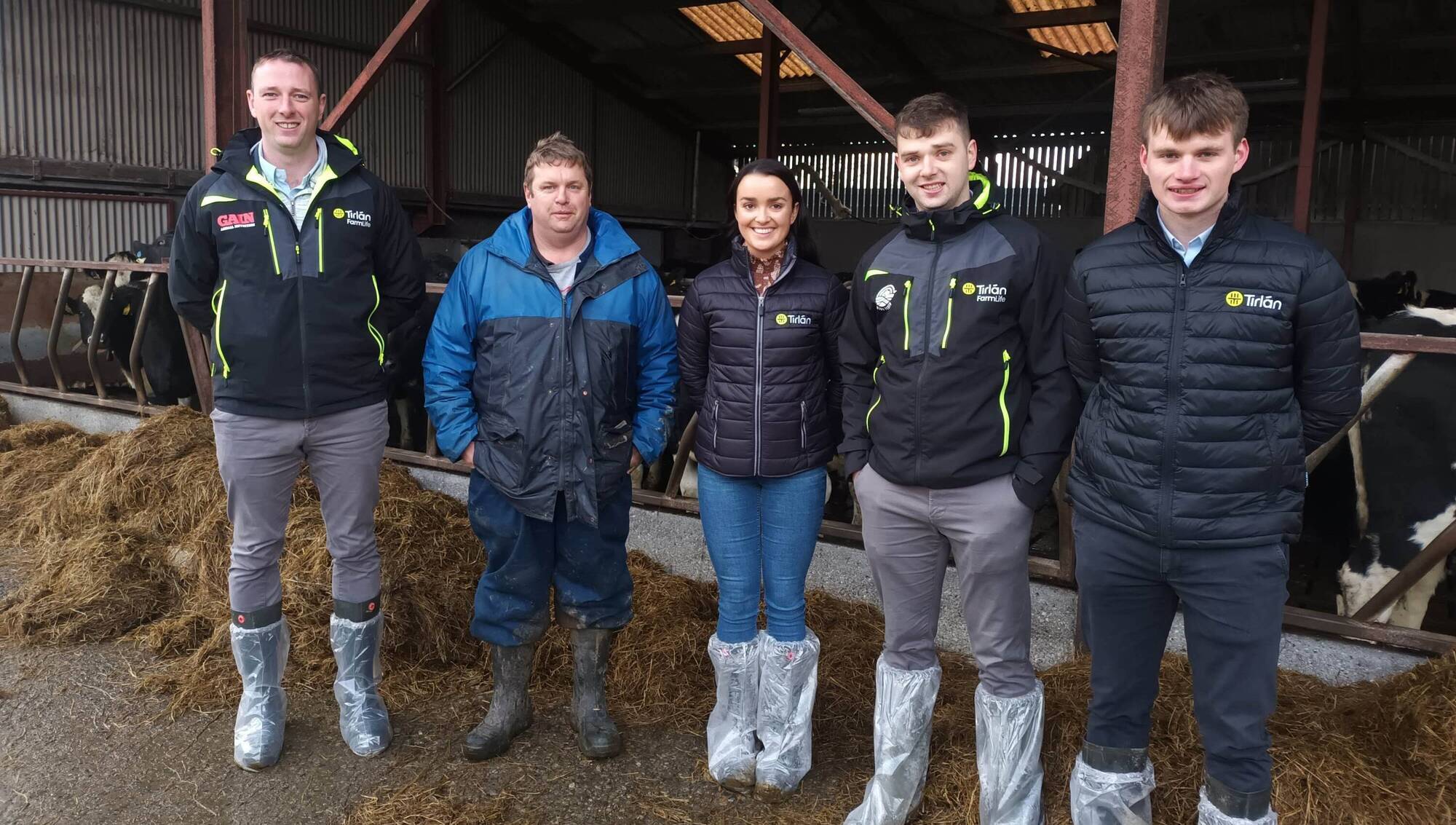
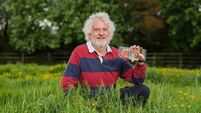
Pictured on Martin Davin's family farm are Tirlán’s Bryan Harte with Tirlán supplier Martin Davin and Tirlán’s farm sustainability advisers Róisin McManus, Aidan O’Donovan and Sean Martyn.
A founding father of the United States would surely have approved of a collaborative water-quality project launched by Tirlán, the Kilkenny-based dairy co-operative.
Benjamin Franklin (1706-1790), a scientist, inventor and statesman, once wrote: “When the well is dry, we know the worth of water.”
The statement fittingly reflects the Farming for Water: River Slaney Project undertaken by Tirlán and partners across the midlands and south-east.
Teagasc, the Local Authorities Water Programme and the accounting and advisory specialists ifac, are working with the co-op on the water enhancement programme.
It involves more than 2,000 on-farm sustainability engagements across the co-op’s supply catchment.
A total of 256 suppliers have submitted applications totalling more than €1.5m for dedicated measures on their family farms.
It is part of a €60m Government and European Commission Farming for Water partnership (EIP).
Growing numbers of farm families are working with the co-op’s dedicated farm sustainability advisers.
They attend discussion groups, farm walks and workshops and take science-based actions on their farms and in the community to improve water quality and enhance biodiversity.
Local authorities across the catchment, along with Irish Water, and food companies, Kepak, Dawn, and ABP Food Group, are playing key roles in supporting the programme.
The collaborative nature of the ongoing project means learnings and beneficial practices from the project have far greater reach throughout the country, the partners say.
Agriculture Minister Martin Heydon said it was great to see a cross-industry approach to the issue of water quality along one of Ireland’s major rivers.
Raising awareness and fostering a collective approach among farmers, processors, and industry stakeholders is crucial to achieving real and lasting change.
“This programme presents a huge opportunity for all parties involved to continue to play a pivotal role in driving positive and long-lasting change across a huge swathe of one of Ireland’s most fertile regions.
“We've made progress, and I appreciate that, but we can't be complacent, and together we can all make a difference to water quality in the region.”
Tirlán chairperson John Murphy said it was committed to long-term programmes to support its farmers to continue their work to enhance and protect their lands and waters for the future.
It has invested significant resources in delivering water quality programmes based on best practice.
“We have seen a high level of engagement with this programme and hit many milestones over the past year.
“It will take time for the best practice measures to be fully reflected in water quality data captured,” he said.
Tirlán has been working with Government and advocating at EU level that an extension of time to showcase improving water quality is imperative.
“It was good to see progress in the recent Environmental Protection Agency's early insight report on nitrogen levels in rivers.
“However, they did highlight that there is more to be done. We’re committed, along with our partners, to continuing to drive action to improve water quality,” he said.
Tirlán chief executive Seán Molloy said it was focused on ensuring the group and its farmers, alongside agri-food organisations across the country, deliver the best possible case for Ireland’s retention of the Nitrates Derogation.
He urged all farm families to continue their good work and engage with the co-op, its partners and advisers. Funding is readily available for focused, results-driven actions to protect water.
Teagasc director Professor Frank O’Mara said the programme had put a major focus on promoting catch crops with tillage and drystock farmers, as a means of reducing nitrate levels in the Slaney catchment and surrounding areas.
The ecological status is good or high for more 60% of the catchment, which compares very well nationally, but the high nitrate levels continue to be the main challenge.
Further work and collaboration need to happen to make progress in addressing this issue, he said.
Anthony Coleman, director of services with the Local Authority Waters Programme, said the project had resulted in greater awareness of the importance of good water quality.
The project has also been recognised as a model for best practice and was a finalist in the recent Green Awards.
It is an approach that would surely have appealed to Benjamin Franklin, who once wrote: “Tell me and I forget. Teach me and I remember. Involve me and I learn.”