Buying in to catch up with the EBI high-flyers
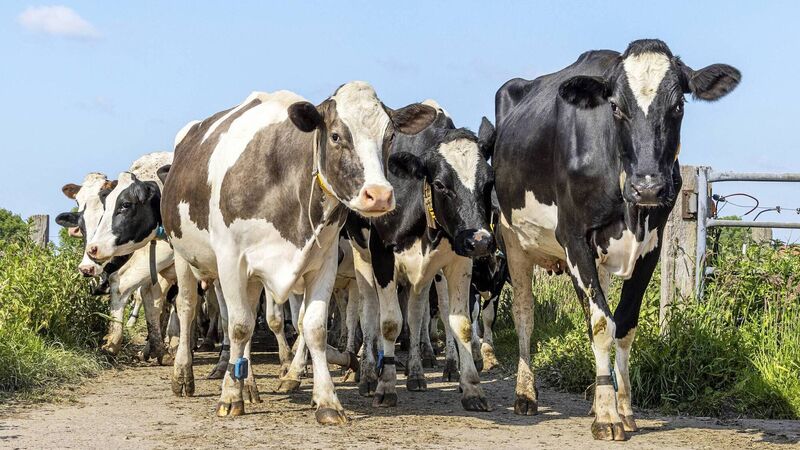
The performance levels of the top Economic Breeding Index (EBI) dairy herds in Ireland far surpass that of the average herd, producing 500 litres more milk and 53kg more milk solids per cow
Buying in to catch up with the EBI high-flyers

EBI is a single-figure profit index aimed at helping farmers identify the most profitable bulls and cows for breeding dairy herd replacements. It includes information on seven sub-indices related to profitable milk production.

The huge potential for genetic improvement in low-EBI dairy herds, by buying replacement heifers from the country's high-EBI herds, has been highlighted by Irish Cattle Breeding Federation chief executive Sean Coughlan.

During a recent Teagasc Dairy Edge podcast, he said it was quite a daunting task for low-EBI herds trying to build up EBI themselves to catch up with the top herds. He said some farmers were engaging with high-EBI herds with a view to purchasing some of their surplus heifers. 

“I really think it’s a lost opportunity, that we’re not able to filter some of the surplus replacements from those herds back down and, in effect, make the providing of replacements a much easier proposition for some of the herds further down the scale,” said Mr Coughlan. 

“I think that there’s huge potential untapped in that regard. I think there’s an opportunity as an industry to do something innovative around that because I think the payback would be enormous”.

He said the farmer generating the dairy heifer calves needed to be sure there was a market for them and, conversely, the purchasing farmer was dependent on being able to source the necessary replacement heifer calves.

“You do almost need that contract element, and the real challenge then becomes, you probably need somebody to underwrite that contract in case somebody tries to bail out of that deal. Just because it’s hard, doesn’t mean it’s not something that we should be looking to pursue, and try to see what could be done to realise the potential that’s undoubtedly there”.

The performance that new entrant herds can achieve in a very short space of time is phenomenal really, on the basis of the genetics that they buy,” said podcast host Stuart Childs.

The performance levels of the top Economic Breeding Index (EBI) dairy herds in Ireland far surpass that of the average herd, producing 500 litres more milk and 53kg more milk solids per cow; having a 16-day better calving interval (for a 12% better six-week calving rate); and low carbon emissions.

EBI is a single-figure profit index aimed at helping farmers identify the most profitable bulls and cows for breeding dairy herd replacements. It includes information on seven sub-indices related to profitable milk production.

For the farmer selecting breeding dairy herd replacements, Mr Coughlan also highlighted the National Genotyping Programme (NGP).

“If somebody needed 20 heifers, and they had 40 calves, they could genotype the 40 calves, keep the best, and move on the other 20,” he explained.

The NGP objective is to move towards a fully genotyped national herd. Genotyping generates a wealth of information that helps the dairy farmer make better breeding decisions.

Genotyping also identifies lethal genes such as HH3. “One of the things that happens if you have an HH3 cow, and it’s mated to an HH3 bull, you have the risk of embryo death, and you won’t actually know. The cow will go in calf, but the embryo won’t last,” Mr Coughlan explained.

The danger of matching an HH3 bull and HH3 dam is removed by using ICBF's HerdPlus Dairy Sire Advice service. “That’s one of the additional benefits that having the herd genotyped actually brings to us,” said Mr Coughlan.

About 14,500 herds, dairy and beef, participate in the National Genotyping Programme.

Based on the experience of the NGP last year, participating farmers are now more aware that sending DNA samples to the lab at least twice a week during peak calving, especially if they are planning to sell surplus calves quickly, ensures timely calf parentage verification and correct registration.

x

More in this section

Farming

Newsletter

Keep up-to-date with all the latest developments in Farming with our weekly newsletter.

Cookie Policy Privacy Policy Brand Safety FAQ Help Contact Us Terms and Conditions

© Examiner Echo Group Limited